How Does Regenerative Braking Blend With Friction Brakes?
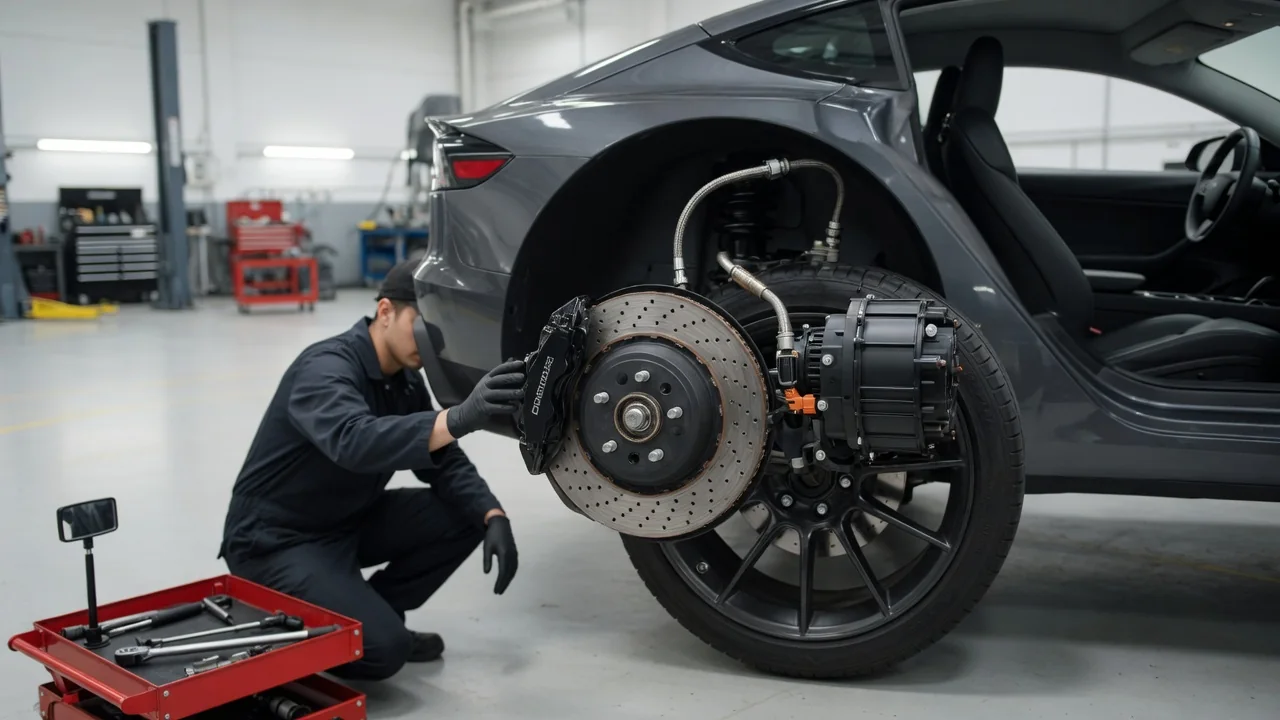
Most hybrid and electric vehicles slow down using two systems at once. The electric motor recovers energy while it decelerates the car, and the conventional hydraulic friction brakes supply whatever extra force is needed. Coordinating the two is called brake blending. Knowing how regenerative braking blends with friction brakes explains why these vehicles slow the way they do, why the pedal can feel different from a conventional car, and where the system reaches its limits.
Motor deceleration
Regenerative braking uses the traction motor in reverse. When the driver lifts off the accelerator or presses the brake pedal, the power electronics, known as the inverter, switch the motor into generator operation. Turning the motor now produces electric current, and drawing that current creates a resisting torque that slows the wheels. The recovered energy is sent back to the high-voltage battery. Without regeneration, that energy would become heat at the brake pads and rotors. This deceleration acts only on the wheels connected to a drive motor. A front-drive vehicle regenerates through the front axle, a rear-drive vehicle through the rear, and a dual-motor vehicle can use both.
The amount of braking the motor can provide is never fixed. It depends on how much charge the battery can accept at that moment, which falls when the battery is nearly full or very cold. It is also capped by the power ratings of the motor and inverter. It drops at low speed, because a slowly turning motor generates little current, so many systems taper regeneration as the car approaches a stop. The control unit therefore treats regenerative capacity as a value that changes constantly and is recalculated continuously. It is never a dependable fixed quantity.
Stability adds another constraint. Strong retarding force applied to only one axle can upset the balance of the vehicle, particularly on slippery surfaces. When wheel slip is detected or the road is loose or icy, the controller may reduce or briefly suspend regeneration. The friction brakes then take over, and they can be controlled at each wheel individually.
Hydraulic brakes
The friction brakes remain sized to stop the vehicle on their own, so regeneration is an energy-saving addition, not a replacement. In a blended system, the brake pedal is interpreted as a request for a total rate of deceleration. The controller compares that request with the regenerative capacity available, uses the motor for as much as it can, and commands the hydraulic system to make up the difference. If the driver asks for more than the motor can deliver, or regeneration drops away, hydraulic pressure rises to fill the gap.
Engineers usually describe two broad approaches. In parallel blending, regeneration is simply added on top of normal friction braking, often during coasting or the first part of pedal travel. It is mechanically simpler but recovers less energy, because the friction brakes still do much of the work. In series blending, friction pressure is deliberately reduced so the motor can take as large a share as possible. Series blending requires the pedal to be at least partly separated from the hydraulic circuit, so the system can decide how much pressure actually reaches the calipers.
Separating the pedal is the basis of brake-by-wire designs. Sensors measure pedal travel or force, and a pedal simulator supplies resistance for the driver's foot. An electric pump, accumulator or electromechanical booster generates the pressure applied to the brakes. Exact architectures vary by manufacturer. Typical designs keep a mechanical backup path. If the electronics fail, the pedal can still pressurize the master cylinder directly, although with greater effort and longer travel. During anti-lock or stability interventions, the hydraulic modulator generally takes priority, because it can release and reapply pressure at each wheel quickly.
Changing feel
The aim of good regen and friction brake blending is simple to state: the same pedal input should produce the same deceleration regardless of how the work is divided. Achieving it is harder. Regeneration fades near a stop, and a bump or wheel slip can cut it abruptly. In either case, hydraulic pressure must rise by exactly the right amount at exactly the right time. When the handoff is not perfectly matched, drivers may notice a slight surge or dip in deceleration, or a change in pedal firmness, typically at low speed.
Lift-off deceleration can also vary from drive to drive. Many vehicles offer selectable regeneration levels or a one-pedal mode in which releasing the accelerator slows the car strongly, sometimes to a full stop. Because regenerative capacity depends on battery condition, the car may coast more freely than usual right after a full charge or on a cold morning. Some systems quietly apply the friction brakes to keep lift-off deceleration consistent. Others let it change and may display a notice. Which behavior applies is specific to each vehicle.
In decoupled systems, the simulator produces the pedal sensation, not fluid pressure at the calipers. That can make the pedal feel uniform. Some drivers find it less communicative than a conventional hydraulic pedal, especially when moving between different cars.
Practical implications and limits
Because the friction brakes handle less routine stopping, pads and rotors often last longer than on a comparable conventional car. Light use has a downside, though. Rotors can accumulate rust and deposits, and caliper slides or pistons can stick from inactivity, particularly where roads are wet or salted. Occasional firm stops, made where it is safe, help keep the surfaces clean. Some vehicles run their own routines for this. Brake fluid still absorbs moisture over time, so the replacement interval in the maintenance schedule still applies.
Service work needs extra care. In many brake-by-wire systems, the hydraulic unit can build pressure by itself, for example when the vehicle wakes up or a door is opened. Service manuals therefore often call for a maintenance mode before replacing pads or bleeding the system, and some vehicles need a scan tool to activate it. The correct procedure is vehicle-specific, so follow the manufacturer's repair information.
Regeneration also has clear limits in demanding situations. On a long descent with a nearly full battery, the motor may offer little retarding force. The friction brakes then absorb most of the energy and heat. In an emergency stop, the deceleration demanded exceeds what the motor can provide, and the friction brakes with anti-lock control do most of the work. A message that regeneration is limited typically relates to battery or temperature conditions. A brake system warning light deserves prompt inspection.