How Does Regeneration Affect Brake Pad Use?
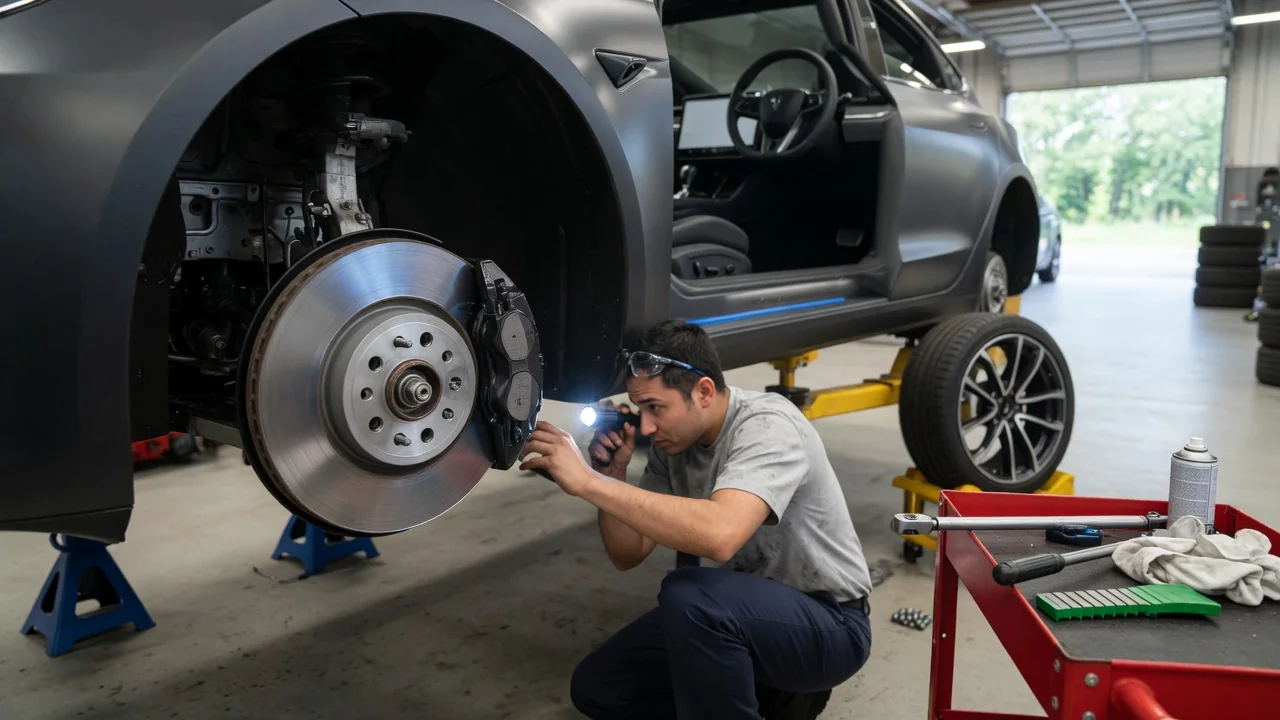
Regenerative braking changes how much work a vehicle's friction brakes have to do. In hybrids and electric vehicles, the drive motor can operate as a generator while the car slows. It sends energy back to the battery instead of turning it into heat at the pads and rotors. That is why EV regen brake pad wear is often discussed differently from wear on conventional cars. The effect is real, but it is not uniform, and using the brakes less has its own side effects.
Less friction work
In a conventional car, most deliberate slowing happens through friction. The pads clamp against the rotors and convert the vehicle's kinetic energy into heat. Every stop removes a small amount of pad material and rotor surface. Regeneration changes that division of labor. When the driver lifts off the accelerator or presses the brake pedal lightly, the electric machine applies resisting torque to the driven wheels while producing electrical current. Any slowing the motor handles is energy the pads never have to absorb, so they spend less time under load and generate less heat.
How much of the slowing the motor handles depends on conditions that change from moment to moment. Regeneration is limited by the capacity of the motor and power electronics, by how much charge the battery can accept, and by battery temperature. A battery that is nearly full or very cold may accept little regenerative energy, and the friction brakes then take over more of the job. Hard stops usually demand more deceleration than regeneration alone can deliver. Many vehicles use brake blending, in which a control system decides how to split each braking request between the motor and the friction brakes. Each manufacturer sets its own blending strategy, so it should not be assumed to work the same way from one vehicle to another.
The general result is that pads on vehicles that rely heavily on regeneration often last longer than they would on a vehicle without it driven the same way. Gradual deceleration in city traffic tends to let regeneration do most of the work. Frequent hard braking or abrupt stops from high speed shift more of the load back to the pads. On vehicles where only one axle is driven, regeneration acts through that axle only. How the brakes on the other axle are used then depends on how the system balances braking for stability.
Corrosion possibility
Using the friction brakes less has a downside. Brake rotors are commonly made of cast iron, which rusts when exposed to moisture and road salt. On a conventional car, regular braking scrubs the rotor faces clean, and the heat it creates helps drive off moisture. When the pads rarely press firmly against the rotors, surface rust and deposits can stay on the rotors and build up. The risk tends to be higher in humid climates, in regions where roads are salted in winter, and on vehicles that sit parked for long periods.
Corrosion can affect more than appearance. Rust that forms unevenly on rotor faces can cause noise, vibration, or a less consistent pedal feel when strong braking is eventually needed. Caliper parts that move infrequently, such as slide pins and pistons, can become sticky or seize if their lubrication deteriorates or corrosion takes hold. A sticking caliper can make a pad drag or wear unevenly, so one pad may wear faster than its partner even on a vehicle that brakes gently overall. Corrosion on a pad's steel backing plate can also weaken its bond with the friction material over time. For these reasons, pads on vehicles that rely heavily on regeneration are sometimes replaced because of their condition rather than because the friction material has worn thin.
Some vehicles are designed to apply the friction brakes periodically, even when regeneration could handle the stop, to help keep the rotors clean. Whether a given vehicle does this, and how often, depends on its design. If the manufacturer describes the behavior at all, it will be in the vehicle's documentation.
Maintenance
Longer pad life does not mean the brakes can be left alone. Brakes deteriorate from disuse over time and with exposure to the environment, not only with distance driven. Inspections are therefore best based on both mileage and elapsed time, following the intervals in the vehicle's maintenance schedule. A low odometer reading is not proof that the brake system is in good condition.
A useful brake inspection on a vehicle with regeneration looks beyond pad thickness. It typically checks the condition of the rotor faces, whether the caliper slide pins move freely and are lubricated, and the state of the piston seals and dust boots. It also looks for uneven wear between inner and outer pads or between the two sides of an axle. Brake fluid deserves attention too. It absorbs moisture over time regardless of how often the brakes are used, so it is generally replaced on a time or condition basis as the manufacturer specifies, not according to pad wear.
Service procedures can also differ from those on older conventional cars. Vehicles with electronically controlled brakes or electric parking brakes may need to be placed in a specific service mode before pads are replaced. Skipping that step can cause the system to apply pressure unexpectedly or set fault codes. The vehicle's service information is the right reference for these steps and for the correct pad specification when replacement is due.
Practical implications and limits
For owners, the practical effect is that brake costs tend to shift rather than disappear. Instead of regular pad replacement due to wear, the more common concerns become rotor surface condition, caliper movement, and fluid age. Typical replacement mileages quoted for conventional cars are a poor guide. The same vehicle can show very different pad life depending on where and how it is driven. A vehicle used mostly for long highway trips with little braking may show little pad wear yet still develop rotor corrosion. A vehicle used daily in heavy traffic benefits most from regeneration.
Driver settings and habits also play a part, within limits. Stronger regeneration settings or one-pedal driving modes, where offered, can shift more slowing to the motor. They cannot take the friction brakes out of emergency stops or stability interventions. They also cannot help when the battery cannot accept charge, such as on a long descent that starts with a full battery. Occasionally braking firmly from moderate speed in a safe, clear location may help clean rotor surfaces, though whether it does depends on how the vehicle blends its braking. General explanations like this one describe typical mechanisms. The owner's manual and service information remain the authority on how a specific vehicle behaves and what maintenance it needs.