How Does Lubrication Reduce Noise? Friction, Protection, and Limits
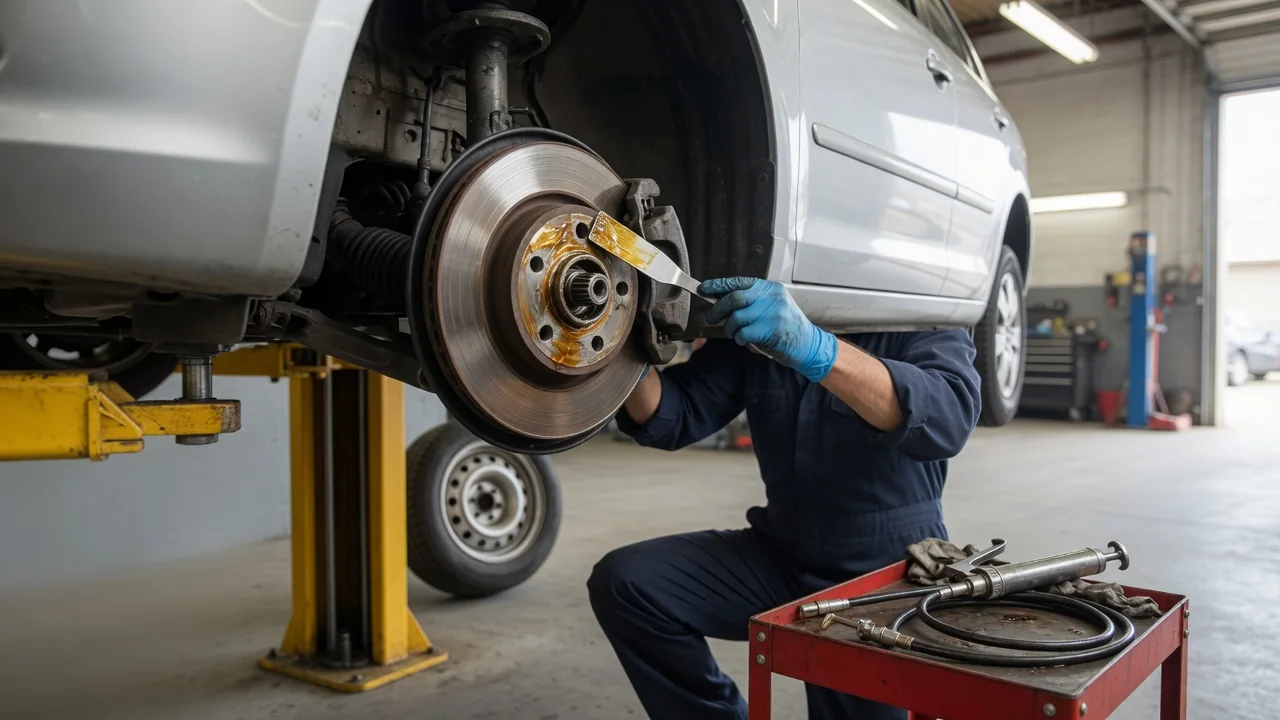
Many of the squeaks, whines, ticks, and grinding sounds a car makes come from parts that rub, slide, or strike against each other. Lubrication reduces this mechanical noise by keeping surfaces apart, smoothing how they move, cushioning impacts, and slowing the wear that makes parts louder over time. It is not a cure-all, though. Understanding how lubrication reduces noise also means knowing which sounds a lubricant can quiet and which ones point to a deeper problem.
Friction contact: where mechanical noise starts
No machined surface is perfectly smooth. Under magnification, metal faces show tiny peaks called asperities, and when two dry surfaces slide together those peaks catch, deform, and release. That repeated grabbing and letting go is known as stick-slip motion. Each slip sends a small burst of vibration into the part and the structure around it, and when those bursts repeat quickly enough they become an audible squeak, squeal, or chatter. Dry contact also tends to have a large difference between the force needed to start motion and the force needed to keep it going, which makes stick-slip more likely. A lubricant fills the gaps between asperities and reduces that difference, so the parts slide more evenly and vibrate less.
How much a lubricant helps depends on the thickness of the film it forms. In full-film, or hydrodynamic, lubrication, motion and pressure build a layer of oil thick enough to carry the load, so the metal surfaces do not touch at all. Rotating engine bearings are designed to operate this way under normal running conditions. In mixed and boundary lubrication, the film is thinner and some asperities still meet, which happens during starts, at low speeds, and under heavy loads. Even then, a thin layer of lubricant and its additives softens each contact compared with bare metal. Gear teeth illustrate the effect well: an oil film between meshing teeth reduces the sharpness of each tooth engagement, which helps lower the impact component of gear noise.
Lubricant also acts as a cushion in tight clearances. When a thin layer of oil is squeezed between two parts, it resists being pushed out quickly, which damps vibration and softens knocks. Some components depend on oil for this directly. Hydraulic valve lash adjusters and many timing chain tensioners use engine oil pressure to take up slack, which is why low oil level, low pressure, or aerated oil can contribute to ticking or rattling from the top of an engine, especially right after a cold start.
Surface protection: keeping parts quiet over time
Lubrication reduces noise not only in the moment but across the life of a component. Wear changes surface geometry: bearing races develop pits, gear teeth lose their intended profile, and clearances between pins and bushings grow. Rougher surfaces and looser fits generate more vibration and more impact, so a part that was quiet when new can gradually begin to hum, whine, or knock. By limiting direct metal contact, lubricant slows adhesive wear, where surfaces weld and tear at microscopic points, and abrasive wear, where hard particles plow grooves into softer metal. Preserving the original surface finish and clearances is one of the most important long-term ways lubrication keeps mechanical noise down.
Modern lubricants rely heavily on additives for this protection. Anti-wear additives form protective layers on metal surfaces when the oil film becomes thin, while extreme-pressure additives in many gear oils react under high load and temperature to help prevent scuffing between heavily loaded teeth. Friction modifiers adjust sliding behavior, which matters in components such as some limited-slip differentials, where the wrong fluid can lead to chatter during turns. Corrosion inhibitors keep moisture from rusting surfaces, and detergents and dispersants hold contaminants in suspension so the filter can capture them instead of letting them scratch surfaces.
Greases extend the same protection to parts that are not fed by a circulating oil system, such as wheel bearings, many chassis joints, and door hinges. Grease stays in place, keeps a reservoir of lubricant at the contact, and helps seal out water and dirt. When a seal or boot fails and grease is lost or contaminated, the joint often becomes noisy as wear speeds up.
Limits: what lubrication cannot fix
Lubrication can prevent damage, but it cannot reverse it. Once a bearing is pitted, a gear tooth is chipped, or a joint has worn loose, the noise comes from changed geometry and excess clearance rather than a lack of lubricant. Adding oil or grease at that stage may quiet a sound briefly or not at all, while the underlying wear continues. Lubricant condition matters too. Oil that has degraded, thinned from fuel dilution, thickened with sludge, or picked up abrasive debris cannot maintain the film it was designed to provide. A fluid of the wrong viscosity or type can cause similar trouble, either failing to support the load when hot or circulating too slowly at a cold start.
Many automotive noises have nothing to do with lubricated friction. Exhaust leaks, loose heat shields, worn tires, wind noise, cracked bushings, and failing mounts produce sounds that no lubricant will address. Some surfaces are also designed to work with deliberate friction. Brake pads and rotors, clutch friction surfaces, and drive belts must not be contaminated with oil or grease, because doing so can reduce grip and create a safety problem. Brakes do use special lubricants at specific contact points such as caliper slides, but only where the service procedure calls for them. Similarly, some rubber components are meant to run dry or with a specific compatible product, since petroleum-based lubricants can degrade certain rubber compounds.
Practical implications and limits for car owners
For everyday ownership, the most effective noise prevention is using the lubricant the manufacturer specifies and changing it on the recommended schedule. The owner's manual or service information lists the correct oil grade, gear oil or transmission fluid type, and grease points for a particular vehicle, and those requirements vary between designs. Following them keeps film strength, additive chemistry, and seal compatibility matched to the components, something a general explanation cannot determine for an individual car. Where a vehicle has serviceable grease fittings, applying the specified grease at the stated interval helps, while overfilling can push grease past seals and attract dirt.
When a new noise appears, note when it happens: only on cold starts, under acceleration, while turning, over bumps, or at a certain speed. That pattern is often more useful to a technician than any quick fix. A general-purpose spray can silence a squeaky hinge or latch, but applying it to unidentified suspension, brake, or belt components risks hiding a symptom or damaging parts. If a noise persists after the correct lubricant has been used, or returns quickly, treat it as a sign of wear or a fault worth inspecting rather than something to keep covering up.