How Does Crosswind Affect a High-Sided Car?
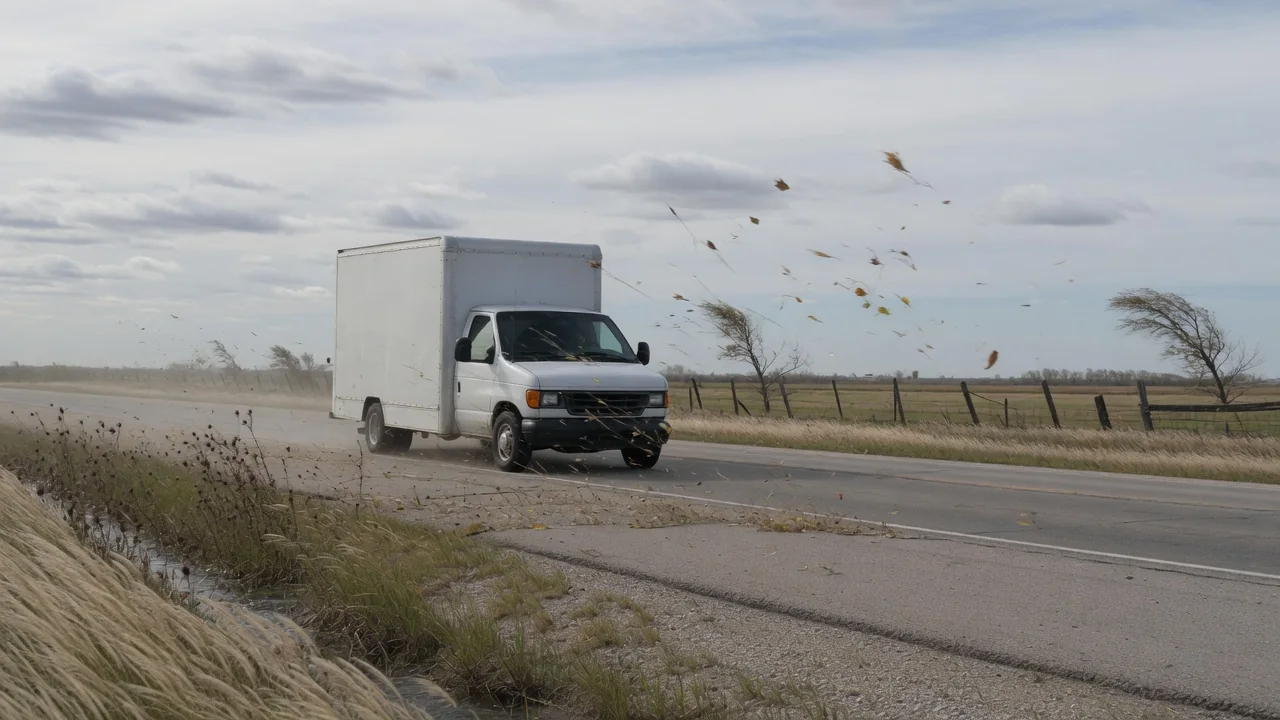
A high-sided car, such as a tall SUV, minivan or passenger van, presents a large flat surface to the wind. When wind blows across the road, it pushes the body sideways, leans it on its suspension and can nudge the vehicle off its intended line. How crosswind affects a high-sided car comes down to three things: the force the wind creates, the places where you are most exposed to it, and how a driver should respond.
Side force
Wind pressure acts on every surface it hits, and the sideways push grows with the area facing the wind. A tall vehicle has more side area than a low sedan of similar length, so the same gust produces a larger lateral force. That force also rises steeply with airspeed: aerodynamic force increases roughly with the square of the relative airspeed, so doubling it roughly quadruples the push. The wind the car actually feels combines the crosswind with the headwind created by the car's own motion, so the effect changes with driving speed as well as with the weather.
Where the force acts matters as much as how large it is. The combined push can be treated as acting at a single point, the center of pressure. On a tall body this point sits high, usually well above the suspension's roll center, so a side gust leans the body over and transfers load onto the downwind tires. If the center of pressure is ahead of or behind the center of gravity, the force also creates a turning moment that rotates the vehicle around its vertical axis. On many road vehicles the center of pressure lies forward of the center of gravity, which tends to push the nose away from the wind, but the exact behavior depends on body shape and load and differs from vehicle to vehicle.
The tires keep the car on its line. To resist a side force they must develop a small slip angle, so the vehicle drifts slightly before the tires build enough grip to counter the push. On dry pavement there is usually ample grip for this; the bigger issue is the sudden drift and body movement, which the driver feels as the car being shoved sideways or wandering in its lane. On wet, icy or snowy surfaces the margin shrinks, and the same gust uses a larger share of the available traction.
Exposure
Steady wind is less troublesome than changing wind. A constant crosswind can be balanced with a small, steady steering input, while a gust arrives quickly and then disappears, forcing repeated corrections. High-sided cars are most affected where the wind is strongest or where shelter suddenly begins or ends. Typical locations include bridges and elevated roadways, open highway across flat or treeless land, causeways and coastal roads, mountain passes, and embankments that lift the road above the surrounding terrain.
Transitions catch drivers off guard. Leaving a tunnel, emerging from a cutting, passing the end of a row of trees or driving past a gap between buildings can expose the side of the vehicle to the full wind almost instantly. Large trucks and buses create a similar effect: while you pass one, its bulk shields you, and when you clear its front, the crosswind returns at once, sometimes mixed with turbulent air disturbed by the truck itself.
The vehicle's own setup changes its exposure too. Roof racks, cargo boxes, roof-mounted bikes and towed trailers all add side area, and items on the roof raise the center of pressure further. A lightly loaded vehicle has less mass to resist a given push, while a heavy roof load raises the center of gravity. As a result, crosswind handling in a tall vehicle can feel noticeably different from one trip to the next.
Driver response
The most effective response is to slow down. Lower speed reduces the airflow from the vehicle's own motion, gives the driver more time to react and shortens the distance the car covers while drifting. Keeping both hands on the wheel matters because gusts arrive without warning, and a relaxed one-handed grip can let the wheel be pushed before the driver notices.
Corrections should be small and smooth. When a gust pushes the car, steer gently back toward the intended line rather than jerking the wheel. The common mistake is overcorrecting: the gust passes, the steering input remains, and the car darts the other way. In a steady crosswind, expect to hold a slight constant steering angle into the wind, and be ready to ease it off when entering a sheltered stretch, such as alongside a truck or beneath an overpass.
Anticipation does much of the work. Watching trees, flags, blowing dust and the movement of other vehicles gives early warning of strong gusts. Keep the car near the center of the lane to leave room on both sides, increase following distance, and give extra space to motorcycles, trailers and other high-sided vehicles that may be blown toward you. Avoid abrupt braking during a strong gust where possible, since hard braking shifts load and can reduce the tires' ability to resist the side force. Many drivers also prefer to switch off cruise control in gusty conditions so that speed stays under direct control.
Practical implications and limits
There is no single wind speed at which a high-sided car becomes unsafe. The threshold depends on body shape, weight, load, tire condition, road surface and driving speed, so any figure quoted without context should be treated with caution. Official wind warnings and bridge or highway restrictions for high-profile vehicles are the most dependable guide; when they are in effect, delaying a trip or choosing a more sheltered route is a reasonable decision.
Maintenance influences how well a vehicle copes. Tires inflated to the pressures on the vehicle's placard and with adequate tread respond more predictably than underinflated or worn ones, and worn shock absorbers or steering components let the body move more and make corrections less precise. Electronic stability control can help manage a skid, and some vehicles include functions intended to counter crosswind drift, but these systems work within the limits of tire grip and cannot cancel a strong gust. The owner's manual is the place to confirm whether a particular vehicle has such a feature and how it operates.
Removing unnecessary roof cargo before a windy trip, packing heavy items low and staying within the load and towing limits in the owner's manual all reduce how much the wind can act on the vehicle. These steps do not make a tall vehicle behave like a low one, but they narrow the gap and give the driver more margin when the weather turns gusty.