How Does Charging Change With Battery Temperature?
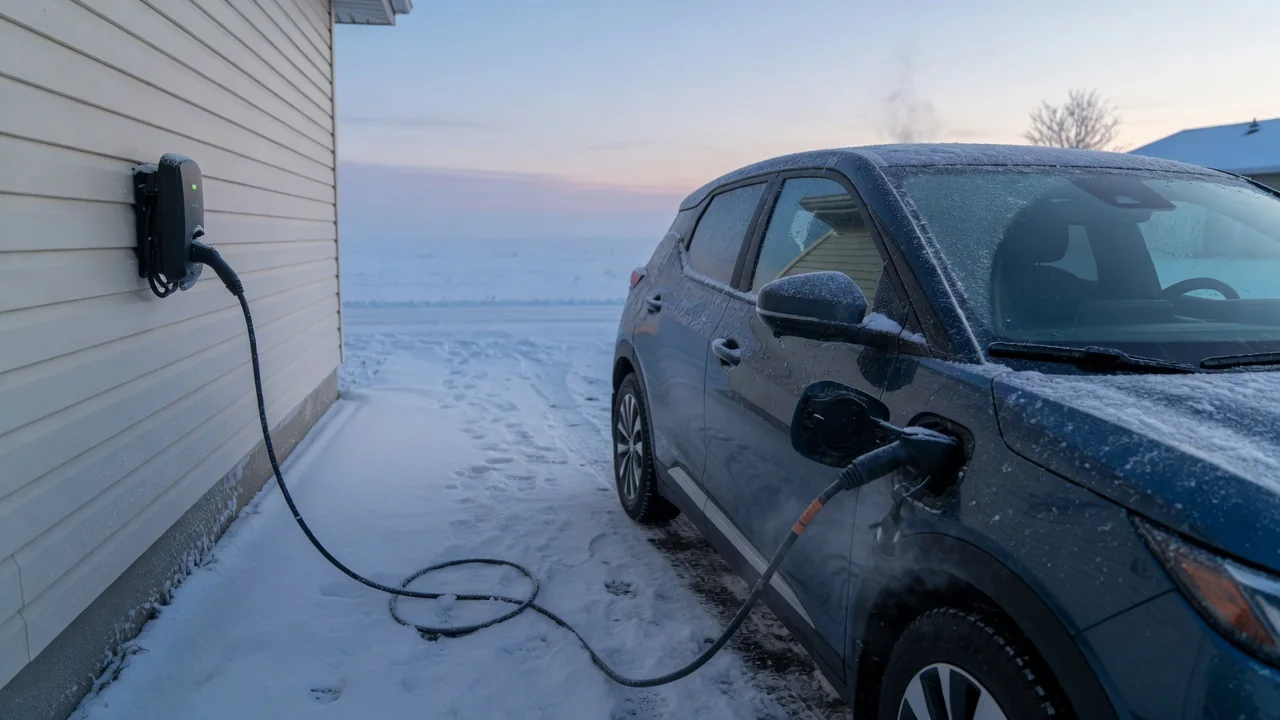
Battery temperature strongly affects how quickly an electric vehicle can accept energy, especially at DC fast chargers. A lithium-ion pack charges best within a moderate temperature window, and the battery management system limits charging current when the cells are too cold or too hot. Knowing how EV charge speed responds to battery temperature explains why the same car on the same charger can deliver very different sessions, and why preconditioning exists.
Cold limits
Low temperature slows the chemistry inside each cell. The electrolyte becomes more viscous, lithium ions move more slowly, and internal resistance rises. The graphite anode also accepts lithium ions more slowly when cold. If a high charging current is forced into a cold cell, ions can arrive faster than the anode can absorb them, and metallic lithium may deposit on the anode surface instead. This effect, called lithium plating, permanently reduces usable capacity and, in severe cases, can create internal defects that compromise safety. Avoiding plating is the main reason cold batteries are charged slowly.
The battery management system monitors cell temperatures and caps the allowed current accordingly. In very cold conditions it may permit only low power, or divert part of the incoming energy to a battery heater before meaningful charging begins. At a fast charger, this often appears as a session that starts slowly and gradually speeds up as the pack warms from heater output and from the heat generated by charging itself. How quickly that happens depends on pack size, ambient conditions and heater capacity, and the exact temperature thresholds vary by cell chemistry and manufacturer.
Cold matters less for Level 2 AC charging because the power is already modest, but it still changes the result. Some of the energy drawn from the wall can go to warming the battery or cabin, so less ends up stored in the pack. Lithium iron phosphate cells are generally considered more sensitive to cold charging than many nickel-based chemistries, which is one reason software strategies differ between vehicles.
Heat limits
High temperature speeds up unwanted side reactions. The protective layer on the anode, known as the solid electrolyte interphase, grows faster, and the electrolyte breaks down more readily. Both processes consume active lithium and raise internal resistance, which shows up over time as capacity loss and weaker performance. At extreme temperatures the risk of thermal runaway increases, and battery management systems are designed to keep the pack well away from that zone. Charging adds to the problem because resistive heat inside the cells scales roughly with the square of the current, so fast charging produces much more heat than slow charging.
Most modern EVs use liquid cooling to carry that heat away, often with a chiller connected to the air conditioning refrigerant circuit. Vehicles with passive or air-based cooling have less capacity to shed heat. When the cooling system cannot keep cell temperatures within limits, the battery management system reduces current, a behavior often called thermal derating. It is most likely during hot weather, after consecutive fast-charging sessions or after sustained high-speed driving, and it can make a session slow down earlier than the normal charging curve would suggest.
Warm is not the same as hot. A pack that has been warmed by driving usually charges faster than a cold one; charging is limited only once temperature approaches the upper boundary the manufacturer has set.
Preconditioning
Preconditioning means bringing the battery into its preferred temperature range before charging starts. In cold weather this means heating; in some vehicles and conditions it can also mean cooling. Depending on the vehicle, it may start automatically when a DC fast charger is set as a destination in the built-in navigation, through a manual control, or as part of a scheduled departure. The heat may come from a resistive heater, a heat pump, or waste heat from the drive system, depending on the design.
Preconditioning has trade-offs. It uses energy from the battery and needs time: started too late, the pack is only partly warmed on arrival; started too early, energy is spent maintaining temperature. Many vehicles calculate the timing themselves from the route. Availability also varies. Not every EV offers it, some trigger it only through factory navigation, and third-party navigation apps may not activate it. The owner's manual is the reliable source for how a particular vehicle handles it.
When the car is plugged in, preconditioning before departure can draw grid power instead of battery energy, so the vehicle leaves with a warmer pack without sacrificing stored range.
Practical implications and limits
Temperature is only one of several factors that cap charging power. State of charge has a large effect, since nearly all EVs taper power as the battery fills, whatever its temperature. Charger output, power sharing between stalls and the vehicle's own maximum acceptance rate also matter. A slow session is therefore not automatically a temperature problem. Many vehicles show a message or icon when the battery is being heated or when charging is limited by temperature, which helps separate thermal limits from other causes.
Some general habits work with these mechanisms. In cold weather, charging soon after a drive usually goes faster than charging a car that has sat outside overnight, and arriving at a fast charger with a lower state of charge lets the session spend more time in the high-power part of the curve. In hot weather, parking in shade and spacing out repeated fast-charging sessions gives the cooling system less work to do.
General principles cannot predict exact numbers for any particular vehicle. Temperature thresholds, charging curves and heater capacity depend on cell chemistry, pack design and software, and manufacturers may change them through updates. Reduced charging speed in cold or hot conditions is a protective function rather than a sign of a fault. Persistent warnings or charging that never recovers after the pack reaches normal temperature, however, deserve a look at the owner's manual or a visit to qualified service.