How Does Brake Fluid Transfer Force?
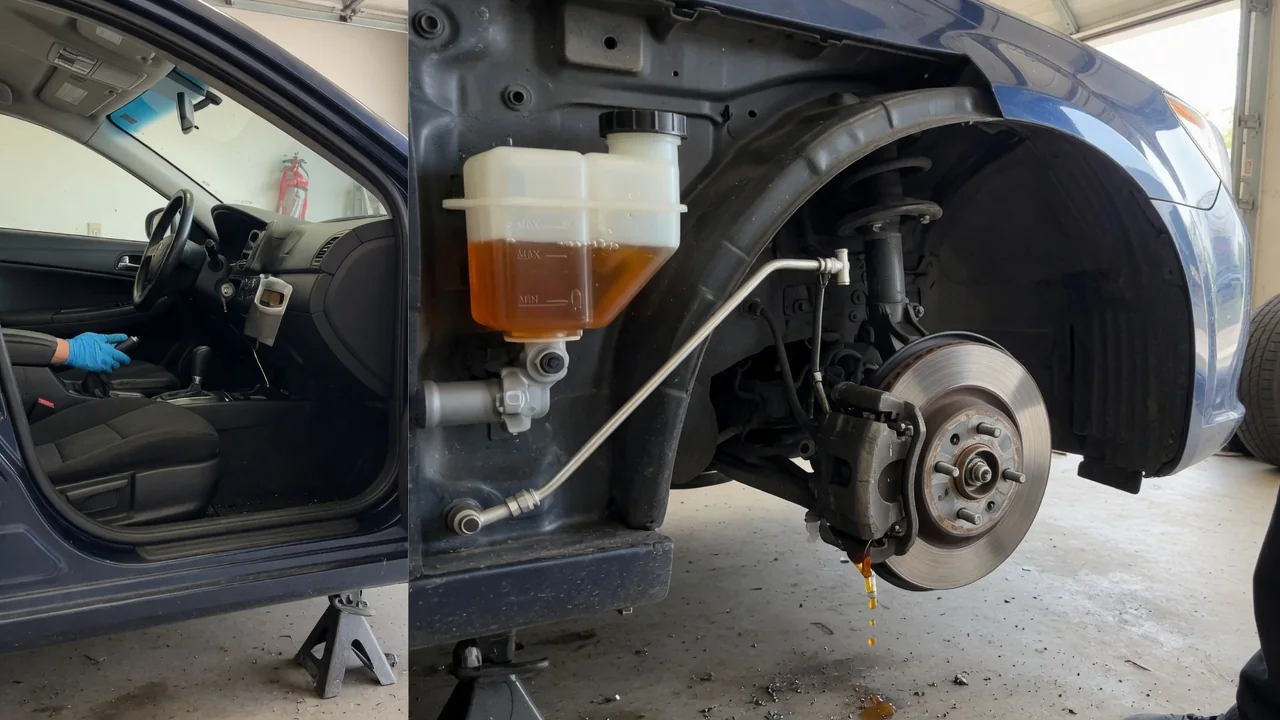
Pressing the brake pedal feels simple, yet the effort from your foot has to reach four wheels at once. Understanding how does brake fluid transfer force comes down to hydraulic pressure: a liquid trapped in sealed lines carries pedal effort to the calipers or wheel cylinders. The condition of that fluid decides how faithfully the pressure arrives.
Incompressible behavior
Brake fluid works because liquids barely compress under load. When the pedal pushes a piston inside the master cylinder, the fluid in front of it cannot shrink into a smaller volume, so pressure rises almost instantly throughout the lines. That pressure acts on the pistons at each wheel, which push pads against rotors or shoes against drums. Because the fluid holds its volume, the movement at the pedal is converted into clamping force rather than being absorbed along the way.
Air and vapor behave very differently. A gas bubble squeezes down when pressure is applied, so part of the pedal stroke is spent compressing the bubble instead of moving the wheel pistons. Drivers notice this as a soft, springy pedal that sinks further than usual before the car slows. How firm a healthy pedal feels differs between vehicles, since booster design, pedal ratio and hose construction all shape the sensation, so comparison with the same car's normal behavior is the most useful reference.
Closed system
Hydraulic brakes rely on the fluid being sealed inside a closed circuit of master cylinder, rigid lines, flexible hoses and wheel-end components. In a sealed space, pressure applied at one point is transmitted equally in every direction, which is why a small piston at the pedal end can operate larger pistons at the wheels. The larger piston area multiplies force, trading extra pedal travel for stronger clamping. Without sealing, pressure would simply escape rather than build.
Most modern vehicles split the system into two separate circuits, so a leak in one still leaves partial braking in the other, though the layout varies by manufacturer. The reservoir on top of the master cylinder keeps the circuits supplied as pads wear and caliper pistons sit further out. A slowly dropping level can therefore reflect normal pad wear, while a sudden drop, wet patches near a wheel or dampness along a line suggests fluid is leaving the system and deserves prompt inspection.
Maintenance
Fluid condition matters because common glycol-based brake fluids absorb moisture from the atmosphere over time, even through hoses and seals. Water lowers the boiling point of the fluid. Under hard or prolonged braking, heat from the pads soaks into the calipers, and moisture-laden fluid can boil into vapor. That vapor compresses like air, so the pedal goes long or soft exactly when braking demand is highest. Moisture also encourages corrosion inside lines, calipers and anti-lock hydraulic units.
Periodic fluid replacement restores the boiling margin and removes contaminated fluid before it damages internal parts. The correct interval and fluid specification are set by the vehicle manufacturer, and the required type is usually marked on the reservoir cap or listed in the owner's manual. Mixing incompatible types can harm seals, so matching the stated specification matters. Fresh fluid is typically clear to light amber, while dark or cloudy fluid points to age, though color alone does not measure moisture content; a shop can test it properly.
Everyday Use and Observations
In daily driving, a healthy hydraulic system gives a pedal that firms up early in its travel and responds in proportion to foot pressure. Light pressure produces gentle slowing, and harder pressure builds deceleration smoothly. That predictability is the incompressible fluid at work, relaying each change in pedal effort to the wheels without delay. On vehicles with electronic brake boosters or regenerative braking, pedal feel is partly simulated, so the sensation may differ from a conventional vacuum-assisted setup.
Changes over time are the most telling observations. A pedal that gradually travels further, feels spongy, or slowly sinks while held at a stop suggests air, vapor, a leak or an internal sealing problem. A pedal that softens after a long downhill descent and recovers once things cool may indicate overheated fluid. A brake warning lamp or a low-fluid message adds evidence but does not identify the cause on its own, and any stored fault code needs vehicle-specific interpretation rather than being treated as proof of a failed part.
Limits and Next Steps
Hydraulic pressure can only do its job when the rest of the brake system supports it. Fresh fluid will not compensate for worn pads, glazed rotors, swollen flexible hoses or a sticking caliper, and a firm pedal does not guarantee strong stopping if the friction surfaces are compromised. Likewise, a soft pedal has several possible causes, so assuming the fluid is the culprit without inspection can leave the real fault in place. Diagnosis should account for the whole circuit, from master cylinder to wheels.
Sensible next steps start with simple checks: look at the reservoir level against its markings, note the fluid's appearance, and pay attention to any change in pedal feel. Avoid leaving the reservoir open, since exposed fluid takes on moisture, and remember that brake fluid damages paint. Bleeding and flushing methods differ between vehicles, particularly those with anti-lock or stability control units, so the work is best left to a qualified technician following the manufacturer's procedure. Any sudden loss of pedal firmness warrants having the vehicle inspected before driving further.