How Does an Odor Neutralizer Differ From a Fragrance?
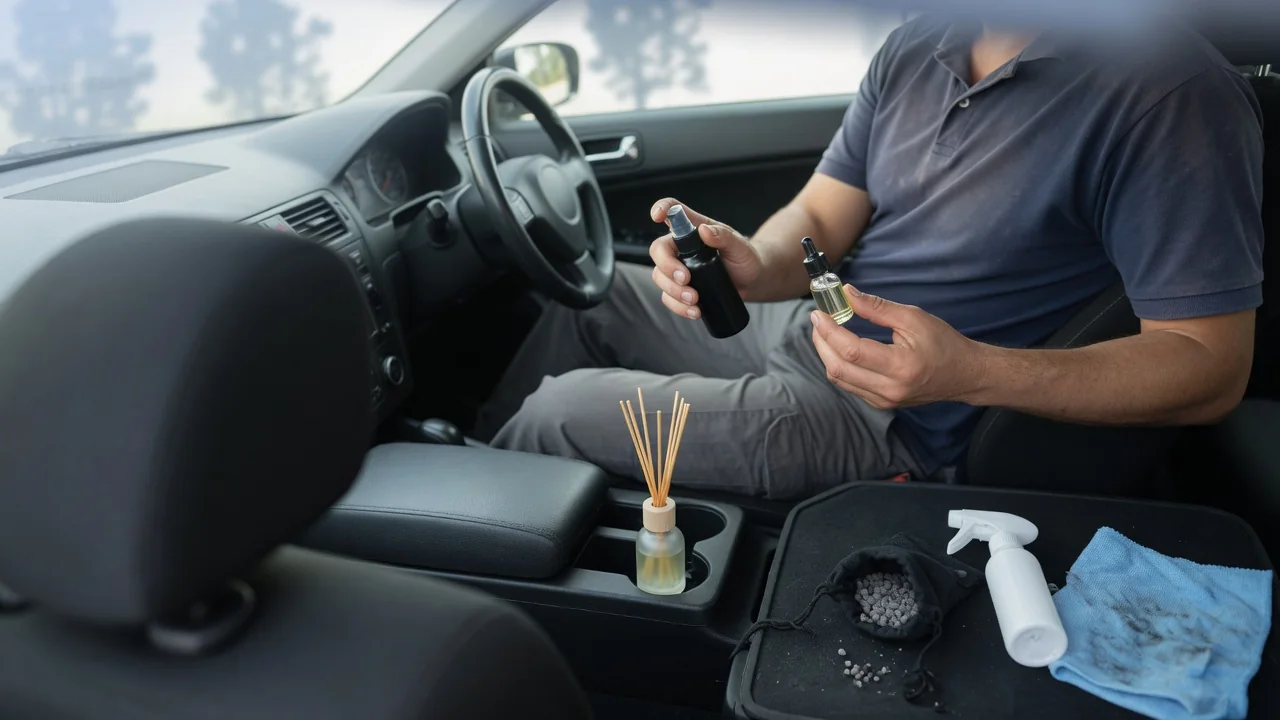
A fragrance and an odor neutralizer can smell similar when sprayed, but they work in different ways. A fragrance adds pleasant scent molecules to the cabin air so unwanted smells become harder to notice. A neutralizer is designed to change, trap, or capture the odor molecules themselves so fewer of them reach your nose. Knowing that difference, and where both approaches fall short, helps you choose a treatment that fits the smell in your car.
Source removal
Most lasting car odors come from a physical source, not from the air itself. Spilled milk or food soaked into carpet, pet urine in seat foam, tobacco smoke residue on the headliner and glass, mildew in damp floor padding, and microbial growth on a wet HVAC evaporator all keep releasing odor compounds over time. As long as that material remains, it keeps feeding the smell, no matter what is sprayed into the cabin. Neither a neutralizer nor a fragrance removes the residue that generates the odor. A fragrance sits on top of the problem. A neutralizer works only on the odor molecules it reaches. Both work best after the source has been found and dealt with.
Source removal usually means physical cleaning. That includes vacuuming loose debris, extracting carpets and upholstery with a suitable cleaner and water, wiping hard surfaces that hold smoke film, and drying soaked materials thoroughly. Moisture needs special attention, because damp padding and a wet cabin can support mold and bacteria that bring the smell back after any treatment fades. In many vehicles, common contributors include water leaks from door seals or sunroof drains, a blocked HVAC drain, and a clogged or old cabin air filter. The exact layout and service steps vary by model, so check the owner's manual or service information for the specific vehicle to confirm the filter location and replacement guidance.
Chemical treatment
A fragrance product is built around volatile aromatic compounds, natural or synthetic, that evaporate into the cabin air. Its job is to change what you perceive, not to remove anything. When a strong pleasant scent is present, you notice it more readily, and the unwanted odor fades into the background or blends into the overall impression. The odor-causing molecules are still there. Once the fragrance evaporates or the nose adapts to it, the original smell often comes back. A fragrance layered over a strong odor can also create a combined smell that is less pleasant than either one alone.
In car care, an odor neutralizer is a product that aims to reduce the odor molecules themselves, and products use different mechanisms to do it. Encapsulating agents such as cyclodextrins have a ring-shaped structure that can trap certain odor molecules and make them less volatile. Zinc ricinoleate, used in some formulas, binds compounds such as sulfur-containing thiols and some amines. Adsorbents such as activated charcoal hold odor molecules on a large internal surface area. Acid-base chemistry helps with specific odors. Mildly acidic cleaners counter alkaline amine and ammonia odors, and alkaline cleaners can help with acidic odors such as those from spoiled dairy or sweat.
Other treatments are more aggressive. Enzyme-based cleaners use biological catalysts to break down organic matter such as proteins, fats, and urine components, so they are partly a cleaner and partly a neutralizer. Oxidizing treatments, including chlorine dioxide products and ozone generators, chemically alter many odor compounds and can reach into fabrics and vents. Many retail products combine a neutralizing ingredient with a fragrance, so a scent on application does not by itself show that any neutralizing is happening. The label and product description are the best way to tell which approach a product uses.
Limits
A neutralizer acts only on odor molecules it actually contacts, and only on the types of compounds its chemistry targets. A spray that mists the cabin air may not reach odor deep inside seat foam, carpet padding, or the HVAC case. Odors from different sources also differ chemically, so a product aimed at smoke or amines will not necessarily handle mildew, fuel, or coolant smells. If the source keeps producing new odor compounds, the neutralizer is gradually overwhelmed and the smell returns. Fragrances have their own limit. They fade as they evaporate and never reduce the underlying molecules, so you end up masking the same odor again and again.
Chemical treatments also have material and health limits. Ozone is a respiratory irritant, so ozone treatment is done in an unoccupied vehicle with thorough airing afterward. Prolonged or heavy exposure can also degrade rubber, some plastics, and certain fabrics. Chlorine dioxide and other oxidizers likewise require following the label directions on concentration, exposure time, and ventilation. Strong fragrances can bother people who are sensitive to scents, and residue from some sprays or hanging fresheners may mark interior surfaces. Testing a product on a hidden area first reduces the risk of staining or discoloration, but it does not guarantee the product is safe for every interior material.
Some odors are warnings rather than cosmetic problems. A sweet smell can point to a coolant leak, a raw fuel smell to a fuel system issue, and a burning or electrical smell to an overheating component. Don't cover these with a fragrance or a neutralizer. They call for an inspection of the vehicle.
Practical implications and limits
In practice, the difference between the two products decides when each is useful. A fragrance makes sense when the cabin is already clean and you simply want a preferred scent, or as a short-term cover while a real fix is arranged. A neutralizer fits better when a lingering smell remains after cleaning, such as residual smoke in fabrics or a faint odor after a spill was extracted. A sensible order is to find the source, clean and dry it, apply a neutralizer matched to the odor type, and only then add fragrance if you want it. Applying fragrance first makes it harder to judge whether the underlying odor is actually gone.
How an odor behaves after treatment also tells you something. If a smell returns within days, especially after rain or when the HVAC system is switched on, a source is probably still active. It could be trapped moisture, a missed spill, or contamination in the air distribution system. Repeating the same product at that point is unlikely to change the result. Shift attention back to inspection, drying, filter replacement, or professional interior or HVAC cleaning, which address the cause. Neutralizers and fragrances work as finishing steps, not as solutions on their own.