How Does an EV Heat Pump Share Heat With the Battery?
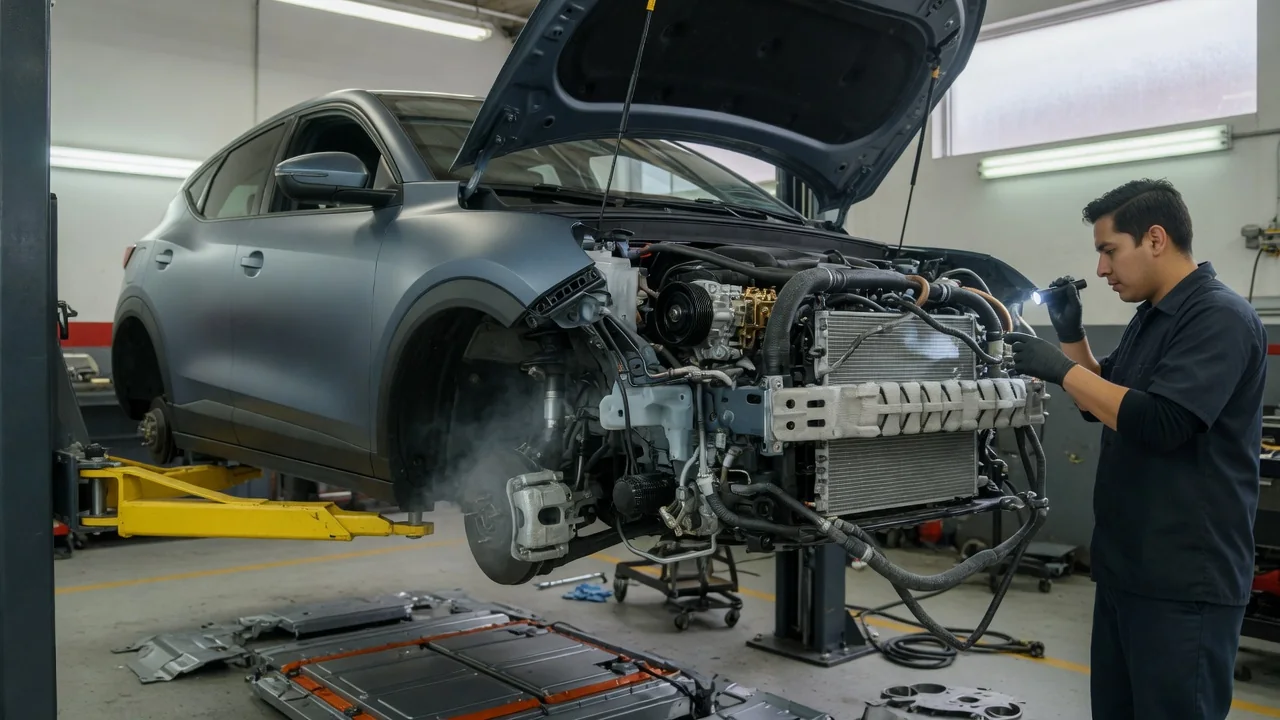
An EV heat pump does not create heat so much as move it. Using refrigerant, a compressor and a set of heat exchangers, it can pull heat from one place and deliver it to another, and in many electric vehicles the battery is one of those places. Understanding how the heat pump and the EV heat pump battery loop exchange energy explains why cold-weather charging, cabin warm-up and winter range behave the way they do.
Heat Sources: Where the Warmth Comes From
The most familiar source is outside air. In heating mode, refrigerant passes through an exterior heat exchanger at a pressure low enough that it boils below the ambient temperature, so it absorbs heat even when the air feels cold. The compressor then raises the refrigerant's pressure and temperature, and that heat is released through a condenser, either directly into cabin air or into a liquid coolant circuit. Ambient air becomes a weaker source as temperatures fall, and the exterior coil can collect frost that must be cleared periodically.
The second major source is waste heat from the vehicle's own hardware. The drive motor, inverter, onboard charger and DC-DC converter all lose some energy as heat, and in vehicles with an integrated thermal system that heat is carried away by coolant. Instead of rejecting it through a front radiator, the system can route that warm coolant through a chiller, a refrigerant-to-coolant heat exchanger, where the heat pump picks it up. Because this coolant is usually warmer than winter air, it is often an easier source to draw from. Some designs can also operate the motor in a deliberately less efficient way while parked or charging to generate extra heat, though whether a particular vehicle does this depends on its engineering.
The battery itself plays both roles. It produces heat during fast charging and hard driving, and that heat can be harvested for the cabin. At other times it is the destination, needing warmth before it can charge quickly or deliver full power. When none of these sources is sufficient, many vehicles include a supplemental heater, typically a resistive element in the coolant or air path, and the compressor's own electrical input also ends up as heat in the refrigerant.
Valve Routing: How Heat Reaches the Battery
Heat moves between the heat pump and the battery through two connected circuits. The refrigerant circuit contains the compressor, expansion valves and heat exchangers, while the coolant circuit runs through cold plates or channels in contact with the battery modules. The two circuits meet at heat exchangers such as the chiller and, in many layouts, a water-cooled condenser. Electronically controlled expansion valves decide where refrigerant flows and at what pressure, and multi-port coolant valves decide which components share a coolant path. By changing these valve positions, the thermal management controller can reconfigure the same hardware for very different jobs without separate systems for each one.
To warm the battery, hot refrigerant from the compressor gives up its heat in a refrigerant-to-coolant condenser, and the valves direct that warmed coolant through the battery pack. To cool the battery, the flow works the other way in effect: refrigerant expands into the chiller, boils at low temperature and absorbs heat from the battery coolant. In a heat-scavenging mode, coolant from the battery or drivetrain loop flows through the chiller so its heat can be lifted and sent to the cabin. Valves can also connect the drivetrain and battery loops in series so motor heat warms the pack directly, or separate them in parallel so each loop holds its own temperature.
The controller chooses among these modes using temperature sensors in the battery, coolant, refrigerant lines, cabin and outside air, along with requests such as navigation to a fast charger or a scheduled departure. Exact mode names, valve counts and switching logic differ between manufacturers, so the routing described here represents common principles rather than any one vehicle's design.
Efficiency: Why Sharing Heat Saves Energy
The efficiency of a heat pump is usually expressed as its coefficient of performance, the ratio of heat delivered to electrical energy consumed. A resistive heater has a coefficient of one by definition, because each unit of electricity becomes one unit of heat. A heat pump can exceed that because most of the heat it delivers is moved from a source rather than converted from electricity. How far it exceeds one depends on operating conditions, so it is not a fixed number for any system.
The key variable is temperature lift, the difference between the source the heat pump draws from and the temperature it must deliver. The smaller that gap, the less work the compressor has to do. This is where sharing heat with the battery and drivetrain pays off: coolant warmed by the motor, inverter or a working battery is a warmer source than frigid outside air, so drawing from it reduces lift and improves efficiency. Recovering heat that would otherwise be rejected through the radiator also means less electricity is spent producing new heat.
Sharing heat is not free. Coolant pumps and the compressor consume power, heat leaks from lines and components, and switching valves between modes takes time to stabilize. Available heat is also finite: warmth taken from the battery for the cabin is no longer available to keep the pack in its preferred range, so the controller must prioritize. In very low temperatures the heat pump's capacity and efficiency fall, and supplemental resistive heating may carry a larger share of the load.
Practical Implications and Limits for Owners
For everyday use, the most noticeable effect is preconditioning. Warming the battery while the car is still plugged in lets the heat pump or supplemental heater draw grid power rather than stored energy, and a warm battery typically accepts charge faster and delivers power more freely. Some vehicles also warm the battery automatically when a fast charger is set as a navigation destination. Using scheduled departure or charging features, where available, gives the system time to bring both cabin and battery up to temperature before driving.
Owners should also expect some sounds and behaviors that are normal for an integrated system: compressor operation while parked or charging, clicking as valves change position, and fans running after the car is switched off. Winter range will still be lower than in mild weather even with a heat pump, because a cold battery and denser air both affect consumption. Not every electric vehicle has a heat pump, and not every heat pump is connected to the battery loop, so the owner's manual is the reliable source for what a specific car does.
Because these systems combine high-voltage components, pressurized refrigerant and specialized coolant, servicing them requires correct procedures and equipment. A warning light, persistent loss of cabin heat or unusually slow charging in cold weather can point to a thermal system fault, and diagnosis normally relies on the manufacturer's service information rather than generic repair steps.