How Does an Alternator Regulate Voltage?
Anyone asking how does an alternator regulate voltage is really asking how a machine that spins at constantly changing speeds can feed a steady electrical system. The answer lies in controlling the magnetic field inside the alternator rather than the engine speed itself. Understanding that relationship makes charging behavior, dashboard warnings, and test results much easier to interpret.
Generation
An alternator makes electricity by spinning a magnetized rotor inside a set of stationary copper windings called the stator. The drive belt turns the rotor, and its moving magnetic field induces alternating current in the stator. A rectifier assembly built from diodes then converts that alternating current into the direct current the battery and vehicle circuits need. Without any control, output would climb as engine speed rises, so a unit that charges adequately at idle would badly overcharge on the highway.
The key detail is that the rotor is an electromagnet rather than a permanent magnet. A small current, usually called field or excitation current, flows through the rotor winding by way of brushes and slip rings. Stronger field current produces a stronger magnetic field and more output; weaker field current produces less. That gives the system a convenient control point, because adjusting a few amps in the rotor governs many more amps leaving the stator. Designs differ by manufacturer, and some brushless or hybrid layouts work differently.
Regulator action
The voltage regulator monitors system voltage and compares it with a target. When voltage sags because the headlights, rear defroster, and blower motor switch on together, the regulator increases field current so the alternator produces more. When loads drop or engine speed rises, it reduces field current. Modern regulators do this electronically by switching the field circuit on and off very rapidly and varying the proportion of on-time, which behaves like a smoothly adjustable field strength without wasting much energy as heat.
Where the regulator lives depends on the vehicle. Many alternators carry a compact internal regulator attached to the rear housing, while older designs used a separate external unit. Many newer vehicles let the engine computer set the charging target, often using a battery sensor and temperature information, and communicating with the alternator over a dedicated signal wire or data line. These systems may deliberately lower output during acceleration or raise it during deceleration to save fuel, so charging voltage that moves around is not automatically a fault.
Testing context
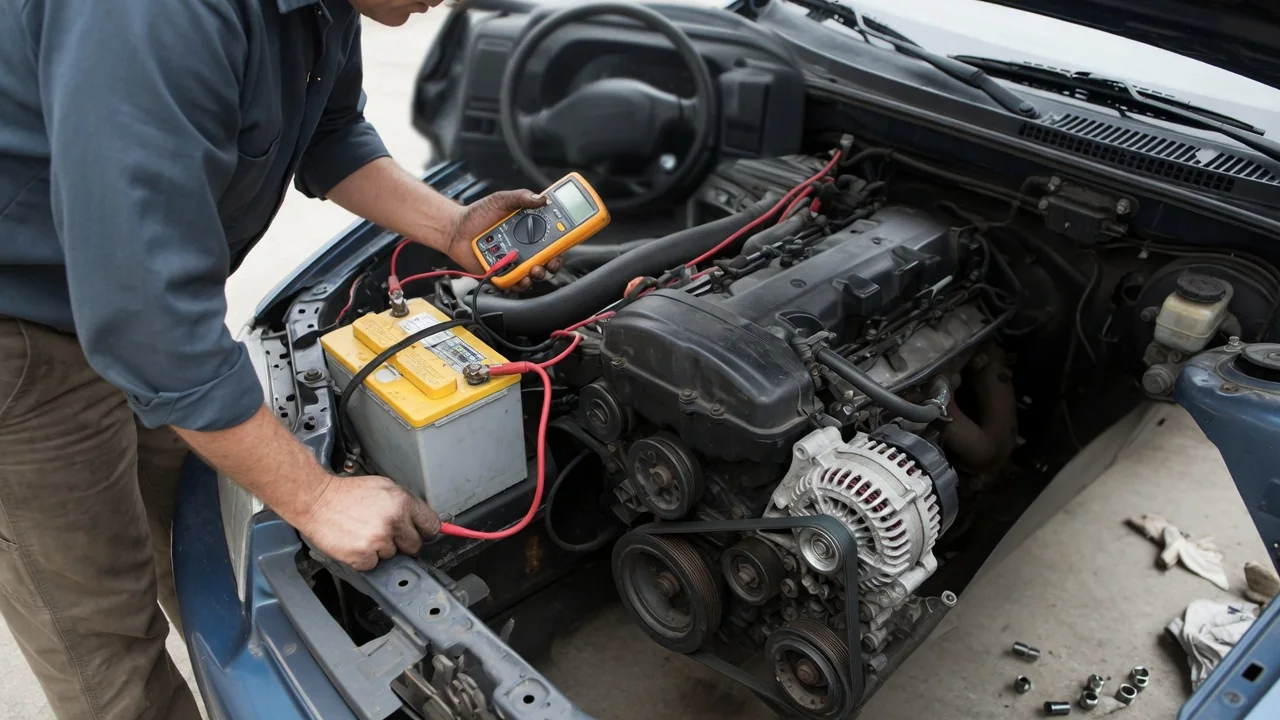
A multimeter across the battery terminals gives the simplest view of regulation. With the engine off, a healthy rested battery in a twelve-volt system typically reads in the mid-twelve-volt range. With the engine running, the reading usually rises noticeably, often to somewhere around the high thirteens or low fourteens, though the correct target depends on the vehicle, temperature, and charging strategy. Watching how the number responds when accessories are switched on shows whether the regulator is compensating for added demand or letting voltage fall away.
Context matters when interpreting those readings. Low voltage can come from a slipping belt, corroded terminals, a poor ground, a damaged wire, or a weak battery rather than the alternator itself. High or erratic voltage may point toward regulation trouble, but a faulty sensing circuit can produce the same result. Charging-related fault codes are evidence to weigh, not proof that a component has failed, and manufacturer-specific codes need vehicle-specific service information before conclusions are drawn. Professional testers can also check output under load and diode ripple.
Everyday Use and Observations
In daily driving, good regulation is mostly invisible. Headlights stay at a consistent brightness whether the engine is idling at a stoplight or cruising, and the battery remains ready for the next start. A brief flicker when a heavy load such as the cooling fan or power steering assist engages is common, because the regulator takes a moment to respond. On vehicles with a voltmeter or an information display, drivers may see the reading shift slightly as loads and driving conditions change.
Signs of trouble tend to follow a pattern. Lights that dim steadily at idle and brighten with revs suggest output is not keeping pace with demand. Lamps that grow unusually bright, bulbs that fail often, or a battery that smells or needs frequent attention can indicate overcharging. A battery or charging warning light, slow cranking after short trips, or electronics behaving oddly are also worth noting. Cold weather, many short journeys, and heavy accessory use all raise demand and can expose a marginal system.
Limits and Next Steps
Regulation has limits. The regulator can only command as much output as the alternator is able to deliver at a given speed, so at low idle with every accessory running, demand may temporarily exceed supply and the battery makes up the difference. Large aftermarket audio systems, auxiliary lighting, or winches can push a stock system past its capacity. Heat also reduces output, and a worn belt, tired brushes, or failing diodes shrink the margin further even when the regulator itself is working correctly.
When symptoms appear, start with safe observations: note when the problem occurs, check that battery terminals look clean and tight, and record voltage readings with the engine off and running. Avoid disconnecting the battery while the engine runs, since the resulting voltage spike can damage electronics. Because computer-controlled charging varies widely, confirming the expected behavior for the specific vehicle prevents replacing good parts. If readings stay abnormal or a warning light persists, a shop with proper charging system test equipment is the sensible next step.