How Does an Alternator Recharge a Battery After Starting?
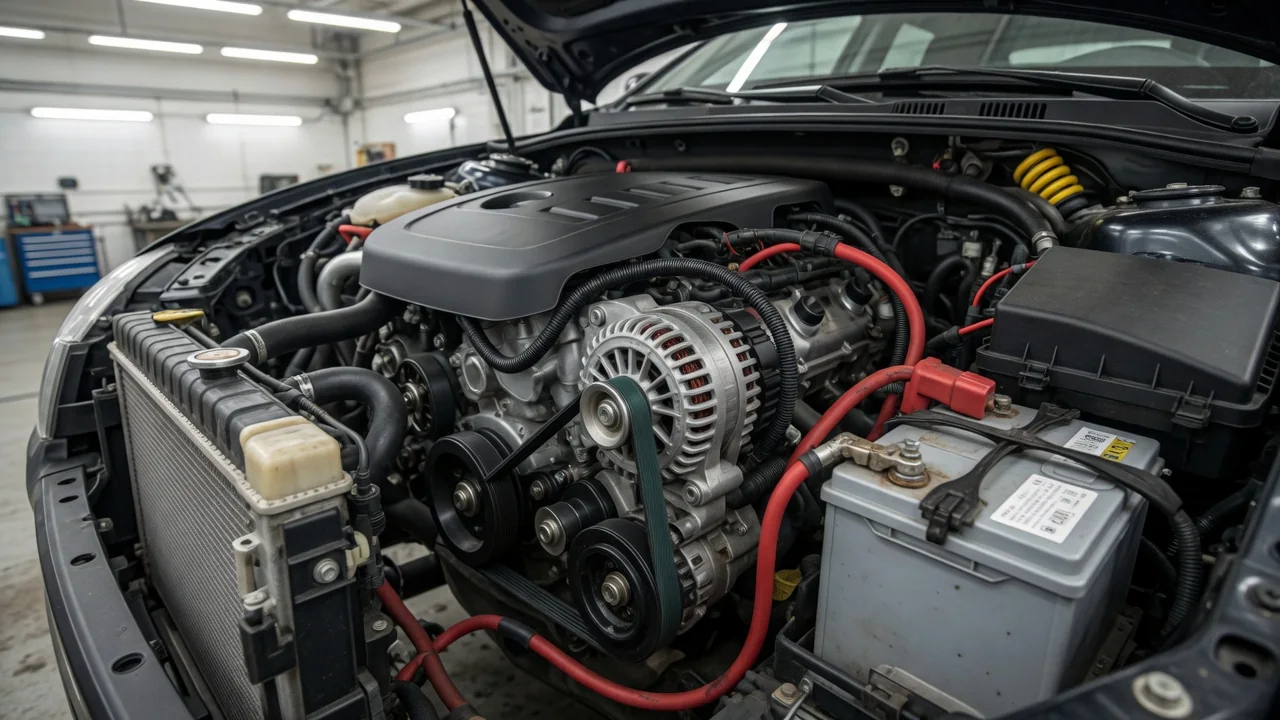
Every engine start pulls a burst of energy from the battery. The alternator's job is to put that energy back while also powering the car's electrical systems. How an alternator recharges a battery after starting comes down to three things: how much energy the start actually used, how the charging system decides what voltage and current to deliver, and why recovery takes longer than many drivers expect.
Starting Energy: What a Start Takes From the Battery
A starter motor is one of the heaviest electrical loads in a vehicle. While it turns the engine, it can draw a very high current, often in the hundreds of amps on a conventional gasoline engine. Larger engines and diesels, which need more torque to crank, can draw more. That current flows only briefly, usually a few seconds on a healthy engine in good conditions. As a result, the total energy removed is relatively small compared with the battery's full capacity. For recharging, what matters is not the peak current but the amount of charge taken out, which depends on both current and duration. A quick start removes a modest amount. Long cranking, repeated attempts, or a cold, stiff engine remove much more.
Starting is not the only drain to consider. Before the engine turns over, the battery may already have powered control modules, alarms, door locks, interior lights, and a fuel pump priming the system. Many vehicles also draw a small parasitic current while parked. Temperature matters as well. A cold battery delivers its energy less efficiently, and a cold engine resists cranking, so winter starts tend to cost more charge. Before the battery returns to its previous state of charge, the alternator has to replace whatever was used during cranking plus anything lost while the car sat.
Charge Control: How the Alternator Decides What to Deliver
Once the engine runs, the accessory belt spins the alternator's rotor. A small current through the rotor's field winding creates a magnetic field. As the rotor turns inside the stator windings, it induces alternating current. A rectifier, typically a set of diodes, converts that output into the direct current that the battery and vehicle electronics use. Output depends on how fast the rotor spins and how strongly the field winding is energized. That is why the regulator, not engine speed alone, is the key to controlled charging.
The voltage regulator adjusts field current to hold system voltage within a target range. Current flows into the battery whenever the alternator's output voltage is above the battery's own voltage. Right after a start, the battery is slightly discharged, so its voltage is lower and it accepts current readily. The alternator may run at a high share of its capacity at first. As the battery recovers, its voltage rises toward the regulator's target, the difference shrinks, and charging current tapers off naturally. On many conventional systems the regulated voltage sits a little above 14 volts, but the exact figure varies with design, temperature, and operating conditions.
Many modern vehicles add another layer of control. Instead of using a fixed setpoint, an engine or body control module may command the alternator based on battery temperature, estimated state of charge, electrical load, and driving conditions. Some systems use a current sensor on the battery cable to track how much charge goes in and out. These strategies can lower charging voltage to save fuel when the battery is judged full. They can also raise it after a demanding start, or charge more aggressively during deceleration. The logic differs between manufacturers and models, so the owner's manual or service information is the reliable reference for how a specific system behaves.
Time: Why Recharging Takes Longer Than the Start
A few seconds of cranking uses little energy, yet fully restoring it can take considerably longer. One reason is that the alternator does not serve only the battery. It first supplies the ignition, fuel injection, control modules, lights, blower fan, heated seats, infotainment, and any other active loads. Only the surplus current goes into the battery. At idle the alternator spins more slowly and produces less output, so with many loads running the surplus can be small. At cruising engine speeds, output is higher and more current is available for battery recharge.
The battery's own chemistry also sets the pace. A lead-acid battery accepts charge quickly when partially discharged, but acceptance slows as it approaches full charge. The final portion of recovery happens at low current, so it stretches out. A short drive may restore much of what a start used, but bringing the battery all the way back to full can take longer driving. This is especially true in cold weather, when the chemical reactions slow down. There is no single universal recovery time. It depends on how much charge was removed, the battery's condition and temperature, alternator output, electrical load, and the vehicle's charging strategy.
Practical Implications and Limits
For drivers who make many short trips, the gap between energy used and energy returned can add up. If each start draws more than the following drive restores, the battery's average state of charge drifts downward over days or weeks. A battery that spends long periods partly discharged is more prone to sulfation and loss of capacity, which makes the next start harder. Combining errands into longer drives helps reduce that drift. So does limiting heavy accessory use on very short trips and using a suitable battery maintainer on a vehicle that sits.
It also helps to recognize what an alternator is not designed to do. It is built to maintain a healthy battery and replace routine starting losses, not to rescue a deeply discharged one. Recharging a flat battery by driving alone puts sustained high demand on the alternator and may still leave the battery undercharged. A proper external charger is the better tool for that recovery. Likewise, an aging battery with reduced capacity or internal damage will not hold charge well, no matter how well the alternator works.
Warning signs do not identify the cause on their own. These include slow cranking, a battery warning light, lights that dim at idle, or a battery that repeatedly needs a jump. Any of them can point to a worn battery, a slipping belt, corroded connections, a failing regulator or alternator, or an unusual parasitic drain. Testing the battery and charging system according to the vehicle's service procedure separates these possibilities. On vehicles with smart charging, voltage readings that look low or vary while driving may be normal. Interpreting them correctly requires knowing how that particular system is meant to operate.