How Does Active Noise Cancellation Use Car Speakers?
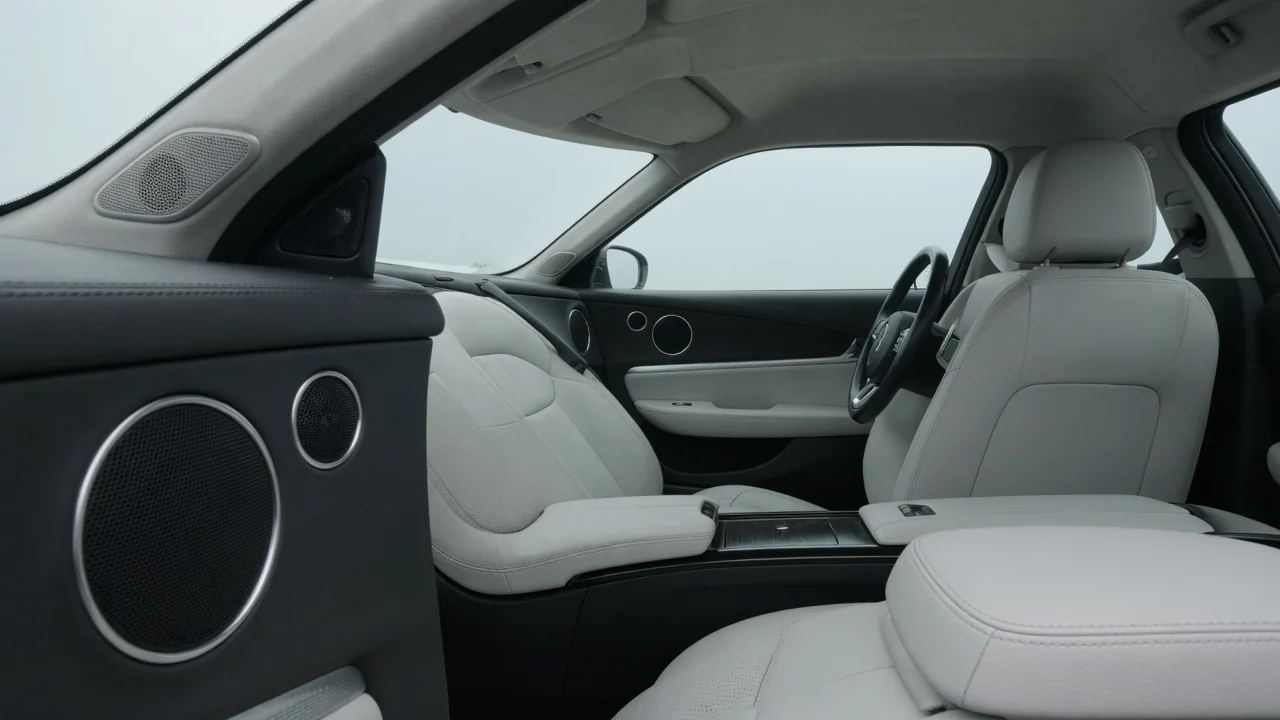
Active noise cancellation in a car does not need special hardware hidden in the doors. Most systems use the speakers you already have for music, plus a few microphones and fast signal processing. The goal is to reduce low, droning sounds such as engine boom and road rumble. This article explains how car audio noise cancellation listens to the cabin, creates an opposing sound wave, and where its physical and practical limits are.
Microphone input: how the system listens to the cabin
The process starts with measurement. Vehicles with active noise cancellation typically have small microphones in the cabin, often in the headliner or near the seats, where they can sample the sound reaching occupants' ears. These are commonly called error microphones because they report how much unwanted noise remains after the system has acted. Their signal is feedback. It tells the controller whether its correction is working, getting worse, or needs adjusting as driving conditions change.
Microphones are usually not the only input. For engine noise, many systems use a reference signal tied to engine speed. The main drone from an engine follows its rotation and firing pattern in a predictable way, so knowing the engine speed lets the controller anticipate which frequencies will be loud before the microphones register them. Systems aimed at road noise may also use vibration sensors, such as accelerometers on the suspension or body, to detect disturbances as they enter the structure. The predictive reference gives the processor early warning, and the error microphones confirm the result.
Inverse sound: creating anti-noise through the speakers
Sound is a pressure wave that alternates between compression and rarefaction. Suppose a second wave with the same frequency and a similar amplitude arrives at the same point exactly out of step. Its peaks line up with the original wave's troughs, and the two largely cancel. This is called destructive interference, and it is the core idea behind active noise cancellation. The system's job is to generate that opposing wave, often called anti-noise or inverse sound, and play it so it meets the unwanted noise near the listeners' heads.
A digital signal processor calculates the anti-noise in real time. Depending on the vehicle, it may sit inside the head unit, the amplifier, or a separate module. Most designs use adaptive filtering, meaning the processor continually adjusts the amplitude and phase of the signal it sends. It uses the error microphones to judge whether the remaining noise is going up or down. Sound also changes on its way from a speaker to a microphone, so the controller needs a model of that acoustic path, usually established during vehicle development. Without that model, the correction could arrive with the wrong timing and add noise instead of removing it.
The anti-noise is mixed into the normal audio signal and played through the car's existing speakers. The targeted noise is low in frequency, so the door woofers and any subwoofer usually do most of the cancellation work, while the tweeters contribute little. The mixing happens whether music is playing or not, so the system can work with the radio muted. Occupants hear nothing obvious from the speakers. The cabin simply sounds quieter and feels less pressurized.
Limits: what car speakers can and cannot cancel
Active cancellation works best on low-frequency sound, the deep hum and boom range, and the reason is physical. Low-frequency waves are long, often longer than the cabin itself, so the pressure pattern changes slowly from place to place. One correction can then cover a reasonably large area around each seat. As frequency rises, wavelengths get shorter, and the area where the anti-noise stays properly out of phase with the noise shrinks. A small head movement could turn cancellation into reinforcement. For that reason, systems limit their action to the frequencies where they can help consistently.
That leaves a lot of noise outside the system's reach. Wind rush around mirrors and door seals, tire hiss, and other higher-frequency sounds are mostly handled by passive measures, such as insulation, acoustic glass, seals and sound-absorbing materials. Sudden, unpredictable impacts, like a sharp pothole strike, are also harder to cancel than steady drones because the controller has less time to anticipate and adapt. Active noise cancellation adds to sound deadening; it does not replace it.
The speakers set limits too. A speaker has to move enough air at low frequencies to match the noise it is countering, and it has to do that cleanly while also playing music. Processing delay matters as well, because the anti-noise must be produced and played quickly enough to stay in phase. Each system is tuned for the specific cabin, speaker layout and microphone positions it was designed around. That is why the effect is engineered for each vehicle rather than added as a universal feature.
Practical implications and limits for drivers
For owners, the key point is that the audio system and the noise control are linked. Replacing factory speakers, amplifiers or the head unit can change the acoustic path the controller was tuned for. It can also remove the processing that generates the anti-noise in the first place. Depending on the vehicle's design, the result may range from slightly weaker cancellation to noticeable droning at certain engine speeds. Before upgrading a factory system, check the service information or owner's manual for your model to see whether it has noise cancellation and how it is integrated.
Faults often show up as sound rather than as warning lights. A failed or blocked cabin microphone, a disconnected speaker, or an incorrect configuration after a repair may cause a low hum, a pulsing boom, or cabin noise that seems louder than before. Some vehicles may also need the module recalibrated or reconfigured after parts are replaced. Avoid covering headliner microphones with accessories or damaging them during interior work. Diagnosis and settings vary by manufacturer, so the repair procedures for your specific model are the right reference.
Keep expectations realistic. A car with active noise cancellation will not feel like wearing noise-cancelling headphones, because the cabin is open, occupants move, and several seats share the same speakers. The benefit is usually less fatigue on long drives and a calmer low-frequency background, not silence. Some manufacturers use related technology to add or shape engine sound through the speakers. That is a separate function, even though it can rely on similar hardware.