How Does a Tire Pressure Monitoring Sensor Send Data?
A direct tire pressure monitoring sensor sits inside each wheel, measures the air pressure, and broadcasts that reading by low-power radio to a receiver in the vehicle. Understanding how a tire pressure monitoring sensor sends data helps explain why readings sometimes lag, why warning lights behave the way they do, and why sensors eventually stop reporting. The details vary by vehicle, but the principles are consistent.
Sensor location
In a direct system, each sensor is mounted inside the tire's air chamber, most often attached to the back of the valve stem, though some designs are strapped to the wheel's drop center with a band. The sealed housing contains a pressure transducer, usually a temperature sensor, a motion detector, a small microcontroller, a radio transmitter, and a coin-style battery. Because the unit lives in the pressurized air itself, it measures the actual condition of the tire rather than estimating it from wheel speed as indirect systems do.
From outside, the clue is often the valve stem: a metal stem secured with a nut frequently indicates a clamp-in sensor, while rubber snap-in stems can also hide one, so appearance alone is not conclusive. The receiving side varies more. Some vehicles use a single central antenna, others place receivers near each wheel well or share the remote keyless entry receiver. That layout affects whether the dashboard can show pressures by wheel position or only a general warning, and the owner's manual is the reliable reference.
Reporting delay
Sensors do not transmit continuously. To conserve energy, the microcontroller wakes at intervals, samples pressure and temperature, and sends a short burst of data containing a unique identification code, the readings, and status information such as battery condition. While the vehicle is parked, many sensors transmit rarely or go dormant; once the motion detector senses wheel rotation, they report more often. This is why a display may show dashes or stale values for the first moments of a drive before fresh numbers appear.
A sudden pressure drop is handled differently. Many sensors are designed to detect a rapid change and transmit immediately rather than waiting for the next scheduled interval, so a puncture is typically flagged faster than a slow seep. The receiving module may also require several consistent messages before turning the warning lamp on or off, which filters out radio dropouts. After adding air, the light may therefore stay lit until the car has been driven for a while; the exact timing depends on the manufacturer's logic.
Battery life
Each sensor carries its own sealed battery, and in most designs it cannot be replaced separately because the electronics are potted in resin to survive heat, moisture, and centrifugal force. Battery life is typically measured in years, but it is consumed by every transmission, so how a vehicle is used matters. Frequent driving means more reporting bursts, while extreme cold temporarily reduces available voltage. Since all four sensors are usually the same age, a weakening battery in one suggests the others may not be far behind.
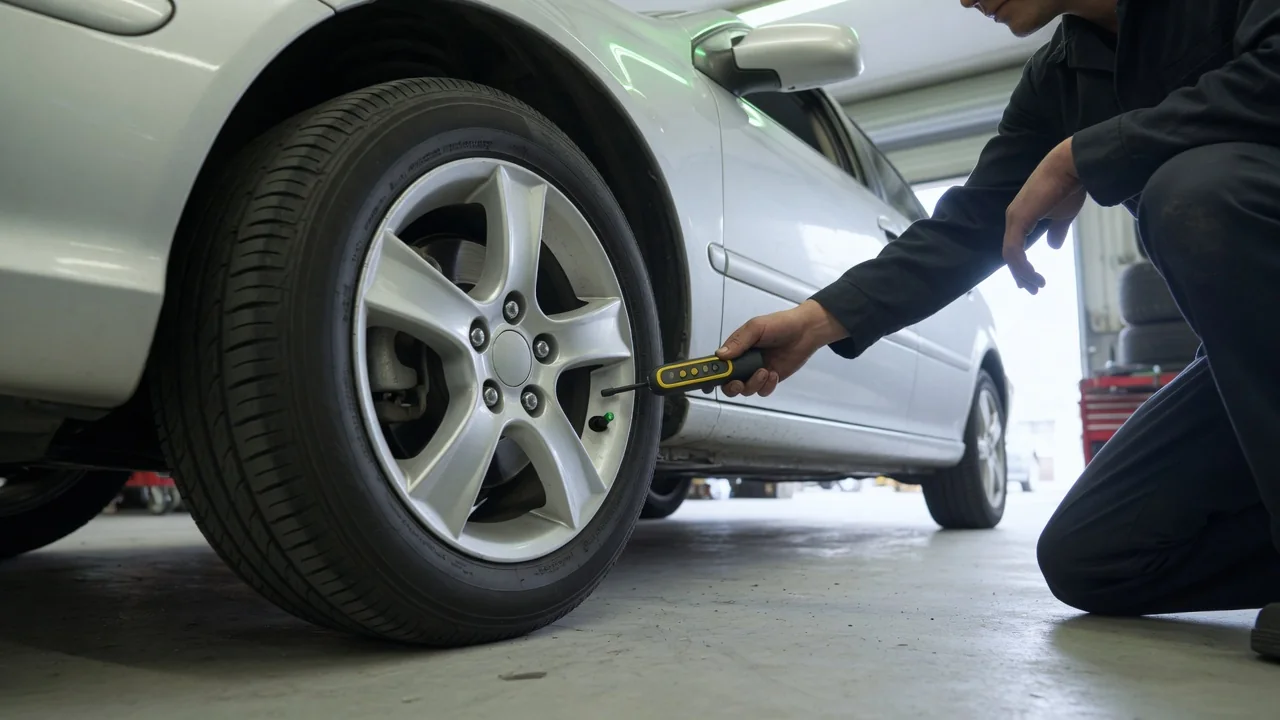
A fading battery tends to show up as intermittent behavior before total silence. A sensor may drop out on cold mornings, a single wheel's reading may vanish from the display, or the system warning lamp may flash at start-up and then stay on, a pattern many vehicles use to signal a system fault rather than low pressure. A scan tool or dedicated trigger tool can often read the sensor's reported battery status, though a stored fault code pointing at one wheel still needs confirmation before any part is replaced.
Everyday Use and Observations
In daily driving, the radio link is invisible, but its effects are easy to notice. Pressures shown on the dashboard rise as the tires warm up and fall overnight, because the sensor reports what the air inside is actually doing. A cold snap can bring a warning on at start-up that clears once the tires warm, which reflects genuine pressure change and not a transmission error. Comparing the displayed values with a quality handheld gauge on cold tires is a simple way to judge whether the readings are plausible.
Wheel position is another observable detail. The sensor only broadcasts its identification code; the vehicle must work out which corner that code belongs to. Some cars relearn positions automatically after a tire rotation, using signal strength or wheel speed comparisons, while others need a relearn procedure or a tool. If positions are not updated, the display may attribute a low reading to the wrong corner. Seasonal wheel sets with different sensors raise the same issue, since the module only listens for identification codes it has stored.
Limits and Next Steps
The system has real limits. Low-power radio signals can be disrupted by electrical interference, aftermarket electronics, or certain window tints and accessories, causing temporary dropouts. Sensors report pressure and often temperature, but they say nothing about tread depth, sidewall damage, or uneven wear, and the warning threshold is generally set some margin below the recommended inflation figure. A tire can therefore be meaningfully underinflated without triggering the lamp, so regular checks with a gauge against the door-jamb placard remain worthwhile.
When a warning appears, the sensible first step is to check all four tires, and the spare if it carries a sensor, with a gauge and correct the pressure. If the lamp persists, flashes, or a reading stays missing after driving, a shop can use a trigger tool to wake each sensor and confirm its signal, identification code, and battery state. Any stored code should be treated as a lead to investigate, since a receiver, wiring, or programming issue can mimic a failed sensor, and replacement sensors must match the vehicle's requirements.