How Does a Surround-View Camera Work?
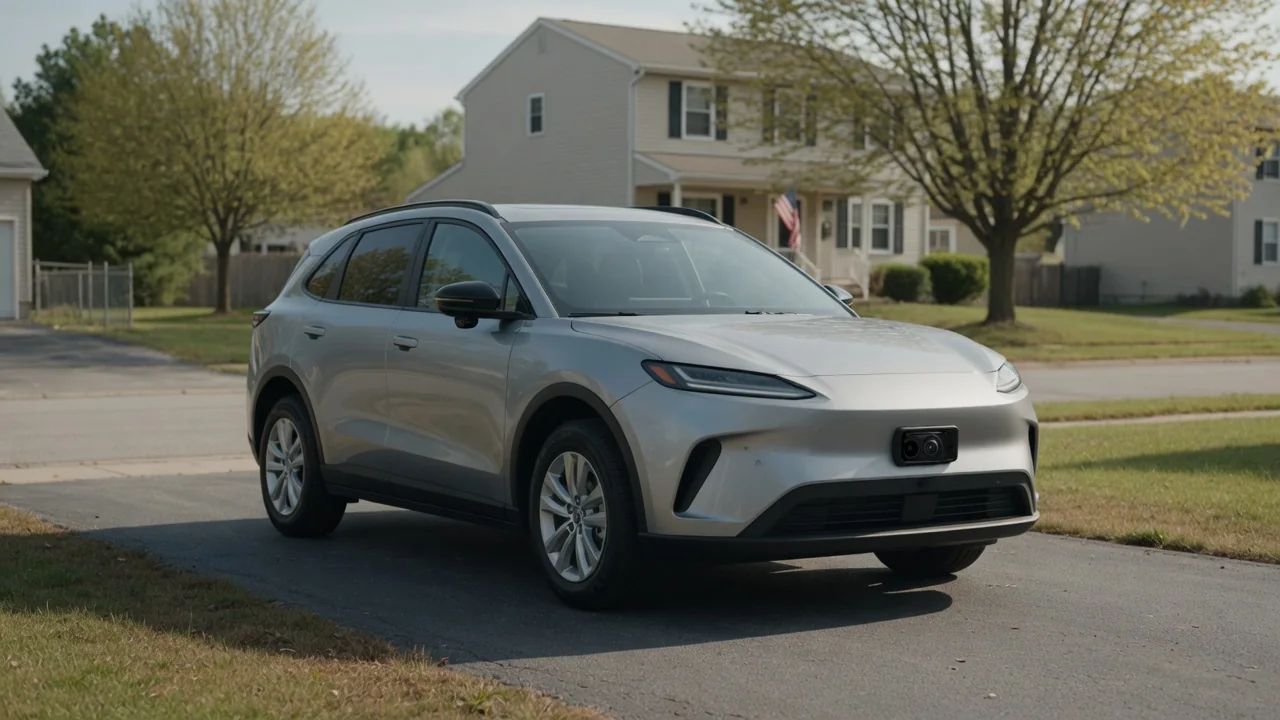
Anyone asking how does a surround view camera work is really asking how a car can show itself from above when no camera hovers overhead. The answer is that several wide-angle cameras around the body each capture part of the ground, and software corrects, aligns and blends those feeds into one composite picture on the dashboard screen.
Camera locations
Most systems rely on four cameras, one facing each direction. The front unit usually sits in or near the grille or badge, the rear one lives above the license plate or in the tailgate handle, and the side cameras are tucked into the undersides of the door mirror housings, pointing down at the pavement. Each uses a fisheye-style lens with a very wide field of view, so neighboring cameras overlap at the corners of the vehicle, which is what gives the software shared ground to join the images.
You can usually find the lenses by looking for small glass domes about the size of a fingertip. Placement varies with body style and manufacturer: a pickup may carry its rear camera in the tailgate, some vehicles hide the front lens behind an emblem, and a few add extra cameras for towing or off-road views. Because the mirror-mounted cameras depend on the mirrors being extended, folding them can change or disable the side view on some vehicles, so the owner's manual is worth checking.
Display image
The overhead image on the screen is a computed view, not a photograph. A control unit first removes the curved fisheye distortion from each feed, then reprojects each picture as though it were seen from directly above, using calibration data that records exactly where each camera sits and how it is angled. The four flattened images are then stitched together along the overlap zones, with brightness and color balanced so the seams are less noticeable.
The car in the middle of the picture is a stored graphic, since no camera can see the vehicle itself. Around it, many systems draw guide lines that bend with the steering wheel to predict the path of the wheels. The screen is often split, with the bird's-eye view on one side and a single front, rear or curbside camera on the other. Available layouts, three-dimensional rotating views and how the view is called up differ considerably between brands and trim levels.
Blind spots and distortion
Stitching assumes that everything in the picture lies flat on the ground. That assumption works well for painted lines and curbs, but anything with height gets stretched. A post, a shopping cart or a person standing nearby can appear to lean away from the car or look smeared outward, because the software is projecting a tall object onto a flat plane. The farther an object rises above the pavement, the more exaggerated this effect becomes.
The seams at the four corners are the weakest areas. A narrow object standing exactly where two camera views meet can look doubled, broken or partly missing as the blend switches from one feed to the other. There are also areas the lenses cannot reach, such as directly beneath the bumpers and under the vehicle itself. Objects hanging above the cameras' line of sight, like a raised loading dock or a low branch, may not appear in the overhead view at all.
Everyday Use and Observations
In daily driving the system typically appears when reverse is selected, and many vehicles also offer a button or menu option to bring it up at low speed while moving forward, then switch it off as speed rises. It is most helpful for centering the car between parking lines, judging the distance to a curb to protect wheels, easing through a narrow garage opening and positioning alongside a wall or another vehicle where mirrors alone leave doubt.
Image quality changes with conditions, and drivers notice it quickly. Road film, salt, rain droplets or snow on a single lens will blur just one quadrant of the composite picture, which is a useful clue as to which camera needs a gentle wipe. Low sun can wash out one side, and at night the view depends on reversing lights and ambient lighting, so the sides often look grainier than the rear. Some vehicles include lens washers, while others leave cleaning entirely to the owner.
Limits and Next Steps
A surround view is an aid to observation rather than a replacement for it. The picture covers only a short distance around the vehicle, has limited ability to show approaching traffic or a fast-moving child, and can misrepresent the size and position of tall objects. Mirrors, a direct look over the shoulder and parking sensors, where fitted, each supply information the stitched image cannot, so the safest habit is to use the screen alongside them and move slowly.
If the image suddenly shows misaligned lines, a visible step at the seams, a black panel or a warning message, the cause may be a dirty lens, a disturbed camera or a calibration that no longer matches the vehicle. Mirror replacement, body repair, windshield or bumper work and suspension changes can all shift a camera's position. Recalibration generally requires specific targets and equipment, and the procedure differs by manufacturer, so a dealer or qualified shop should confirm what the particular vehicle needs.