How Does a Roofline Affect Airflow? Attachment, Rear Shape and Packaging
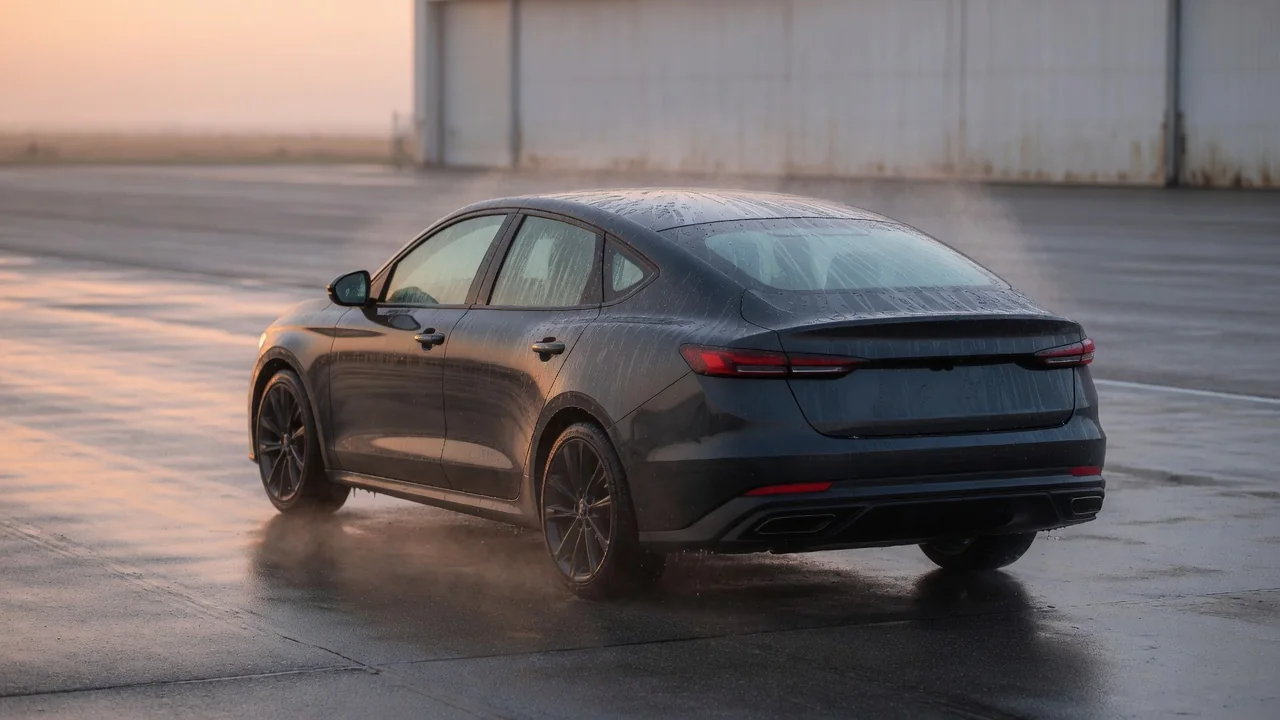
A car's roofline is one of the largest surfaces the oncoming air meets, and its shape strongly influences how that air travels from the windshield to the tail. The aerodynamic effect of a car roofline shows up in drag, lift, wind noise and even how quickly the rear glass gets dirty. Understanding how a roofline affects airflow means looking at three linked ideas: whether the flow stays attached, how the rear of the body releases it, and what compromises interior space forces on designers.
Flow attachment
As a car moves, air divides at the nose, speeds up over the hood and meets the windshield. Right next to the body sits the boundary layer, a thin sheet of air slowed by friction against the paint and glass. The air ahead of the windshield base slows and builds pressure, then turns upward and must bend again at the header, where the glass meets the roof. A tight edge at that point can trigger a small separation bubble, while a well-rounded header and a raked windshield help the flow turn smoothly and stay attached to the roof surface.
Across the roof, the air travels quickly and its pressure drops below that of the surrounding atmosphere. This is why a curved roof behaves somewhat like the upper surface of a wing and generates lift. The critical moment arrives where the roof starts to fall away toward the rear. There the flow has to slow down while pressure rises, a condition engineers call an adverse pressure gradient. The boundary layer, already slowed by friction, may lack the energy to follow a sudden downward curve and lifts off the surface. A gentle, continuous curvature gives it the best chance to stay attached, while rails, seams, antennas and other protrusions can disturb the boundary layer and make separation happen earlier.
Separation is unavoidable, since the air must leave the car somewhere, so the real goal is to control where it happens. A deliberate edge fixes a stable separation line as speed and wind direction change, whereas flow detaching from a smooth curve can wander, causing fluctuating lift, noise and drag.
Rear shape
Once the air leaves the roof, it leaves behind a wake, a zone of turbulent, low-pressure air trailing the vehicle. That low pressure acting on the rear surfaces pulls backward on the car, and for typical passenger vehicles this pressure drag makes up a large share of total aerodynamic drag. In general, a smaller wake with higher pressure on the rear surfaces means less drag, so the way a roofline ends is at least as important as how it begins.
Rear profiles fall into broad families. On a squareback or wagon shape, the roof runs nearly level to an abrupt end, so the flow separates cleanly at the trailing edge. The wake is large but predictable, and its low pressure tends to draw road spray onto the rear glass. A fastback slopes gradually toward the tail; when the slope is shallow, the flow follows it and the wake shrinks. Research on simplified test bodies has shown, however, that drag does not fall steadily as the slope gets steeper. At intermediate angles the flow can stay partly attached while strong swirling vortices form along the rear pillars, and drag can be higher than with either a gentle slope or a blunt end. A notchback, with a separate trunk, often creates a pocket of recirculating air over the rear window before the flow reattaches on the trunk lid.
Designers frequently borrow the Kamm tail principle: let the roof taper for some distance, then cut the body off sharply. Much of the benefit of a long tapered tail is retained without its impractical length. The rear shape also governs lift. A sloping rear can act like the back of an airfoil and reduce load on the rear tires at speed, which is why trunk lips and roof-mounted spoilers are used to raise pressure, fix the separation line and trim rear lift.
Packaging
A roofline is never drawn by airflow alone. It must clear the heads of rear passengers, allow a reasonable door opening, give a usable cargo area and let the driver see out of the back. The long, gentle slope that suits the air tends to cut into rear headroom and hatch height, while a tall, square roof maximizes interior space at the cost of a bigger wake.
Height matters on its own terms. Aerodynamic drag depends on both the drag coefficient, which describes how slippery a shape is, and the frontal area the vehicle presents to the wind. A taller roof raises frontal area, so a tall vehicle with a respectable coefficient can still produce more total drag than a lower one. The roof is also shaped in plan view: tapering the roof and side glass inward toward the rear, sometimes called boat-tailing, helps shrink the wake but reduces rear shoulder room and cargo width.
Other requirements crowd the same space. Sunroofs and panoramic glass panels, integrated roof rails, antennas, driver-assistance sensors and pillars strong enough for rollover protection all influence the final surface. Designers often recover some aerodynamic benefit with subtle details, such as a slightly dished roof center, a sharp trailing edge at the top of the hatch or carefully shaped rear pillars, while keeping a practical interior.
Practical implications and limits
For owners, the most noticeable effects appear when the roofline is altered. Crossbars, cargo boxes and bike carriers interrupt attached flow, add frontal area and create new sources of turbulence. Because aerodynamic drag rises roughly with the square of speed, the extra fuel use and wind noise are most pronounced on the highway and minor around town. Removing roof accessories when they are not needed is a simple way to avoid that penalty, and the owner's manual is the place to check roof load limits and any guidance on mounting racks.
Several everyday observations reflect roofline aerodynamics. Grime collecting on the rear glass of a wagon or SUV traces the wake. A rhythmic throbbing with only a sunroof or one rear window open is an air resonance driven by the flow passing the opening, and it usually eases when another window is cracked. Aftermarket roof spoilers deserve caution, because their effect depends on precise placement and angle relative to the existing separation line; without testing, one may add drag, change nothing measurable or simply serve as styling.
The roofline is one piece of a larger system. Underbody panels, wheel and tire design, mirrors, cooling airflow and ride height all have substantial effects, and crosswinds change the flow pattern from one moment to the next. Two vehicles with similar silhouettes can perform quite differently, so aerodynamic efficiency cannot be judged reliably by eye. The mechanisms described here are general; the actual behavior of a specific car is established through the manufacturer's wind tunnel and simulation work.