How Does a Manual Clutch Connect Engine and Wheels?
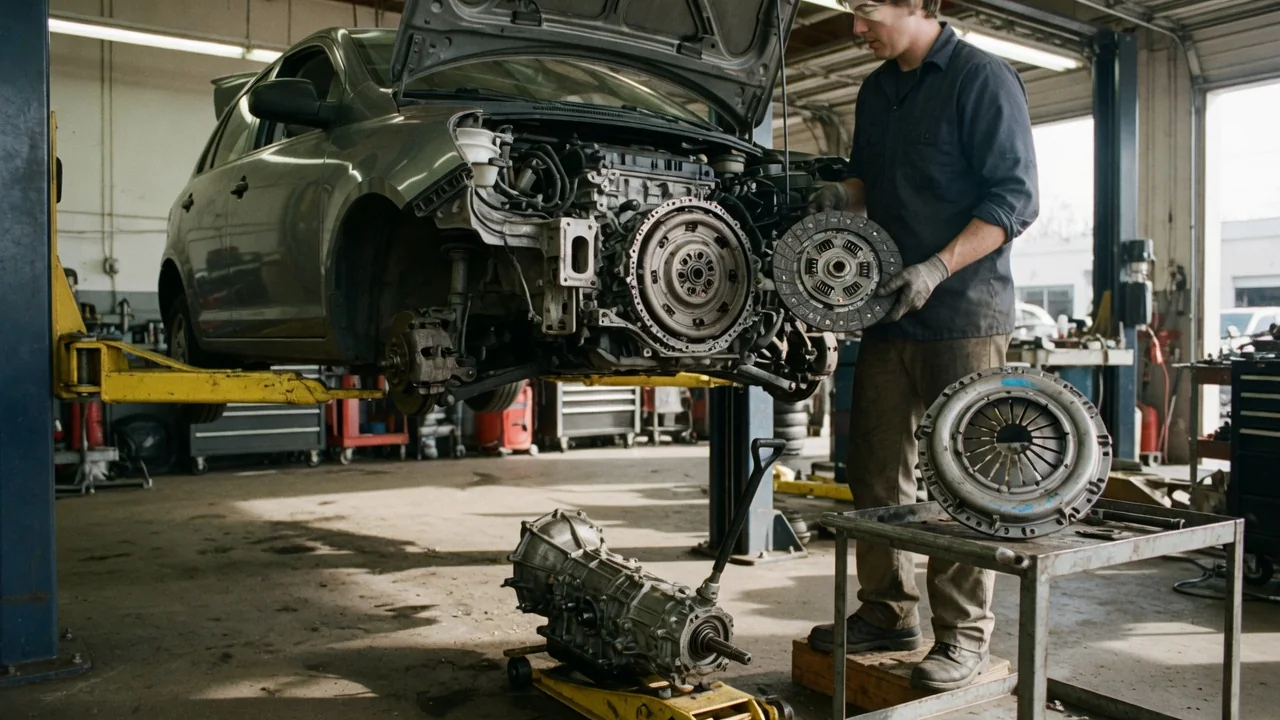
Anyone wondering how does a manual clutch connect engine and wheels can start with one idea: friction under spring pressure. The clutch sits between the engine's flywheel and the transmission, clamping a lined disc so torque can pass through the gearbox to the driven wheels. Pressing the pedal releases that clamp, letting the driver interrupt and restore the connection at will.
Pedal and pressure plate
The flywheel bolts to the engine's crankshaft and spins whenever the engine runs. Bolted to it is the pressure plate assembly, which uses a strong spring, commonly a diaphragm type, to squeeze the clutch disc against the flywheel face. The disc is splined to the transmission input shaft, so when it is clamped tight, the shaft turns at engine speed. From there, the selected gear, the driveshaft or axles, and the differential carry torque to the wheels.
Pushing the pedal moves a release bearing against the spring fingers, lifting the pressure plate away from the disc. With the clamp released, the disc and input shaft can slow or stop while the engine keeps running, which is what allows a gear change or a standstill in gear. Some vehicles use a cable to transmit pedal movement, while others use hydraulic master and slave cylinders, so pedal weight and travel differ noticeably between models, and the owner's manual describes the specific arrangement.
Smooth starts
A smooth start depends on the short span of pedal travel where the disc begins to touch the flywheel, often called the bite point or friction zone. In that span the disc slips deliberately, so a stationary input shaft can be brought up gradually to engine speed instead of being jolted. The driver feels the car begin to creep and hears engine speed dip slightly, which signals that torque is starting to reach the wheels.
Releasing the pedal too quickly forces the engine to match a stopped drivetrain instantly, and it usually stalls or lurches. Holding the pedal in the friction zone too long with high revs produces heat and wears the lining. The practical balance is a modest amount of throttle and a steady, progressive release, finishing with the foot fully off the pedal. Bite point height, engine torque at low speed, and flywheel weight vary by vehicle, so each car needs a brief period of familiarization.
Wear signs
Because the friction lining is consumed a little with each engagement, the disc gradually thins. A common symptom of a worn disc is slipping: engine speed rises under acceleration, especially in a higher gear on a hill, while road speed fails to climb with it. A hot, sharp burning smell after hard use can accompany this. On some designs the bite point moves higher in the pedal travel as wear progresses, although self-adjusting mechanisms can mask that change.
Other symptoms point to different parts of the system rather than the lining. Shudder during takeoff may suggest contamination from oil, uneven surfaces, or worn mounts. A noise that appears or disappears as the pedal is pressed may involve the release bearing. Difficulty selecting gears, or grinding going into reverse, can indicate the clutch is not releasing fully, sometimes because of a hydraulic leak or cable problem. Each of these is a clue to investigate, not confirmation that a particular component has failed.
Everyday Use and Observations
Daily habits influence how long the friction surfaces last. Resting a foot on the pedal while cruising can partially unload the pressure plate, allowing slight slip and loading the release bearing continuously. Holding the car on a slope by balancing the clutch against gravity generates heat that the brakes would handle without wear. At a long red light, selecting neutral and releasing the pedal lets the release mechanism rest, though hill-start assistance and stop-start systems on some vehicles change how this routine feels.
Drivers can also learn a great deal from simple observation. Noting where the pedal begins to bite, how heavy it feels, and whether those characteristics change over months gives an early baseline. On hydraulic systems, the fluid reservoir level is often visible under the hood, and a dropping level deserves attention. Towing, frequent stop-and-go traffic, and steep terrain all increase the work the clutch does, so two identical vehicles can show very different wear depending on how and where they are driven.
Limits and Next Steps
A clutch can transmit only as much torque as its clamping force and friction surfaces allow. Engine modifications that raise output, heavy loads, or aggressive launches can exceed that capacity and cause slip even when the parts are healthy. Heat is the other limit: repeated slipping can glaze the lining or mark the flywheel and pressure plate surfaces, reducing grip afterward. Some vehicles use dual-mass flywheels or other designs with their own characteristics, so general descriptions never replace vehicle-specific information.
When symptoms appear, a sensible next step is to note the conditions: the gear, engine speed, temperature, and whether the pedal feel has changed. That record helps a qualified technician separate a worn disc from a hydraulic fault, an adjustment issue, or a problem in the gearbox itself. Clutch replacement generally involves removing the transmission, which requires proper lifting equipment and manufacturer procedures, so it is not a casual job. Service information for the exact model should guide any inspection, adjustment, or parts decision.