How Does a Keyless Entry Antenna Work?
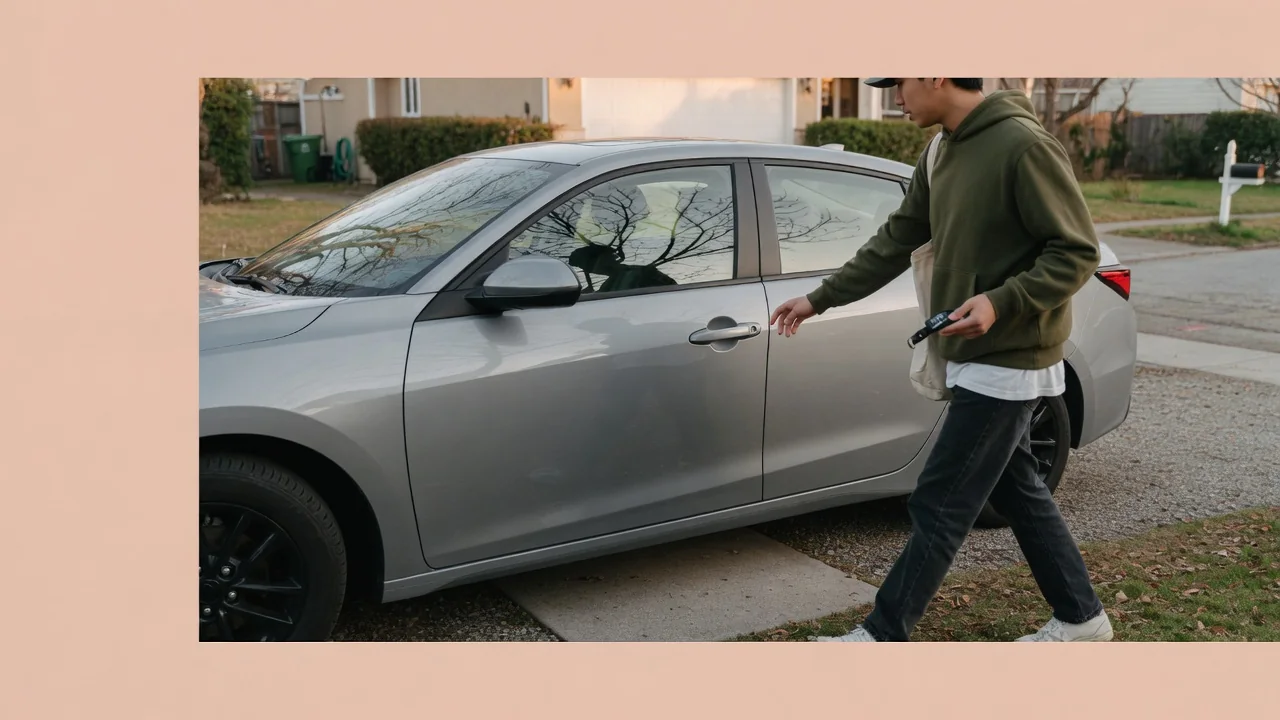
Walking up to a locked car and having it open at a touch can feel like magic, but it comes down to a short radio conversation. If you have wondered how does a keyless entry antenna work, the answer is that the antennas in the vehicle wake the key fob, the fob replies, and the car confirms where the key is.
Key detection
A passive entry vehicle carries several small antennas, commonly placed in the door handles, inside the cabin, and near the trunk or rear bumper. Each one is essentially a coil of wire, often wound around a ferrite core, that produces a low-frequency magnetic field covering only a small area around it. The key fob contains its own tiny receiving coils, usually arranged along three axes so the fob can pick up the field whether it is lying flat in a bag or standing upright in a pocket.
When that field reaches the fob, it wakes the fob's electronics, which measure how strong the signal is and answer on a separate, higher-frequency radio channel. A receiver in the car passes the reply to a control module that checks the key's encrypted identity. Because several antennas are involved, the module can compare readings and judge whether the key is outside the driver's door, inside the cabin, or behind the vehicle. The number and placement of antennas differ between manufacturers and even between trim levels.
Door request
Most systems do not unlock simply because a key is nearby; they wait for a request. That request usually comes from a touch sensor built into the door handle or a small button on its surface. Once a hand is detected, the module sends a coded challenge through the antenna nearest that door. The fob calculates a matching response and transmits it back, and if the answer is valid and the key is located outside that door, the lock actuator is released, all within a fraction of a second.
Drivers can see this exchange in small ways. Pulling the handle very quickly sometimes beats the system, so the door stays locked on the first tug and opens on the second. Locking often works by touching a ridged area or pressing the handle button while walking away. A trunk release request is answered through the rear antenna, and the start button relies on interior antennas to confirm the key is inside the cabin. Which doors unlock on the first touch is often an adjustable setting.
Range limits
The detection zone is small on purpose. A low-frequency magnetic field weakens very steeply with distance, so the fob only wakes when it is within roughly a step or two of the handle or trunk. That keeps the car from unlocking for a stranger while the owner's key sits across a parking lot or on a kitchen counter. Pressing the lock or unlock button on the fob is a different function, using the fob's own transmitter, which is why the remote buttons reach much farther than passive entry does.
Several things can shrink the working distance further. A weak fob battery, a metal case, or a phone or laptop pressed against the key can all muffle the exchange, and strong radio sources nearby can occasionally drown it out. The short range also has a security side, since thieves have used relay equipment to stretch the signal between a car and a distant key. Some manufacturers answer this with fobs that go to sleep when motionless or with precise distance-measuring radio technology, depending on the vehicle.
Everyday Use and Observations
Much of what the antennas do shows up as ordinary convenience. On many vehicles, approaching with the key brings on welcome lighting or unfolds the mirrors, which means the car has already sensed the fob. A dashboard message that the key is not detected means the interior antennas did not hear a valid reply. The same location logic explains why many cars refuse to lock with the fob left on a seat, or chirp when someone walks away with the key while the engine is still running.
The antennas also provide a backup when the fob battery dies. Many vehicles have a designated spot, such as the start button, the steering column, or a pocket in the console, where the fob can be held close. At that distance the antenna's field can power a passive transponder chip inside the fob directly, so the car can still read the key. A hidden mechanical key blade usually handles the door itself. The owner's manual shows where both of these are located on a given model.
Limits and Next Steps
When passive entry becomes unreliable, simple observations narrow things down before any parts are suspected. Replacing the fob battery and trying a second fob separates a key problem from a vehicle problem. Noting whether only one door ignores a touch while the others respond is useful, because that pattern points toward that handle's sensor, antenna, or wiring. It is only a direction for testing, though. Moisture inside a handle, a damaged connector, or interference in one particular parking spot can produce the same symptom.
Stored fault codes deserve the same caution. A code naming an antenna circuit tells a technician where to start measuring, not that the antenna itself has failed, and many body and security codes are defined by the manufacturer, so their meaning has to be confirmed for the specific vehicle. Proper diagnosis usually needs a scan tool that can communicate with the body control module, and replacement fobs or modules generally need programming. Because these components are part of the anti-theft system, this work is best left to a qualified shop.