How Does a Hybrid Recover Energy on a Downhill?
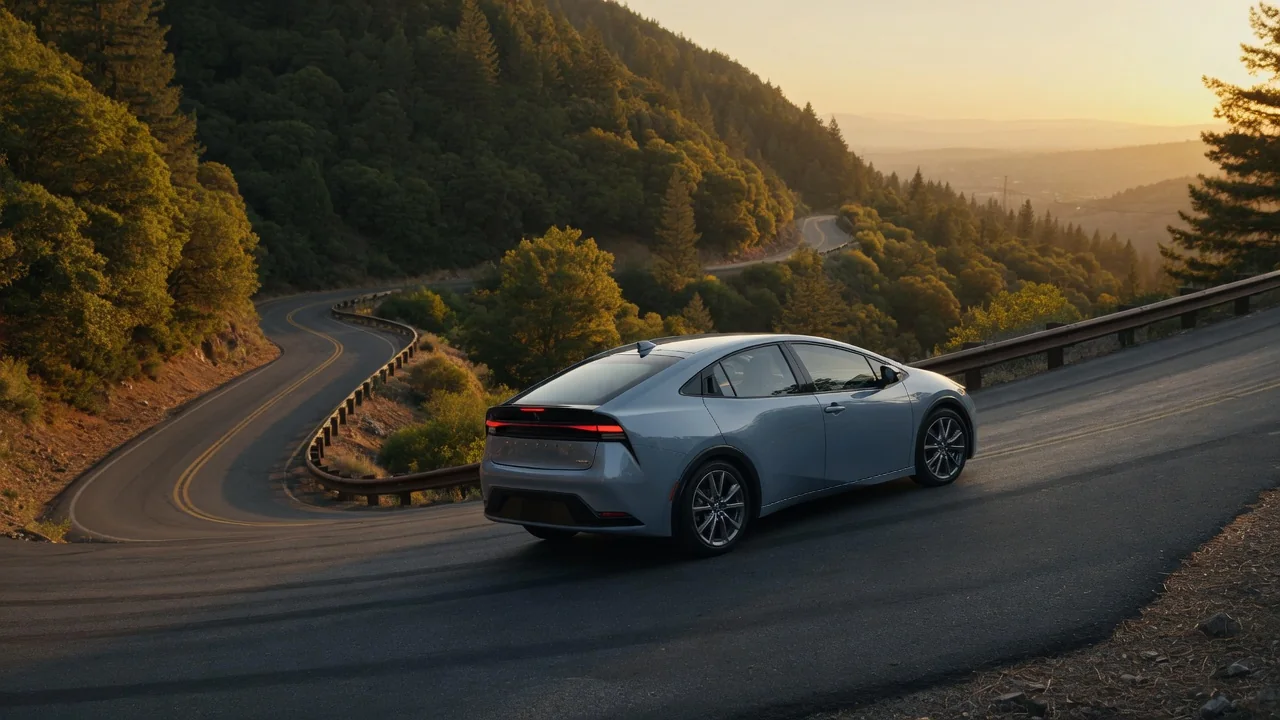
When a car rolls down a long grade, gravity keeps pushing it forward. A conventional car turns most of that energy into heat in its brakes, but a hybrid can capture part of it. Hybrid downhill regeneration depends on three things working together: an electric motor that can run as a generator, a battery that can accept the charge, and a friction brake system that covers whatever the electric side cannot handle. Here is how each part fits into the process.
Motor generation
An electric motor is a reversible machine. When the battery supplies current, the motor turns the wheels. When the wheels turn the motor instead, as they do on a descent, the same machine can work as a generator. The rotating magnetic field between the rotor and stator induces a voltage in the windings. Power electronics, usually called the inverter, then convert that output into a form the high-voltage battery can store. Generating electricity takes mechanical effort, so the motor resists being turned. That resistance creates drag at the wheels, and the drag slows the car. This is what drivers experience as regenerative braking.
On a downhill, the vehicle's height is steadily converted into speed. Without any resistance, the car would keep accelerating. The hybrid control system decides how much generator drag to apply based on inputs such as accelerator release, brake pedal pressure, the selected drive mode or gear position, and vehicle speed. In many designs, lifting off the accelerator produces mild regeneration, while pressing the brake pedal requests more. How strong that effect feels, and whether the driver can adjust it, depends on the specific vehicle.
Not all of the energy from the descent reaches the battery. Aerodynamic drag and tire rolling resistance consume part of it before the motor is involved. The motor, inverter and battery also lose some energy as heat during each conversion. What remains is stored and can later help power the car, reducing the work the gasoline engine must do.
Battery limit
Recovered electricity needs somewhere to go, and in a hybrid that is normally the high-voltage battery. A battery cannot accept unlimited power. The battery management system continuously monitors state of charge, cell voltage and temperature, and from those readings it sets a maximum charging rate for that moment. Regeneration cannot exceed that limit, no matter how steep the hill or how hard the driver presses the brake pedal. The motor and inverter also have their own power ratings, so the lower of these limits governs how much energy can be captured at any instant.
State of charge becomes the main constraint on long descents. Hybrid batteries are generally operated within a protected charge window rather than across their full theoretical capacity, which helps preserve battery life. As the charge approaches the top of that window, the system reduces regenerative current and eventually stops accepting more. On a long mountain road, the battery may reach that point partway down, after which little additional energy is stored. A descent that begins with a lower charge leaves more room for recovery, while a plug-in hybrid that starts the hill fully charged may have very little headroom.
Temperature matters as well. A cold battery typically accepts charge less readily, and a battery that is running hot may be protected by limiting current. Because these conditions change from trip to trip, the amount of energy recovered on the same hill can vary noticeably between drives.
Brakes
Every hybrid still has a conventional hydraulic brake system with rotors, pads and calipers, or drums on some rear axles. In many hybrids the brake pedal does not simply squeeze the pads directly. Instead, the control system interprets how much deceleration the driver is asking for and splits that request between generator drag and friction braking. This process is often called brake blending. When the generator can supply all the requested deceleration, the friction brakes may do little. When it cannot, the system adds friction braking to make up the difference, aiming to keep pedal feel and stopping behavior consistent.
The friction share grows in several situations. At very low speeds the generator produces little useful power, so the friction brakes usually finish the stop. During hard or emergency braking, and whenever stability or anti-lock systems intervene, friction brakes provide the necessary force. And when the battery has reached its charge limit on a long descent, the friction brakes would otherwise carry the entire load, which raises the risk of overheating.
To reduce that load, many hybrids offer a selector position or drive mode intended for descents. Depending on the design, it may increase generator drag where possible or spin the gasoline engine without fuel to add engine braking, which does not depend on battery capacity. The owner's manual describes which options a particular vehicle provides and how they are meant to be used.
Practical implications and limits
Driving style influences how much energy is recovered. Smooth, early deceleration gives the system a better chance of keeping braking requests within what the generator can absorb, while late, hard stops push more of the work onto the friction brakes. If the vehicle has an energy flow display or a charge gauge, it can show when regeneration is active and when the battery is approaching its limit, which helps drivers understand what is happening on a particular grade.
Recovery is always partial. Climbing a hill consumed fuel or stored electricity, and each conversion on the way up and down loses some energy, so a descent can never return everything spent on the climb. Downhill regeneration reduces waste; it does not make hilly routes free. Expectations should also account for the fact that a battery that fills early on a long grade stops contributing for the rest of the descent.
Safety comes first on steep roads. Regenerative drag can fade when the battery is full, and the car may then feel as though it is coasting more freely. Drivers should not rely on regeneration alone to hold speed; using the descent setting recommended in the owner's manual and braking in firm intervals is generally wiser than riding the pedal. Although hybrid friction brakes often see lighter use, lightly used components can still develop surface corrosion or uneven wear, so periodic brake inspection remains part of normal maintenance.