How Does a Hybrid Manage Battery Temperature?
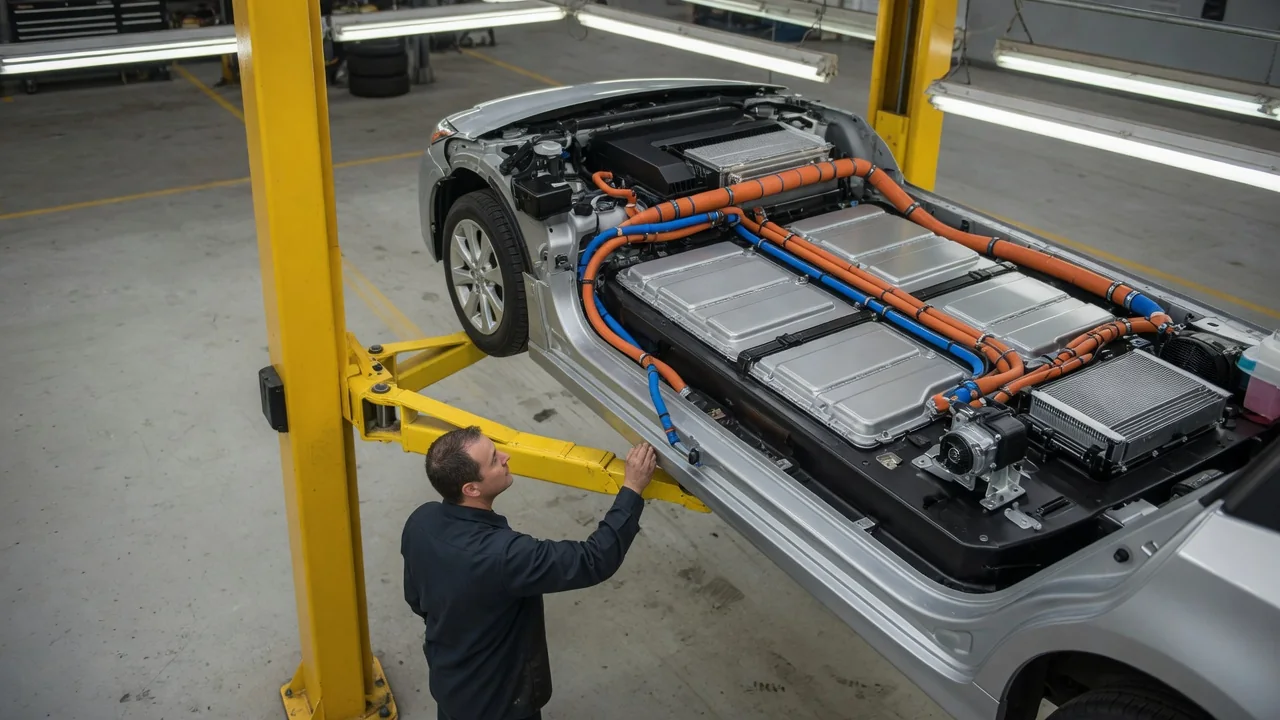
Hybrid battery temperature control is one of the quieter jobs a hybrid's control system performs, but it shapes how the car drives every day. A traction battery works best within a moderate temperature window, and both heat and cold affect how much power it can safely deliver or accept. This article explains in general terms how a hybrid manages battery temperature: the cooling path, the power limits applied by software, and the alerts drivers may see.
Cooling path
Most hybrids monitor the traction battery with several temperature sensors placed among the cell modules, plus sensors for incoming air or coolant. A battery management controller reads these values continuously along with voltage and current, and it decides how much cooling or heating the pack needs. The hardware that carries heat away falls into two broad designs. Which one a given vehicle uses depends on the manufacturer and on the pack's size and location.
Many hybrids, especially those with smaller packs, use forced-air cooling. An electric fan draws air, typically from the passenger cabin through an intake grille, passes it across or between the battery modules, and exhausts it elsewhere in the body. Using cabin air makes sense because the climate control system usually keeps it at a comfortable temperature already. The controller varies fan speed according to battery temperature, so the fan may run faster after hard driving, on hot days, or during long climbs. Some systems place a filter in this air path to keep dust and debris away from the cells.
Larger packs, including those in many plug-in hybrids, more often use liquid cooling. Coolant circulates through plates or channels in contact with the modules, then carries heat to a radiator or to a heat exchanger connected to the air-conditioning refrigerant circuit, often called a chiller. Liquid systems can remove heat faster and more evenly, and some can also warm the battery with an electric heater or recovered heat when temperatures are low. The control logic is the same: sensors report temperature, and the controller adjusts pumps, valves, fans or compressor demand to hold the pack within its target range.
Power limits
Cooling hardware cannot always keep pace, so the second tool is software. The battery controller calculates, moment by moment, how much current the pack may supply and how much it may accept. These discharge and charge limits shrink when cells are too hot or too cold, and the hybrid control unit plans the split between engine and electric motor within whatever limits it receives.
When the pack runs hot, the system reduces the electric power it draws from the battery. The driver may notice the engine starting more often, less electric assist during acceleration, or shorter stretches of electric-only driving. Limiting current lowers the heat generated inside the cells, which helps the cooling system bring the temperature back down and reduces the kind of stress that can accelerate battery aging.
Cold has a different effect. Chemical reactions inside the cells slow down, internal resistance rises, and accepting charge becomes harder on the cells. As a result, the controller often restricts regenerative braking and charging more strictly than discharge at low temperatures. The engine may also run longer after a cold start, partly for cabin heat and emissions control and partly because the battery's usable power is reduced. As the pack warms through use or active heating, the limits typically relax gradually rather than all at once.
Alerts
If temperature management cannot keep the battery within acceptable bounds, the vehicle uses alerts to inform the driver. The exact form varies widely by manufacturer: a dashboard message about the hybrid system, a general warning indicator, or a notice that available power is reduced. Some vehicles display a message suggesting that the battery cooling intake be checked, while others record the condition without a dedicated driver message.
Behind any visible alert, the control units typically store diagnostic trouble codes describing what they detected, such as a sensor reading out of range, a fan or pump fault, or a temperature that stayed high despite cooling. These codes are read with a scan tool that supports the vehicle's hybrid system. A warning does not by itself identify the cause. A blocked air intake, a failed fan, a coolant problem, a faulty sensor or a weakening battery can produce similar symptoms, so the owner's manual or a qualified technician is the right reference for the specific vehicle.
Practical implications and limits
For owners of air-cooled hybrids, the most practical step is keeping the battery air intake clear. Bags, blankets, pet hair or items pushed against a rear-seat or side-trim grille can restrict airflow and make the system work harder. Where a filter is fitted, the maintenance schedule may list an inspection or cleaning interval, and following it is more reliable than guessing. Liquid-cooled packs instead depend on the coolant type and service procedures the manufacturer specifies, which may differ from those for the engine cooling system.
Changes in behavior during extreme weather are often normal. Reduced electric operation during a heat wave or on a cold morning usually reflects deliberate limits rather than a fault, and performance generally returns as conditions moderate. Persistent changes in mild weather, a fan that is unusually loud or seems to run constantly, or a warning that returns after restarting the vehicle deserve attention.
There are also limits to what an owner can infer. Temperature thresholds, fan strategies and power limit curves are calibrated differently across vehicles and are rarely published in detail, so general rules cannot predict exactly when a particular hybrid will reduce power. Thermal management slows battery aging but does not prevent it. When in doubt, rely on the vehicle's own documentation and proper diagnostics rather than assumptions drawn from a different model.