How Does a Heated Seat Pad Work?
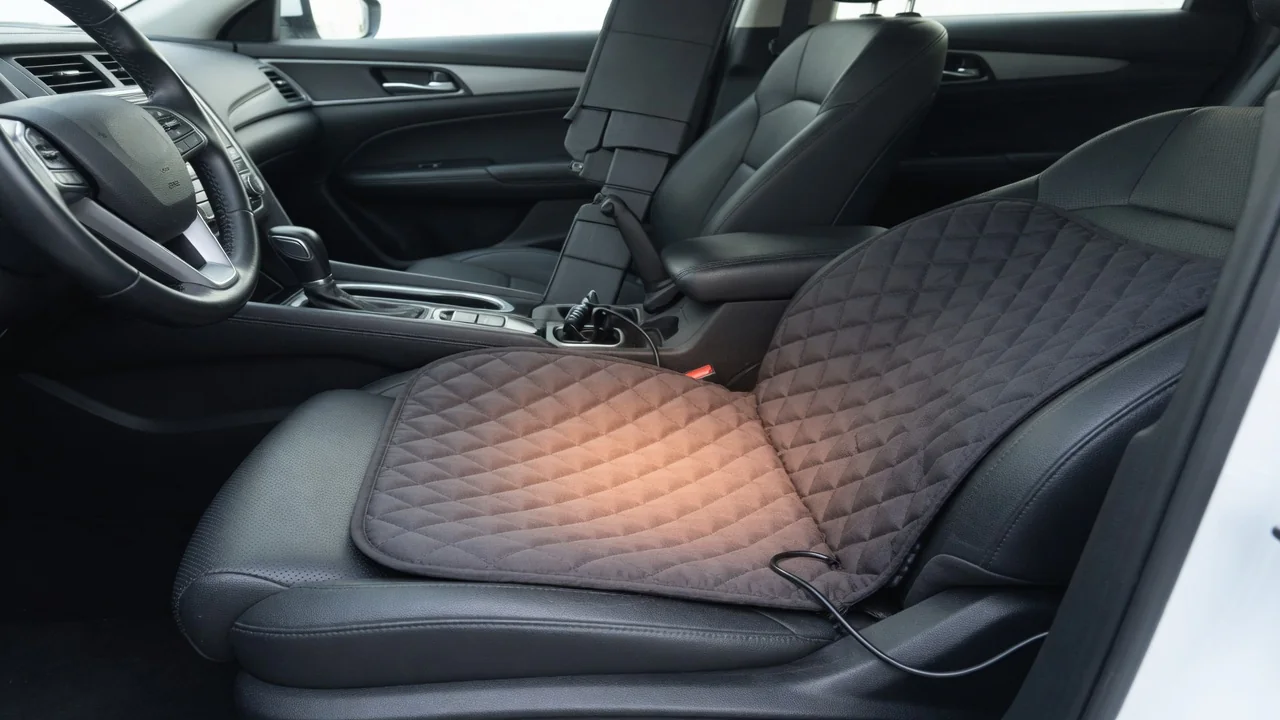
A heated seat pad turns electrical current into gentle warmth right where you sit. A factory element hidden under the upholstery and an aftermarket car seat heating pad that plugs into a power outlet work the same basic way. Each has a resistive element, a control circuit that decides how much power the element gets, and a few predictable failure points. Here is how each part works and what tends to go wrong.
The Electrical Heating Element
At its core, a heated seat pad is a resistance heater. When electric current flows through a material that resists it, some of the electrical energy becomes heat. This process is called Joule heating. The amount of heat depends on the current and on the element's resistance. Designers choose a conductor and a layout that spread mild, even warmth across the seating surface instead of creating a single hot spot.
Factory systems usually use one of two element styles. The traditional design is a thin, insulated resistance wire laid in a zigzag pattern and stitched or bonded onto a felt or fabric carrier. Many newer designs use carbon fiber strands or a flexible carbon-based film, which handle repeated bending well and spread heat evenly. The carrier sits directly beneath the seat cover, on top of the foam cushion. There are typically separate pads for the seat bottom and the backrest. Aftermarket pads place a similar element inside a padded cover that straps over the existing seat.
Power comes from the vehicle's 12-volt electrical system. In a factory installation, current typically passes through a fuse, then a relay or control module, then a connector under the seat before it reaches the element. Aftermarket pads commonly draw power from the accessory socket, with a fuse or controller built into the plug or cord. In both cases the wiring and circuit protection are matched to the element's electrical load.
How Seat Heat Is Controlled
The simplest control is a switch, often with high and low settings. In basic designs, the low setting may come from adding resistance to the circuit or from changing how the element sections are connected. Many simpler pads, including some aftermarket units, use a small thermostat embedded in the pad. This thermostat, often a bimetallic switch, opens the circuit when the pad reaches a set temperature and closes it again as the pad cools. The cycling keeps the surface warm without letting the temperature climb indefinitely.
More advanced systems pair an electronic control module with a temperature sensor, commonly a thermistor placed in the heating pad. The module reads the sensor and regulates power, often by switching the current on and off rapidly. This method is called pulse-width modulation. Choosing a higher level either raises the target temperature or increases the share of time the element is powered. Because the module reads the actual pad temperature, it can heat quickly at first and then hold a steadier level. Depending on the vehicle, drivers operate the seat heaters with dedicated buttons, a touchscreen menu, or automatic climate settings.
The control logic also handles protection. Typical features include an over-temperature cutoff and operation only while the ignition or engine is on. Some vehicles also step the heat down or shut it off after a set time. Other behaviors vary by vehicle, such as remembering the last setting, linking heat to occupancy sensing, or switching on automatically in cold weather. The owner's manual is the reliable reference for how a specific car behaves.
Common Heated Seat Faults
The most frequent failure is a break in the heating element itself. The pad flexes every time someone sits down. The bolster nearest the door takes extra wear as occupants slide in and out. Over time, wire elements can crack, and a single break can open the circuit so the pad stops heating. If the seat bottom and backrest are wired in series, a break in one section can disable both. If they are wired in parallel, only one area may go cold. Sharp objects, kneeling on the seat, or liquid spills can also cause breaks or localized hot spots.
Problems outside the pad often look identical from the driver's seat. Any of these can leave the heater dead: a blown fuse, a failed relay, a worn switch, a loose or corroded connector under the seat, or a faulty control module. A failed temperature sensor may cause the module to refuse to heat or to shut off early. Sometimes the indicator light works but the seat stays cold. That pattern means the request is registering, yet power is not reaching the element or the element is not passing current.
Diagnosis usually follows the power path. Technicians check the fuse and confirm voltage at the seat connector with the heater switched on. They then measure the element's resistance and compare it to the value in the service information. An open circuit points to a broken element. Correct resistance with no supply voltage points to a problem upstream. On vehicles with a control module, stored diagnostic codes can narrow the search. Some element breaks can be repaired, but the pad is often replaced, which usually means removing the seat cover.
Practical Implications and Limits
Because the element sits under the upholstery, anything layered on top slows the heat that reaches you. Thick seat covers, extra cushions, and heavy coats can make a working system feel weak. Check the owner's manual before adding a cover to a heated seat. Leather, cloth, and perforated surfaces transfer warmth differently, so the same system can feel quicker or slower depending on the trim. A seat heater warms the person in contact with the seat over a few minutes, not instantly, and it does little to warm the cabin air.
A seat heater is one of the heavier comfort loads in a car. Running it with the engine off can drain the battery, and many factory systems are designed to work only with the ignition on. Aftermarket car seat heating pads need extra care. Route the cord so seat tracks and doors cannot pinch it. Keep straps and padding away from seat-mounted airbags or occupant sensors. Unplug the pad when the vehicle is parked, and choose a unit with built-in temperature limiting and a fused plug.
Children and people with reduced sensation in the legs or back may not notice when a seat becomes too warm. Lower settings and shorter use are sensible for them. When seats are reupholstered or covers are replaced, the heating pad must be kept, laid flat, and reconnected without creases or punctures, since a fold or pierced element can lead to later failure. Turn off and inspect a heater that smells hot, heats unevenly in one spot, or keeps working after it is switched off.