How Does a Car Detect a Burned-Out Bulb?
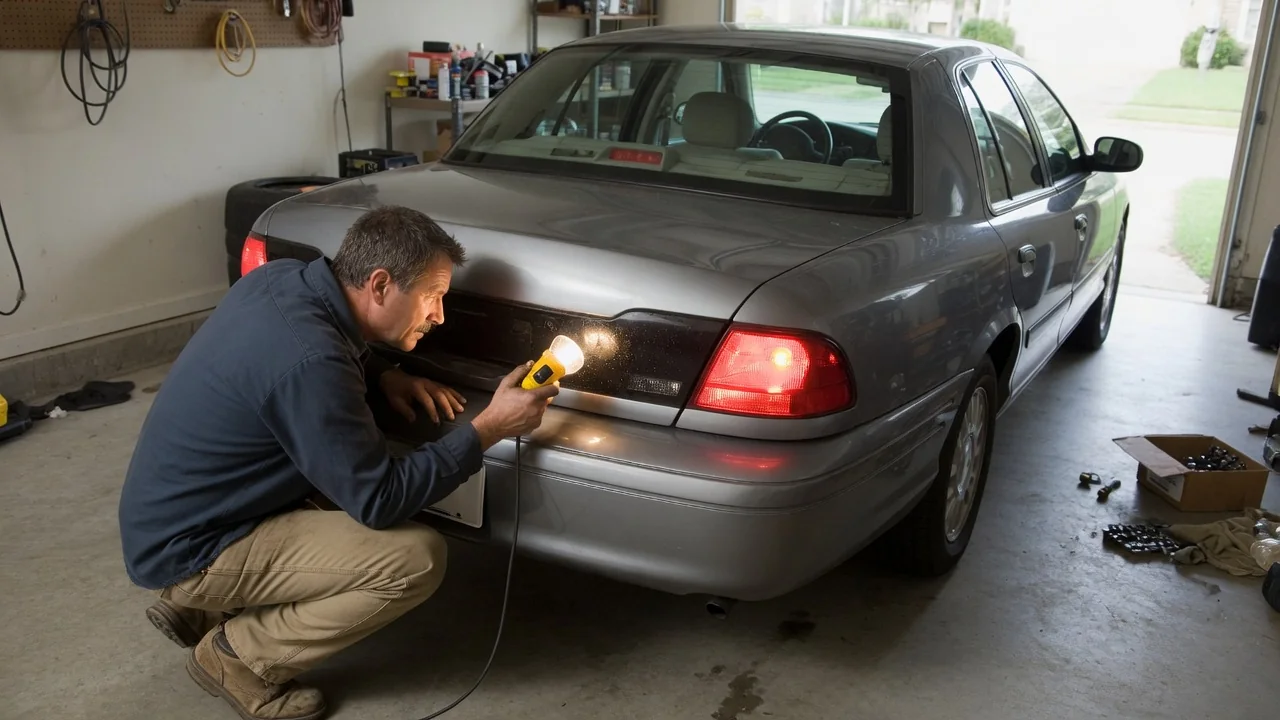
Many drivers wonder how a car can detect a burned-out bulb without anyone walking around the vehicle. The answer lies in electrical monitoring: a control module watches how much current each lighting circuit draws and compares it with what a healthy lamp should use. When the numbers do not match, a dashboard warning appears. Understanding that logic makes the alert far easier to interpret.
Circuit load
Every working bulb places a predictable load on its circuit. A traditional filament lamp has a known resistance, so when voltage is applied, a certain amount of current flows through it. When the filament breaks, the circuit opens and current drops to almost nothing. Older vehicles often used a simple lamp-out relay or sensing resistor to notice that drop, while most modern cars route exterior lighting through a body control module that measures current electronically on each output.
Some systems also check lamps while they are switched off by sending a very brief, low-energy pulse through the circuit, too short to make the bulb glow visibly. If the pulse finds no path to ground, the module logs an open circuit. The familiar fast-flashing turn signal is a simpler version of the same idea: with one bulb gone, the reduced load changes the flash rate. Exactly which lamps are monitored, and how, differs between manufacturers and even trim levels.
False alerts
Because the module is judging current rather than actually seeing light, anything that changes the circuit's load can trigger a warning even when the bulb is shining. The most common example is fitting LED replacements in place of filament bulbs. LEDs draw far less current, so the module may conclude the lamp has failed, producing a warning message, rapid turn signal flashing, or flickering caused by the test pulses briefly lighting the sensitive LED.
Other false alerts come from the wiring rather than the lamp. Corroded bulb sockets, a weak ground connection, moisture inside a tail light housing, or a bulb of the wrong wattage can all push current outside the expected window. Trailer wiring adapters spliced into the rear harness are another frequent source. In these cases the warning is genuine evidence that something in the circuit is abnormal, but it is not proof that the bulb itself is at fault.
Inspection
A bulb warning is best confirmed with a simple visual check. With the vehicle safely parked, switch on each lighting function in turn, including parking lights, low and high beams, turn signals, hazard flashers, and license plate lamps. Brake and reverse lights are easier to verify with a helper or by watching the reflection in a garage door or window. Some instrument clusters name the affected lamp, which narrows the search considerably, while others show only a generic symbol.
If every lamp appears to work, the inspection shifts to the details. A filament bulb with a darkened or cloudy glass envelope may be near the end of its life, and a dual-filament bulb can lose one function while the other still lights. Green or white deposits in a socket, a loose connector, or water droplets inside the lens all point toward a connection problem. A technician can read stored body module codes, which still need interpreting against the vehicle's wiring before any part is condemned.
Everyday Use and Observations
In daily driving, the pattern of the alert often says as much as the alert itself. A warning that appears only when the brake pedal is pressed points toward the stop lamp circuit, while one that shows up with the headlights suggests the parking or tail lamps. A message that comes and goes over bumps or in wet weather usually hints at an intermittent connection rather than a dead bulb, since a broken filament rarely repairs itself for long.
Drivers may also notice behavior that seems odd but is deliberate. Some vehicles substitute another lamp when one fails, for instance brightening a tail light to stand in for a failed brake light, or shut off power to a faulted output until the ignition is cycled. A turn signal indicator ticking at double speed is the classic cue. How long a warning stays on after a bulb is replaced varies, with some systems clearing immediately and others after a restart.
Limits and Next Steps
Bulb monitoring has clear limits. It measures electrical behavior, so it cannot tell whether a lens is cracked, dirty, or fogged, or whether a headlight is aimed poorly. Not every lamp is supervised either; interior lights, some marker lamps, and accessories added after purchase may fall outside the system. A dim bulb that still draws roughly normal current can also slip past unnoticed. For that reason, an occasional walk-around remains worthwhile even on a car with no warnings displayed.
When an alert does appear, replacing the indicated bulb with the correct type listed in the owner's manual is the sensible first step. If the warning persists with a known good bulb, the socket, wiring, and ground deserve attention, and vehicle-specific diagnosis becomes more useful than guesswork. Those converting to LEDs should confirm what their particular vehicle requires, since some need compatible bulbs or a configuration change. Because working exterior lights are a legal and safety matter, lingering warnings are worth resolving promptly.