How Does a Car Decide Which Circuits Stay Awake?
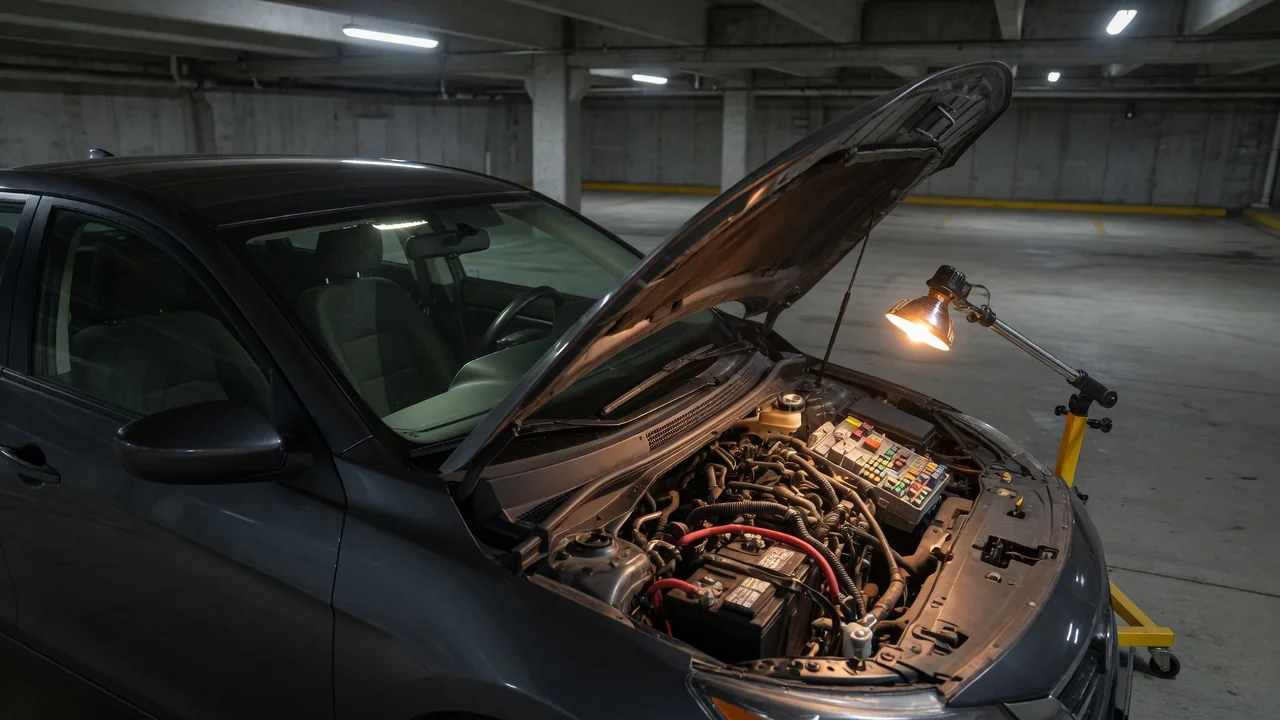
Locking a modern car does not switch it off. Some circuits stay powered, others shut down in stages, and a few stay ready to wake the rest. Which circuits stay awake depends on three things working together: control modules that agree when the network can sleep, timers that delay shutdown for practical reasons, and a battery draw budget the design must respect.
Control modules
A modern vehicle contains many electronic control units, each responsible for a function such as engine management, body electronics, climate control, infotainment, or driver assistance. The first decision about what stays awake is made in hardware, by how each module is powered. In common wiring terminology, some modules get a constant battery feed, often called terminal 30. Others are fed only when the ignition or accessory position is on, often called terminal 15 or an accessory circuit. Modules on switched feeds lose power when the vehicle is turned off. Modules on constant feeds stay connected to the battery and must manage their own transition into a low-power state.
Constantly powered modules usually communicate over shared networks such as CAN or LIN, so sleep has to be coordinated. Under a network management scheme, each module signals whether it still needs the bus. While any module keeps asking, the network stays active. When every participant releases its request, the bus and its modules go to sleep together. This is why one misbehaving module can keep a whole network awake. In sleep, the network transceivers stay in a low-power listening mode, ready to detect a wake-up event and bring the system back.
Certain functions are expected to stay alert while the car is parked. Typical examples are the keyless entry receiver, alarm and immobilizer monitoring, door, hood, and trunk switches, the clock, memory for seats and radio presets, and, on vehicles equipped with them, telematics units. These usually run at reduced activity, waiting for an input rather than processing continuously. The body control module or a gateway often acts as the coordinator. It switches courtesy loads through relays or electronic drivers and decides when to wake other modules. Exactly which module plays which role differs between manufacturers and platforms.
Timers
Shutdown is rarely instant because several tasks continue after the ignition is turned off. Modules may need a short after-run period to save learned values, finish writing to memory, or complete internal checks. Some vehicles keep retained accessory power so windows or audio still work until a door is opened or a set time passes. Some engines run a cooling fan after shutdown when temperatures call for it. These durations are set in software by the manufacturer and are not universal.
Network management also depends on timing. After the last module releases its request, the network typically waits through a defined period before going fully to sleep. This gives other modules a chance to respond, finish messages, or ask to stay awake. Timeouts also act as safeguards, so a module that stops communicating properly does not hold the network open forever. Separate timers often manage interior lighting and so-called battery saver functions, which cut power to courtesy loads if a light or accessory is left on.
Some vehicles use staged sleep, moving into progressively deeper low-power levels the longer they sit. In deeper stages, a system might check for a key fob less often or limit remote connectivity until a stronger wake-up event occurs. Opening a door, pressing a remote button, or another recognized input usually restarts the relevant timers. The vehicle then begins its sleep sequence again from the start. Whether a given car uses staged sleep, and which functions it limits, is vehicle-specific.
Battery draw
Everything that stays powered after sleep adds up to the vehicle's quiescent current, often called parasitic draw. Engineers design the sleep strategy around a draw budget. The goal is that a healthy, charged battery can sit for an extended period and still start the vehicle and run its systems. The acceptable draw and the time the vehicle needs to reach full sleep are defined by the manufacturer, and service information is the authoritative source for those values on a specific model. A car that is fully awake draws far more current than one that has completed its sleep sequence. That is why a single module failing to sleep can matter more than the many small loads designed to stay on.
Many modern vehicles also monitor the battery directly, often with a sensor at the negative terminal that tracks current, voltage, and temperature to estimate state of charge. An energy management strategy can use this information to shed loads when charge drops, for example by disabling comfort features, reducing remote services, or restricting non-essential functions. Low voltage can also affect module behavior, so a weak battery may cause symptoms that look like unrelated electrical faults. How aggressively a vehicle protects its battery depends on its design.
Practical implications and limits
Timing matters when checking for excessive draw. A reading taken right after locking the car shows modules that have not finished their sleep sequence yet, so the current looks higher than the true resting value. Opening a door, using the remote, or briefly disconnecting the battery can wake the network and restart the process. Service procedures commonly allow for this by setting a waiting period and a measurement method that avoids interrupting the circuit. Following the manufacturer's procedure helps avoid false conclusions.
When a vehicle will not sleep, common causes include aftermarket accessories wired to a constant feed, devices left plugged into a diagnostic or power port, a switch that keeps a trunk, glovebox, or courtesy light circuit active, and a module that keeps requesting network activity. Where supported, diagnostic tools can sometimes show which module is keeping the network awake. That is often more informative than pulling fuses one at a time, which can itself wake modules and disturb the measurement.
No single rule fits every vehicle electrical sleep strategy. The same feature can be built with different modules, feeds, and timers depending on the manufacturer and platform. For long parking periods, follow the owner's manual, which may describe storage modes or battery maintainer guidance. Repeated short trips may not fully replace the energy used while parked, so battery condition and charging habits affect how well any sleep strategy can protect the vehicle.