How Does a Car Air Conditioner Remove Heat?
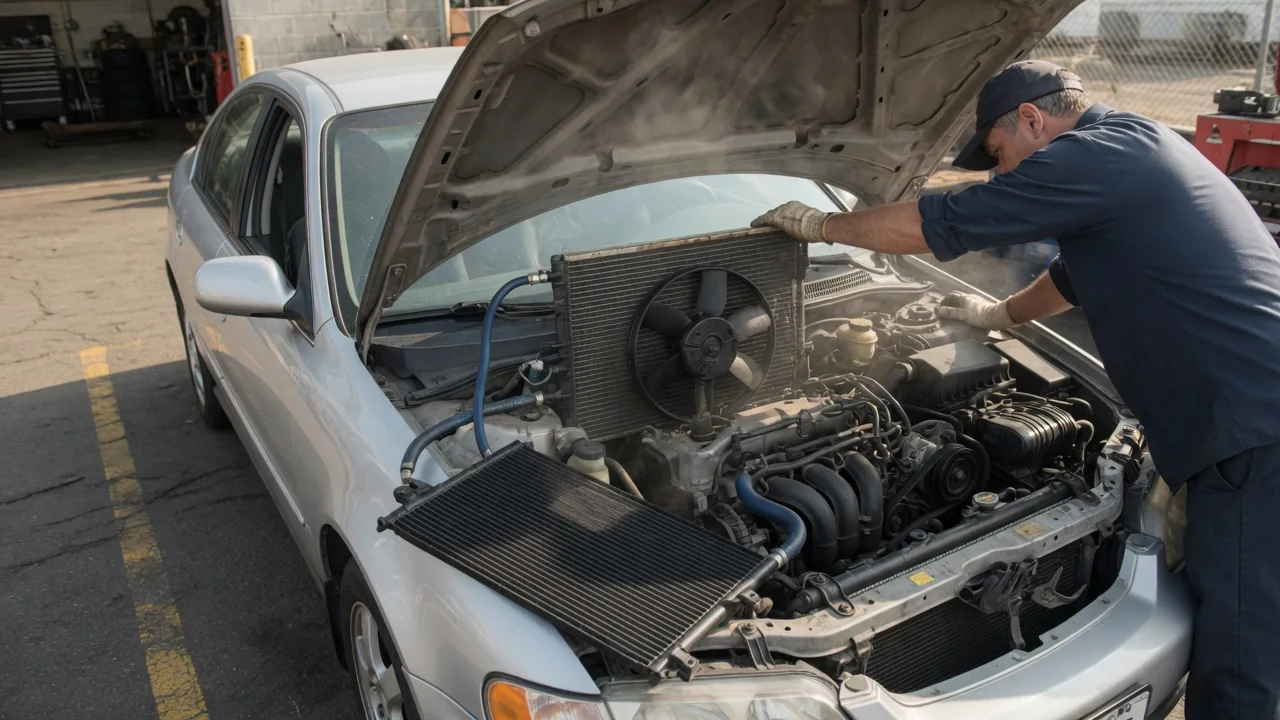
How does a car air conditioner remove heat from a cabin that has been baking in the sun? It does not create cold. Instead, a sealed loop of refrigerant picks up warmth from the air inside the vehicle, carries it to the front of the car, and releases it outdoors. Each part of that loop has one plain job.
Compression and expansion
The compressor is the pump at the heart of the loop. On many vehicles it is driven by the engine's accessory belt, while hybrids and electric cars typically use an electrically driven unit. It draws in cool, low-pressure refrigerant vapor and squeezes it into a much smaller volume. Squeezing a gas raises its temperature, just as a bicycle pump grows warm in use, so the refrigerant leaves the compressor hot and under high pressure, ready to give up heat.
Expansion is the opposite step. After the refrigerant has cooled into a liquid, it is forced through a tiny restriction, either an expansion valve or a fixed orifice tube depending on the design. Pressure drops sharply on the far side, and the liquid's temperature drops with it, much like an aerosol can turning cold as it sprays. Drivers may hear a brief click from a compressor clutch engaging or notice a slight change in idle speed, although variable-displacement and electric compressors often run without either sign.
Cabin evaporator
The evaporator is a small finned heat exchanger hidden inside the heating and ventilation housing behind the dashboard. Cold, low-pressure refrigerant enters it as a mist and boils into vapor as it flows through the tubes. Boiling takes a large amount of energy, and that energy comes from the cabin air the blower fan pushes across the fins. The air leaves cooler, the refrigerant leaves carrying the heat it absorbed, and the vapor heads back to the compressor.
The evaporator also dries the air. Moisture condenses on its cold surface the way droplets form on a chilled glass, then runs out through a drain tube beneath the vehicle. A puddle of clear water under the front passenger area after a drive is usually that condensate, not a leak. Because the core sits out of sight, its exact location, the drain routing and the presence of a second rear evaporator in larger vehicles differ from one model to another.
Heat release
Heat collected in the cabin has to go somewhere, and the condenser is where it leaves. This thin heat exchanger usually sits at the front of the vehicle, ahead of the engine radiator, where it receives the hot, high-pressure vapor from the compressor. Because the refrigerant is now hotter than the outside air, heat flows naturally from the tubes into the passing airstream. As it sheds that heat, the vapor condenses into a warm liquid and continues toward the expansion device.
Airflow decides how well this step works. At road speed, air rams through the grille; in traffic, electric cooling fans take over, which is why fans often run whenever the air conditioning is on. Warm air felt at the front of a parked car with the system running is cabin heat being rejected. A condenser clogged with leaves, bugs or bent fins cannot shed heat efficiently. Some electrified vehicles add heat pump functions or battery cooling circuits, so layouts vary.
Everyday Use and Observations
In daily driving, the loop explains several familiar behaviors. A heat-soaked cabin takes time to cool because the seats, dashboard and glass all hold stored warmth that the evaporator must absorb through the air. Opening the windows briefly to flush out the hottest air, then switching to recirculation, lets the system re-cool air it has already cooled and dried instead of constantly processing hot outside air. Vent temperature generally falls faster once the vehicle is moving and the condenser gets strong airflow.
The same drying effect makes air conditioning useful in cool, damp weather. Many vehicles engage the compressor automatically in defrost mode because dehumidified air clears fogged glass more quickly. Other normal observations include a small rise in fuel or battery consumption while cooling, a faint hiss behind the dashboard just after shutdown as pressures equalize, and one refrigerant line under the hood sweating with cold while another runs hot. Automatic climate control systems blend these functions differently, so the owner's manual is the best guide.
Limits and Next Steps
No system can cool beyond what its heat exchangers and airflow allow. In extreme heat, at long idle or with a heavily loaded cabin, vent air will be warmer than on a mild day, and that alone is not a fault. Weak cooling, on the other hand, can stem from low refrigerant charge, restricted condenser airflow, a clogged cabin air filter, a blend door problem or an electrical issue. Similar symptoms have different causes, so a guess based on vent temperature alone is unreliable.
Sensible first checks are simple: confirm the settings, look for debris blocking the condenser face, and replace a dirty cabin filter according to the maintenance schedule for the vehicle. Refrigerant work is different. The loop is sealed and under pressure, the refrigerant type and charge amount are specific to each vehicle, and handling is regulated, so it belongs with a qualified technician using recovery equipment. If a scan tool shows a climate-related code, treat it as a clue that needs vehicle-specific testing rather than proof that a part has failed.