How Does a 12-Volt Car Battery Work?
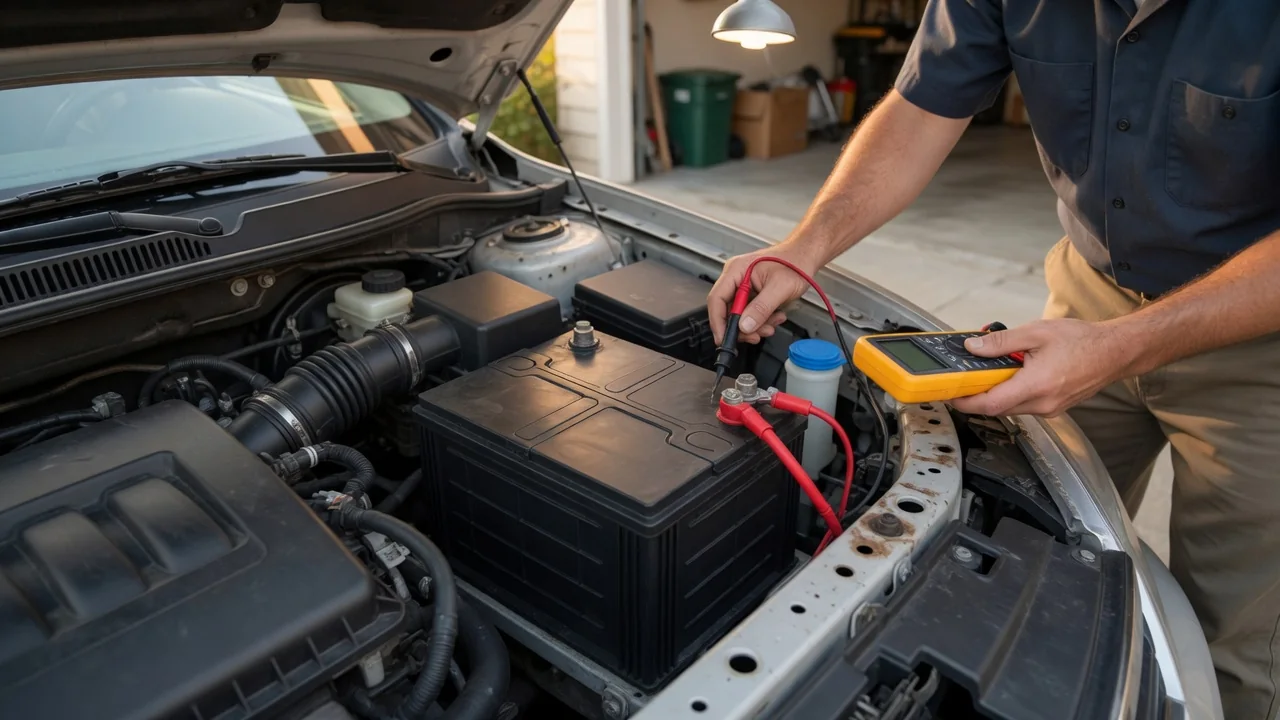
A conventional car battery looks like a plain plastic box, yet it handles two demanding jobs: delivering a brief, heavy burst of current to crank the engine and supplying steady power to lights, electronics, and accessories. Understanding how a 12-volt car battery works makes it easier to interpret slow starts, dim lamps, and warning lights before they leave you stranded.
Stored energy
A 12-volt car battery stores energy chemically, not as electricity sitting in a tank. Inside a typical lead-acid design are six cells connected in series, each contributing a little over two volts. Every cell contains lead-based plates immersed in an electrolyte of sulfuric acid and water. When a circuit is connected, a reaction between the plates and the acid releases electrons, which flow out through the terminals as usable current for the starter and accessories.
As the battery discharges, the plates gradually become coated with lead sulfate and the electrolyte grows weaker, which is why voltage sags as stored energy is used. Charging reverses that reaction. Drivers can see part of this in practice: a healthy, rested battery reads somewhat above twelve volts on a multimeter, while a depleted one reads noticeably lower. Construction varies by vehicle, with flooded, enhanced flooded, and absorbed glass mat designs used depending on electrical demands and stop-start equipment.
Starting
Cranking the engine is the hardest work the battery does. Turning the key or pressing the start button sends a small signal to a relay or solenoid, which then connects the battery directly to the starter motor through thick cables. The starter draws a very large current for a few seconds, spinning the engine until combustion takes over. Car batteries are built with many thin plates specifically to release this short, intense burst rather than a long, slow discharge.
Because the demand is so high, starting exposes weakness quickly. A sluggish crank, a rapid clicking sound, or dash lights that dim sharply while the starter runs all suggest voltage is collapsing under load, though corroded terminals, loose cables, or a starter fault can produce similar symptoms. Cold weather compounds the problem, since chemical reactions slow while thickened engine oil makes the engine harder to turn. Diesel engines and larger gasoline engines generally need more cranking capacity, so battery ratings differ between vehicles.
Charging
Once the engine runs, the alternator becomes the main power source. Driven by a belt from the crankshaft, it generates electricity that supplies the vehicle's systems and pushes current back into the battery, reversing the discharge reaction and restoring the plates. A voltage regulator, often managed by the engine computer on newer vehicles, keeps system voltage above the battery's resting level so charge flows in the right direction without overcharging and overheating the cells.
With the engine running, a multimeter across the terminals normally shows a higher reading than it does with the engine off, which is a simple sign the charging system is contributing. A battery warning light on the dash usually points to a charging problem rather than the battery itself, so it deserves prompt attention. Charging strategies vary: some vehicles deliberately lower alternator output to save fuel, and hybrids and electric vehicles typically recharge their 12-volt battery from the high-voltage pack through a converter instead of an alternator.
Everyday Use and Observations
With the engine off, the battery alone powers everything: interior lamps, the radio, hazard flashers, power locks, and the modules that stay awake to remember settings and listen for the key fob. This small background demand, often called parasitic draw, is normal, but it slowly drains a car that sits for weeks. Leaving headlights or a dome light on overnight is the classic example of accessories emptying a battery that was never designed for deep, repeated discharge.
While driving, the battery also acts as a buffer, smoothing voltage when loads such as heated seats, rear defrost, and blower fans switch on together. Short trips matter here, because a few minutes of driving may not replace the energy used to start, especially in winter. Owners can watch for headlights that brighten noticeably as revs rise, slow power windows, or white or bluish crust on the terminals. Battery location varies too, from under the hood to the trunk or beneath a seat.
Limits and Next Steps
No battery lasts indefinitely. Repeated cycling, heat, vibration, and long periods at low charge allow sulfate to harden on the plates, reducing how much energy the battery can hold and deliver. Lifespan depends heavily on climate, driving patterns, and battery type, so there is no universal replacement schedule. A resting voltage reading offers a rough clue, but it cannot show how the battery behaves under load, which is why a battery can seem fine on a meter and still fail on a cold morning.
A proper load or conductance test at a repair shop or parts store gives a clearer picture, and the charging system is worth checking at the same time so a weak alternator is not mistaken for a bad battery. When replacement is due, the correct size, terminal layout, rating, and technology should match the vehicle's requirements, and some models need the new battery registered with the onboard computer. Batteries contain acid and can release flammable gas, so the owner's manual should guide any jump-starting or handling.