How Do Manufacturers Mark Car Glass? Reading Automotive Glass Markings
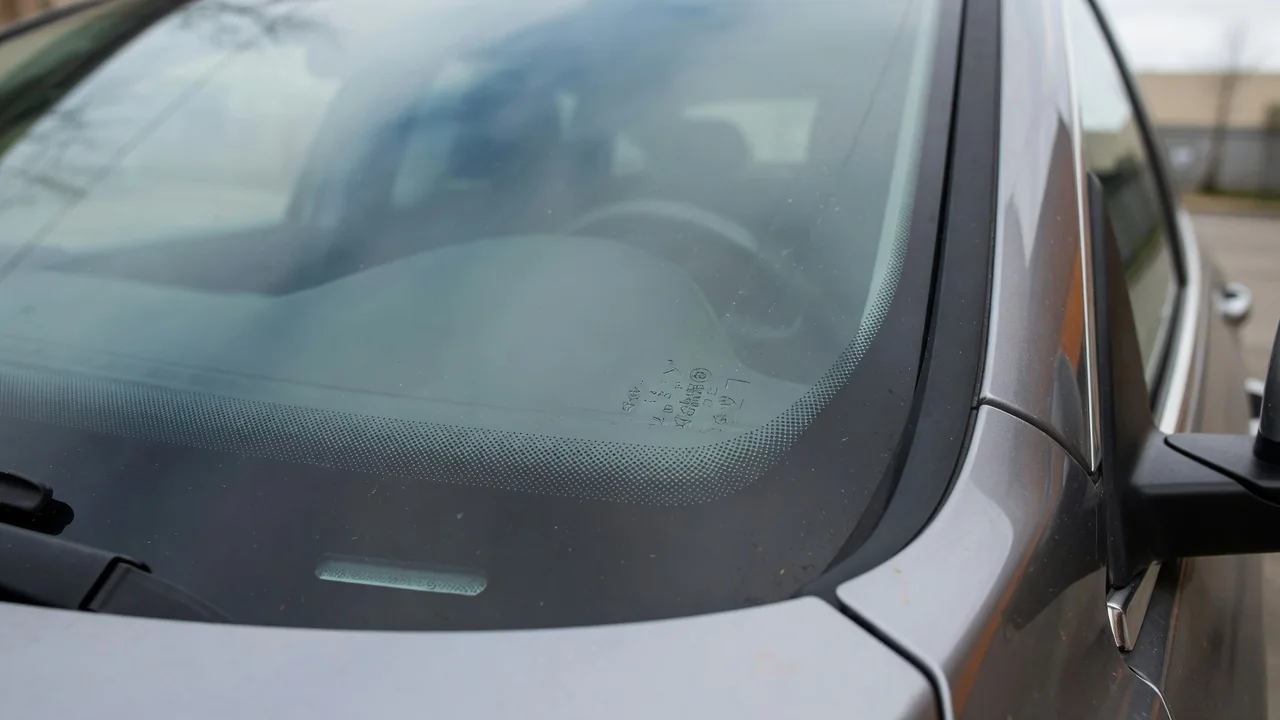
Look closely at a lower corner of almost any car window and you will find a small block of printed or etched text and symbols, often called the monogram or bug. This is how manufacturers mark car glass. Understanding automotive glass markings and what they mean helps you identify who made a pane, what kind of safety glass it is, which regulations it was certified to, and whether a replacement is likely to match the original.
Manufacturer data in the glass monogram
The monogram is applied during production. It is usually fired into the black ceramic band at the edge of the glass, etched, or sandblasted so that it cannot be wiped off. The layout differs between glass makers, but most marks combine the same kinds of information: the name or logo of the company that produced the glass, regulatory approval codes for the markets where it may be sold, a model or product code, and a production date code. When glass is supplied as original equipment, the vehicle manufacturer's logo or name often appears alongside the glass maker's mark.
In the United States, safety glazing must meet Federal Motor Vehicle Safety Standard 205, which incorporates the ANSI/SAE Z26.1 standard. The marking therefore includes DOT followed by a number. That number is a code assigned by the National Highway Traffic Safety Administration to the glazing manufacturer, so it identifies the producer even when no brand name is printed. Many marks also show an M followed by digits, which is the manufacturer's model number for that glass construction. In Europe and many other regions, approval under UN Regulation No. 43 is shown by a capital E inside a circle with a number identifying the country that granted approval, followed by an approval number, often with 43R nearby. Other markets use their own certification symbols, such as the CCC mark in China, so a pane intended for several markets can carry several sets of codes.
The date code is usually the least obvious part. Many glass makers combine a single digit for the last digit of the production year with a row of dots, where the number and position of the dots relative to the digit indicate the month or part of the year. There is no universal scheme, however. The same dot pattern can mean different months depending on the producer, so a date code should be read using that glass maker's convention, and a single year digit only narrows the date to a year within a decade.
Glass type: laminated, tempered, and AS ratings
Automotive safety glass comes in two main constructions, and the marking normally states which one you are looking at. Laminated glass is made from two sheets of glass bonded to a plastic interlayer, typically polyvinyl butyral. When it breaks, the fragments tend to stay attached to the interlayer, which is why windshields are laminated. Tempered glass is a single sheet heat-treated to create surface compression, making it stronger than ordinary glass and causing it to break into small, relatively blunt pieces. Side and rear windows are commonly tempered, although some vehicles use laminated side glass for noise reduction or security. The monogram typically spells out Laminated or Tempered, sometimes in another language or an abbreviated form.
US markings add an AS code that describes where the glazing may be installed. AS1 glass meets the strictest requirements, including light transmittance of at least 70 percent, and it is the category required for windshields. AS2 glass meets the same light transmittance requirement but may be used anywhere except the windshield, which is why it often appears on tempered side windows. AS3 glass has lower light transmittance, as with factory privacy tint, and is permitted only in locations not requisite for driving visibility, such as many rear side and rear windows. European approval marks use their own category symbols for similar distinctions, so the AS code applies to glass certified for the US market.
Some monograms also carry symbols or short text for added features, such as an acoustic interlayer, solar-control coating, heating elements, or compatibility with a head-up display. These indicators are not standardized across the industry. A feature can be present without any symbol in the monogram, so the absence of a mark is not proof that the glass lacks it.
Replacement match: what the markings can confirm
When replacing a pane, the monogram is a useful first check rather than a final answer. A replacement should belong to the same construction and category as the original: a laminated AS1 windshield for a windshield opening, and glass with the same tint level for side and rear positions. Matching tint matters not only for appearance but also for legal light transmittance in that position. The marking does not describe shape, curvature, mounting brackets, connectors, or sensor openings, all of which determine whether the part physically fits and works.
For that reason, the more dependable reference is the replacement part number, usually found through the vehicle identification number with a dealer or a glass supplier's catalog. A single model can be offered with several windshield variants depending on trim and options, such as rain sensors, heated wiper areas, acoustic glass, a head-up display, or camera-based driver assistance. Replacement glass broadly falls into three groups: original equipment glass bearing the vehicle manufacturer's logo, original equipment equivalent glass intended to match the original specification but sold without that logo, and aftermarket glass from other producers under their own DOT or approval codes. Each must meet the safety standards of its market, but fit, optical quality, and feature compatibility can differ, so the part specification matters more than the presence of a carmaker logo.
On vehicles with a forward-facing camera mounted at the windshield, the replacement also has to provide the correct bracket position and optical area for the camera. Many vehicle manufacturers specify a camera calibration procedure after windshield replacement. Whether calibration is required, and which method applies, depends on the specific vehicle and should be confirmed from the vehicle maker's service information.
Practical implications and limits
For owners and buyers, the monogram is a quick way to spot replaced glass. If one pane shows a different glass maker, a missing carmaker logo, or a date code noticeably different from the others, it was probably replaced at some point. That observation has limits. It does not reveal why the glass was changed, whether because of a stone chip, vandalism, theft, or a collision, and small date differences between original panes can occur normally because windows are produced at different times before vehicle assembly.
Markings describe the glass as it left the factory, not its condition today. They say nothing about installation quality, adhesive curing, edge damage, or chips. Aftermarket tint film is a common example: a window marked AS1 or AS2 can fall below the light transmittance allowed by local law once film is applied, and the original mark will not reflect that change. Tint and windshield rules vary by state and country, so the marking should be checked against local regulations rather than treated as proof of legal status.
Finally, the monogram can be partly hidden by trim, worn by abrasive cleaning, or printed in a compact form that omits some details. A pane approved for one market may lack the codes another market requires, which matters when importing a vehicle or sourcing glass from abroad. When the markings are unclear or incomplete, the vehicle identification number and the part specification remain the reliable route to a correct match.