How Do EV Batteries Remove Heat While Parked?
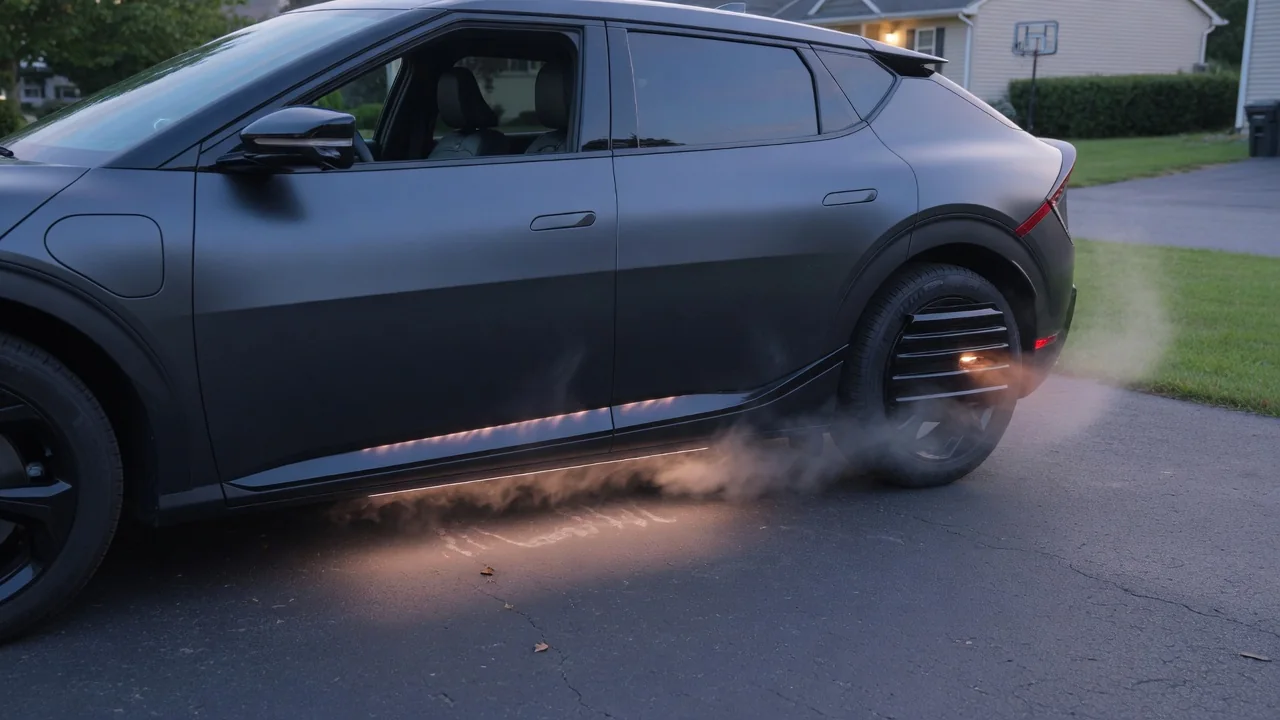
Many electric vehicles keep managing battery temperature after the driver walks away. Parked EV battery cooling exists because heat does not vanish when the car stops. A pack can still be warm from fast charging, hard driving or a hot day. This guide explains how EV batteries remove heat while parked, what powers that process, and which sounds are a normal part of it. Exact behavior varies by vehicle, so the owner's manual remains the final reference.
Fans and pumps
Temperature sensors inside the pack report to the battery management system. When the car is parked, that system can wake the thermal management hardware if cell temperatures rise above limits set by the manufacturer. Many modern EVs use liquid cooling. Coolant flows through channels or cold plates in contact with the battery modules and absorbs heat from the cells. An electric pump keeps the coolant moving and carries the heat to a heat exchanger, usually at the front of the vehicle. There, an electric fan pulls outside air through the exchanger so the heat can escape into the atmosphere.
Outside air alone is not always cool enough to bring the battery down to its preferred range. In that case, many liquid-cooled systems send coolant through a chiller. A chiller is a heat exchanger connected to the air-conditioning refrigerant circuit, so the electric compressor effectively uses the car's air conditioning to cool the battery. Electrically operated valves decide which path the coolant takes. Other designs work differently. Air-cooled packs use fans to move cabin or outside air across the modules. Some designs rely mostly on passive cooling, where heat leaves through the pack housing, which limits how much active cooling can happen while parked.
Not every EV actively cools its battery while parked and unplugged. Whether the system runs, and for how long, depends on the manufacturer's software, pack temperature, state of charge and sometimes owner-selectable settings. Some vehicles cool mainly while charging, and others can also do it while sitting unplugged.
Power use
Every part of the cooling system needs electricity, including the pump, fan, compressor, valves and the control modules that wake up to supervise them. In an EV, that energy ultimately comes from the high-voltage traction battery. The air-conditioning compressor typically runs directly on high voltage. Pumps and fans are often low-voltage components powered through the DC-DC converter, which also keeps the 12-volt battery charged. When the car cools its pack while parked and unplugged, it is spending some stored energy, and therefore some range, to protect the battery.
When the vehicle is plugged in, many EVs can power thermal management from the charging connection instead of drawing down the pack. This is one reason some owner's manuals advise leaving the car connected during very hot weather. Charging itself produces heat in the cells, especially DC fast charging. For that reason, the cooling system often works hardest during a fast-charging session and in the period right after it, even if the car is about to sit.
There is no single figure for how much energy parked cooling uses. The amount depends on outside temperature, direct sunlight, how warm the pack is, how long the system runs and how the vehicle is designed. Some vehicles may also limit cooling when the state of charge is low to avoid leaving the driver with too little range. Where available, the vehicle's energy screens or companion app are the best way to see what a specific car is consuming.
Normal sounds
A parked EV that is cooling its battery can make noise that surprises new owners. Common sounds include a steady whir or hum from the coolant pump and a rushing sound from the front fan. At high speed, the fan can sound much like a radiator fan on a gasoline car. A deeper hum may come from the air-conditioning compressor when the chiller is in use. You may also hear clicks or a solid clunk as high-voltage contactors close when the system wakes and open again when it shuts down, plus faint ticking as coolant valves change position.
These sounds often follow a pattern. They may begin a few minutes after parking or during a charging session, continue for a while, stop, and later start again as the pack warms or the software rechecks temperatures. Sounds usually come from the front of the vehicle or from underneath. A brief gurgle as coolant settles can also be normal. When the battery is warm, this kind of intermittent activity is the system doing its job.
Some noises are not typical cooling activity. Grinding, squealing or rattling, or cooling that seems to run constantly in mild weather when the car is not charging, deserve attention. The same applies to any noise that comes with dashboard warnings, a sweet chemical smell or coolant on the ground. A qualified service provider familiar with electric vehicles should inspect those symptoms.
Practical implications and limits
Parking choices affect how much work the thermal system has to do. Shade reduces heat gained from sunlight. A ventilated space is generally better than an enclosed one that traps warm air. Plugging in during hot spells, where the manufacturer recommends it, lets the car protect the pack without spending its own range. Keep the front air intakes clear and avoid parking with the nose tight against a wall or snowbank, because the heat exchanger needs airflow to shed heat.
Parked cooling has real limits. The system can only move heat at a finite rate, and only while it has energy available and the software allows it to run. A car left unplugged in sustained heat at a high state of charge may not be able to hold the pack at its ideal temperature the whole time. High temperature combined with high charge is generally associated with faster battery aging. For that reason, many owners avoid leaving a car fully charged in extreme heat for long periods unless the manual says otherwise.
Because the details are vehicle-specific, treat the owner's manual and in-vehicle settings as the authority on when parked cooling runs and what the car expects from you. Do not try to disable or obstruct the system to stop the noise. If a vehicle never seems to cool its pack on hot days, or reports battery temperature warnings, have the thermal management system checked rather than guessing at the cause.