How Do Car Speakers Create Sound?
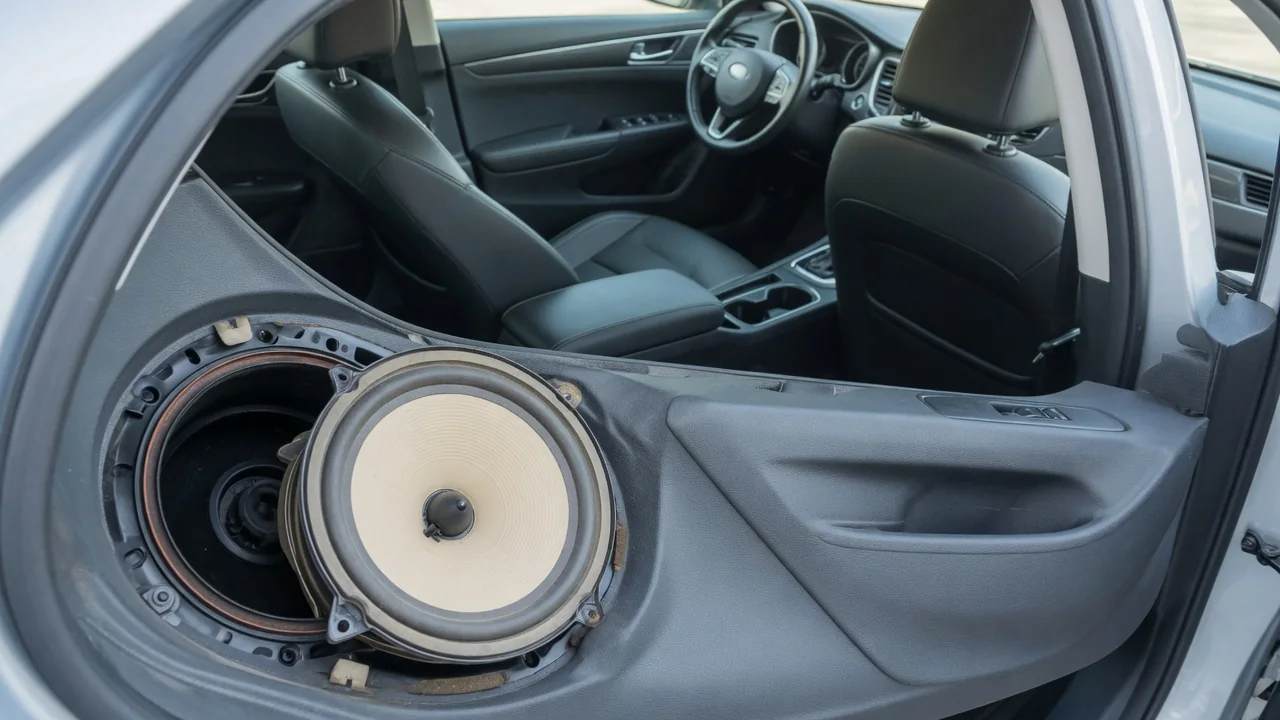
Anyone who has wondered how do car speakers create sound will find the answer in a simple chain of events: an electrical signal from the stereo becomes physical motion, and that motion pushes air toward your ears. This overview explains the moving parts, why location inside the vehicle matters, and what everyday listening can tell you about a system's health.
Cone movement
Every conventional car speaker is built around a voice coil, a magnet, and a cone. The head unit or amplifier sends an alternating electrical signal through the voice coil, which sits inside the field of a permanent magnet. As the signal changes direction, the coil is pushed and pulled, and the cone attached to it moves forward and backward. That motion compresses and thins the air in front of it, creating pressure waves that the ear interprets as music, speech, or navigation prompts.
The speed of that movement sets the pitch, and the distance it travels influences loudness. Slow, long strokes produce bass, which is why a door woofer can be seen pulsing visibly during a heavy drum beat. Rapid, tiny vibrations produce treble, so a small tweeter in the dash or pillar appears motionless while playing. A flexible surround and a spider hold the cone centered as it travels. Cone materials, sizes, and the number of drivers differ widely between vehicles and trim levels.
Placement in a cabin
A car cabin is a small, irregular space filled with glass, plastic, fabric, and people, so where a speaker sits changes what listeners hear. Larger drivers usually live low in the doors, where the door cavity acts as a rough enclosure behind the cone. Tweeters are often mounted higher, near the mirror corners, dash edges, or windshield pillars, because high frequencies travel in a narrow beam and are easily blocked by legs, seats, and trim panels.
Reflections shape the result as much as the drivers themselves. A dash-mounted speaker firing upward bounces sound off the windshield, while a rear deck speaker in a sedan uses the trunk as an air space behind it. Hatchbacks, trucks, and SUVs distribute speakers differently, and some add a center channel or a subwoofer under a seat or in the cargo area. Because the driver sits closer to one side, many systems use balance, fade, or factory tuning to even out the sound stage.
Common sound limits
A speaker can only move so far and handle so much power. When the volume is pushed beyond what the cone, suspension, or amplifier can manage, the motion stops following the signal accurately and distortion appears. Bass notes turn muddy or crackle, and voices take on a harsh edge. A small door speaker also cannot move enough air to reproduce very deep bass, which is why systems aimed at fuller low-end response add a dedicated subwoofer rather than asking more of the door drivers.
The vehicle itself imposes limits too. Road, wind, and tire noise mask quieter details, particularly at highway speed, and thin door panels can buzz or rattle when the woofer behind them works hard. An unsealed door cavity lets sound from the back of the cone cancel some of the bass from the front. How noticeable these effects are depends on the body style, the amount of factory sound insulation, and the way the audio system was tuned for that particular cabin.
Everyday Use and Observations
Daily driving offers plenty of clues about how a system is working. Resting a hand lightly on a door panel during a bass-heavy song reveals the vibration of the woofer behind it. Shifting the balance and fade controls to isolate one corner at a time shows whether each speaker is playing and how its tone compares with the others. A healthy speaker sounds clean and consistent as volume rises moderately, with no scratching, popping, or sudden dropouts.
Changes over time are worth noting. A speaker that buzzes on certain notes may have a deteriorated surround, a loose mounting, or simply a vibrating trim clip or an item rattling in the door pocket. Sound that cuts in and out when a door opens or closes can point toward wiring where it flexes between the body and the door. Moisture inside doors, sun exposure on dash speakers, and age all affect materials differently, so the symptoms vary from one vehicle to the next.
Limits and Next Steps
Listening tests narrow down a problem, but they cannot confirm its cause. Distortion from one corner might come from the speaker, its wiring, the amplifier channel feeding it, or the source material itself. Trying a different audio source and a moderate volume level helps rule out a poor recording or a compressed stream. Tone settings matter as well, since heavy bass boost can make a sound speaker seem faulty by demanding more travel than it can deliver.
When a fault persists, the sensible next step is a proper inspection by an audio specialist or technician, who can test the speaker and its circuit directly. Door panels often conceal airbag components, window mechanisms, and fragile clips, so removal is best left to someone familiar with the vehicle. Anyone considering an upgrade should confirm the speaker sizes, mounting depth, and electrical requirements for their exact model, since factory systems differ in wiring, amplification, and how they integrate with other vehicle electronics.