How Did Power Steering Change Car Design?
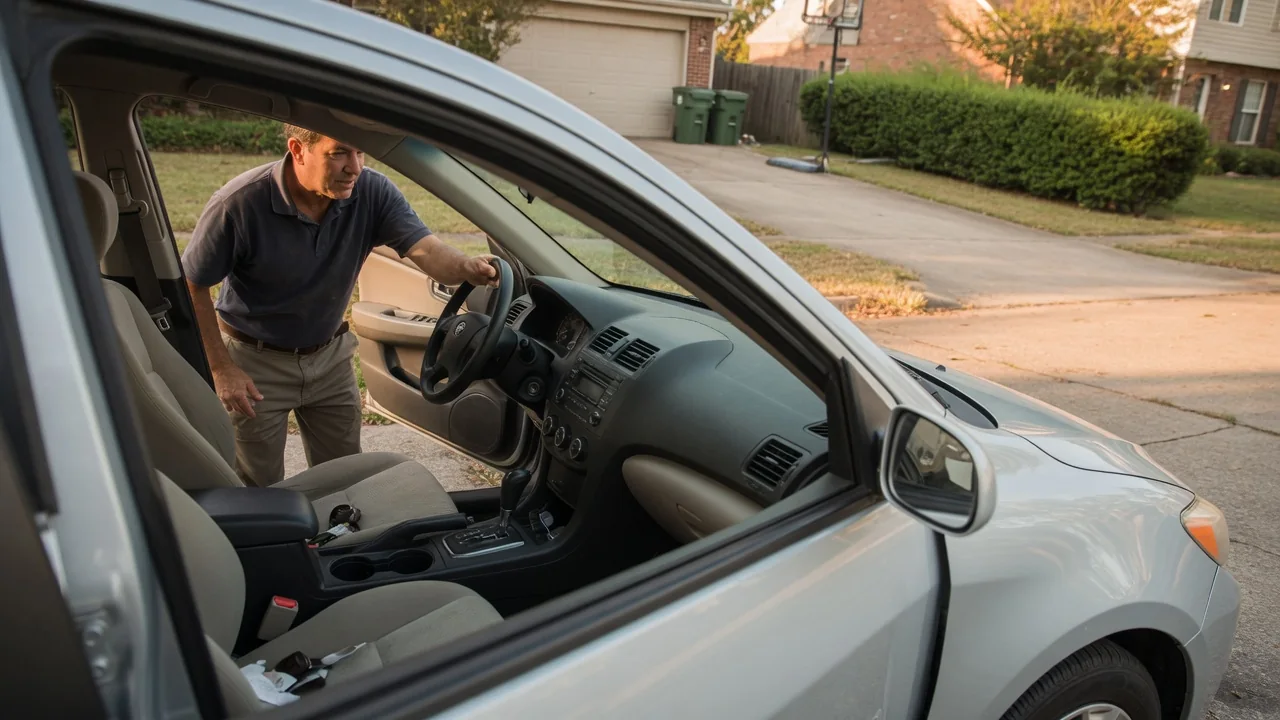
Steering assistance did more than make parking easier. To understand how power steering changed car design, it helps to look at what engineers were free to do once the driver's arms were no longer the only source of steering force: fit wider tires, place more weight over the front wheels, quicken the steering ratio, and shrink the steering wheel itself.
Low-speed effort
Steering is heaviest when the car is barely moving, because the front tires must scrub across the pavement rather than roll through the turn. Without assistance, designers managed that load with leverage: a large-diameter steering wheel, a slow steering ratio requiring many turns from lock to lock, and narrow tires carrying modest weight. Each of those choices shaped the cabin and the chassis, so the limits of the driver's arms effectively set limits on the whole vehicle.
Once a pump or motor supplied most of the parking-speed force, those compromises loosened. Steering wheels could shrink, which opened room for the driver's legs and a clearer view of the instruments. Ratios could quicken, so less arm movement was needed in tight maneuvers. Heavier engines, front-wheel-drive layouts that concentrate mass over the steered wheels, and wider tires all became practical for ordinary drivers. How far any model went depends on its era, weight, and intended market.
Hydraulic systems
Hydraulic assistance typically uses an engine-driven pump, usually turned by an accessory belt, to pressurize fluid. A valve in the steering gear senses how hard the driver is twisting the wheel and directs that pressure to one side of a piston, which pushes the rack or linkage in the chosen direction. The driver still has a mechanical connection to the wheels, so the car can be steered if assistance is lost, though with considerably more effort.
The packaging consequences were real. Engineers had to find room for the pump, its bracket and pulley, a fluid reservoir, high-pressure and return hoses, and sometimes a small cooler, all in an engine bay already crowded with accessories. Because the pump turns whenever the engine runs, it also consumes some energy even when the car travels straight. Under the hood, owners can usually spot the reservoir and hoses, though locations and fluid specifications differ by manufacturer and should be confirmed for the specific vehicle.
Electric systems
Electric power steering replaces the pump and fluid with an electric motor, a torque sensor, and a control module. The motor may be mounted on the steering column inside the cabin, or down on the rack itself, depending on the vehicle's size and the loads involved. Because the motor draws meaningful power only when assistance is needed, the system suits engines that shut off at stoplights, hybrids, and battery-electric cars that have no belt-driven accessories at all.
Removing the hydraulic hardware cleared space in the engine compartment and simplified assembly, since there are no hoses to route or fluid to fill. Software control added a further design dimension: assistance can vary with road speed, differ between drive modes, and support features such as parking assistance and lane-keeping, where the motor applies steering torque itself. Some vehicles used a transitional electro-hydraulic layout, with an electric motor driving a hydraulic pump, so the arrangement on any given car needs to be checked rather than assumed.
Everyday Use and Observations
Drivers feel the design shift most clearly in a parking lot. A modern car with wide tires and a heavy front end can be turned with one hand at a standstill, something that would be tiring in an unassisted vehicle of similar weight. At highway speed, many systems reduce assistance so the wheel feels firmer and steadier on center. The sense of road texture coming through the rim varies widely, and it reflects tuning choices as much as the type of system.
A few observations hint at which system a car uses. A fluid reservoir and belt-driven pump under the hood point to hydraulic assistance, while their absence, together with a steering warning light on the instrument panel at startup, suggests an electric system. Hydraulic setups may hum or groan at full lock, and electric ones may produce a faint motor whir. In either design, steering becomes notably heavy with the engine or ignition off, which is a reminder of how much work the assistance normally does.
Limits and Next Steps
Assistance changed what cars could be, but not the physics underneath. Tire grip, suspension geometry, and alignment still determine how a vehicle responds, and assistance can mask problems such as low tire pressure or worn components by hiding the extra effort. Dependence on the system also matters: a leaking hose, slipping belt, weak battery, or sensor fault can leave steering heavy at low speed. A stored fault code or warning light is a starting point for diagnosis, not proof that a particular part has failed.
For owners, sensible next steps are modest. Consult the owner's manual to learn which system is fitted and what the warning indicators mean, and have a qualified technician investigate any sudden change in effort, new noise, fluid leak, or uneven feel between left and right turns. Looking ahead, steer-by-wire designs that replace the mechanical link with electronic control are appearing on some vehicles, potentially freeing even more cabin and chassis space. Availability, behavior, and backup provisions differ by manufacturer, so model-specific information remains essential.