How Did Headlight Placement Change Over Time? Body, Optics and Rules
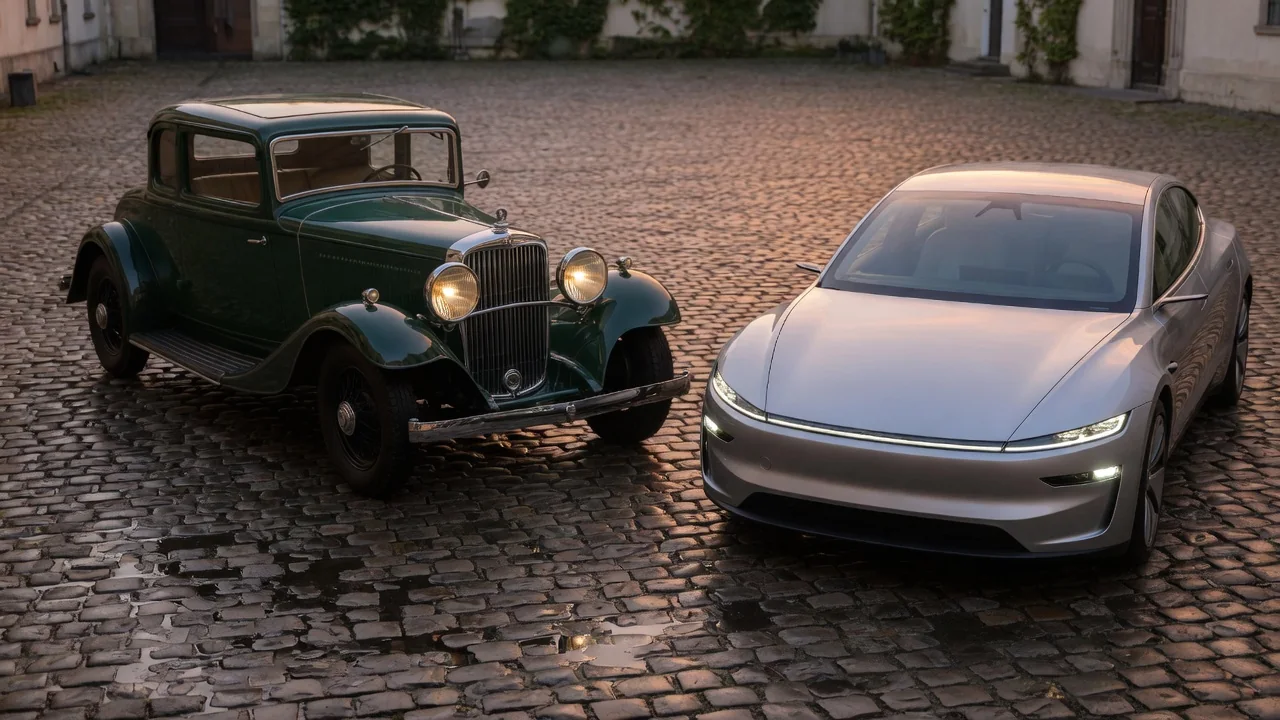
Headlights began as accessories clamped to the front of early cars and gradually became part of the body itself. How headlight placement changed over time comes down to three parallel threads: how designers merged lamps into fenders and front ends, how light sources and optics reshaped the lamp, and how lighting rules set the boundaries designers worked within. This overview of automotive headlight design evolution follows those threads in general terms, focusing on mechanisms rather than individual models.
Body Integration: From Bolt-On Lamps to Sculpted Openings
On the earliest automobiles, headlamps were separate units mounted on brackets, typically flanking the radiator or attached to the frame or fenders. Fenders, running boards and the hood were distinct pieces, so the lamp sat in open air as its own object. This arrangement made lamps easy to add, remove and adjust, but it left them exposed to weather and road debris, added aerodynamic drag, and allowed vibration to disturb their aim.
As bodies moved toward enclosed, smoother forms, fenders grew larger and blended into the body sides. Headlamps followed, first nesting into the leading edge of the fenders and then becoming openings in a continuous front surface once full-width bodies replaced separate fenders. The lamp turned into a recessed unit surrounded by a trim ring or bezel, and placement settled at the outer corners of the front end, framing the grille. Designers also experimented with arranging multiple lamps side by side or stacked vertically, using the lamp layout as a strong styling element.
Hidden headlamps offered another solution. Pop-up, rotating or covered lamps let designers draw a low, sharp nose while still raising or exposing the lamps when they were switched on. Later, plastic lenses and composite housings allowed lamps to become sculpted modules that wrap around the front corners and sit flush with the surrounding panels. More recent designs often split functions, placing a slim signature light high on the front while main beams sit lower or closer to the grille. Today, headlamp placement is a coordinated decision involving the hood line, bumper and crash structure, cooling openings and, increasingly, sensors for driver assistance systems.
Optics: How Light Sources Reshaped Placement
Early flame-based lamps produced weak light, and electric filament bulbs brought a major improvement when paired with parabolic reflectors. In these designs, much of the beam shaping was done by patterned glass lenses with prisms molded into them. That approach favored fairly flat, round lens faces and a deep reflector behind the bulb, which is why older headlamps tended to be large, round and prominent on the front of the car.
Sealed units that combined filament, reflector and lens in one replaceable piece simplified service but limited shapes to a small set of standardized sizes. That standardization effectively dictated what openings stylists could cut into the front end, and it encouraged dual-lamp arrangements that separated low and high beam duties into different units. Halogen light sources later delivered more output from compact bulbs, though the overall lamp geometry still depended heavily on reflector depth and lens design.
A decisive shift came when beam shaping moved from the lens to the reflector. Computer-designed complex reflectors could control light precisely, so the outer lens could be clear, curved and angled to match the bodywork rather than act as an optical element. Projector modules, which focus light through a small lens, made compact units possible, and high-intensity discharge and LED light sources shrank the emitters further. LEDs in particular allow lamps to become thin strips or clusters of small modules, which loosened many traditional constraints on where and how lamps could be placed. They still require heat management and a clear forward view, so optics never become entirely free of packaging limits.
Regulations Avoided: The General Pattern Without the Rulebook
Lighting rules differ between markets and have been revised many times, so specific clauses, numeric limits and adoption timelines are deliberately left out of this explanation. What can be described is the general pattern. Lighting standards commonly address mounting height, spacing from the vehicle's outer edges, the number and color of lamps, beam pattern and cutoff, aim, and how visible the lamps must be from various angles. Those boundaries help explain why headlamps have stayed at broadly similar heights and toward the outer corners of the vehicle, even as styling changed dramatically.
Rules also shaped design indirectly. Where regulations required standardized lamp types, front-end designs tended to converge on similar shapes; where they allowed custom-shaped lamps, variety increased quickly. Safety requirements for the front structure, including pedestrian protection, are commonly cited as one influence on the decline of pop-up headlamps, alongside cost, weight, complexity and aerodynamics. Requirements for daytime running lights in some markets also encouraged the distinctive light signatures seen on many modern front ends. In each case, regulation acted as a framework that steered design choices rather than a single cause of any one change.
Practical Implications and Limits
For owners, deeper integration has tangible consequences. Many modern headlamps are sealed assemblies in which a damaged lens, broken mounting tab or failed LED module may require replacing the whole unit rather than a single bulb. Lamps that wrap around the corners are more exposed to minor impacts, and plastic lenses can haze or yellow with age and sun exposure. Aiming procedures, access to bulbs and the presence of nearby sensors vary widely, so the vehicle's owner's manual or service documentation is the right reference before attempting adjustment or repair.
Retrofitting is another area where the optical design matters. A reflector or projector is engineered around a particular light source and its position, so substituting a different type of bulb can alter the beam pattern, cause glare for other drivers or reduce useful light on the road, and may not be permitted in every jurisdiction. As a historical account, this overview has limits too: the sequence described here happened at different times and in different ways across markets and manufacturers, and individual vehicles often mixed older and newer approaches. Treat the general trends as context, and rely on vehicle-specific documentation for decisions about a particular car.