How Are Headlights Sealed Against Moisture?
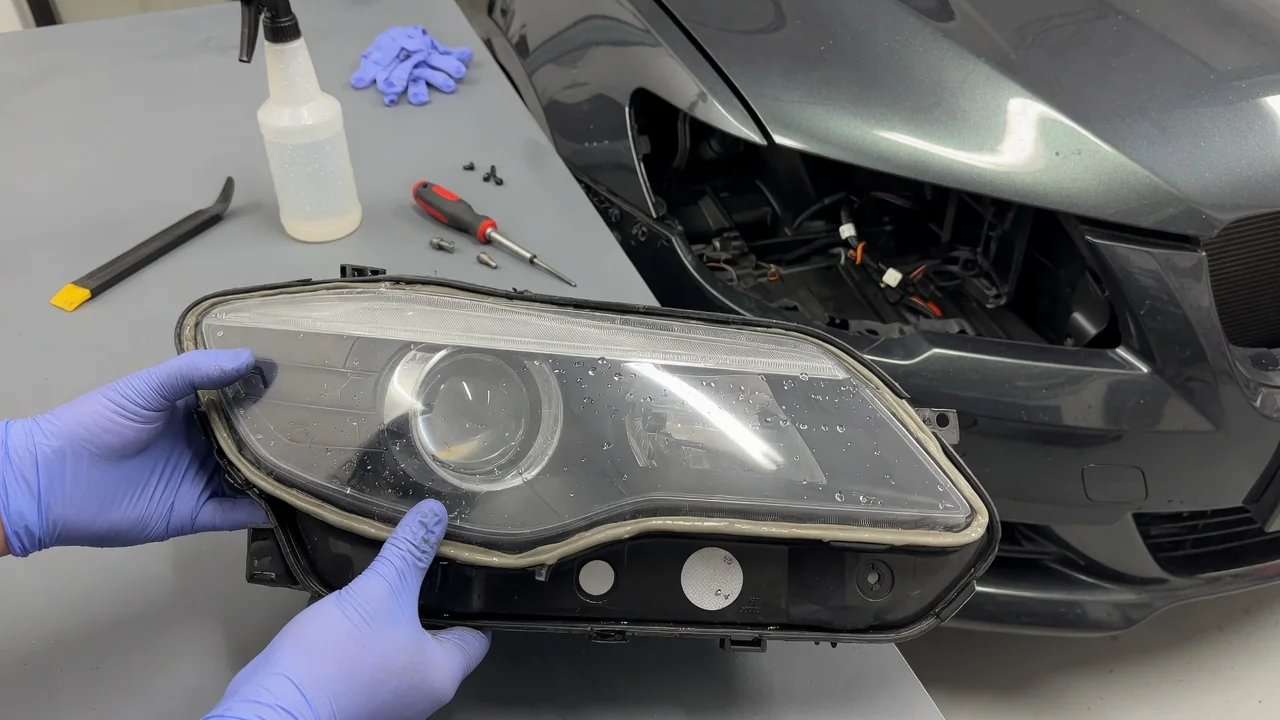
A headlight has to keep road spray, rain, and wash water away from its bulbs, reflectors, and electronics while also coping with large swings in internal temperature. Manufacturers do not do this by making the lamp perfectly airtight. Headlamp sealing design instead combines a durable joint between lens and housing, sealed openings for service and wiring, and controlled ventilation that lets the assembly breathe. Seeing how these parts work together explains why some fogging is normal and some is not.
Housing joint: bonding the lens to the body
Most modern headlamps are built from two main shells. One is a molded plastic housing. The other is a clear polycarbonate lens with a hard protective coating. The perimeter where the two meet is the primary barrier against liquid water. A common approach uses a channel molded around the edge of the housing. The channel is filled with sealant, and a matching flange on the lens is pressed into it. Butyl-based hot-melt sealants are widely used because they stay flexible, tolerate vibration, and can be softened with heat. That is why some assemblies can be opened for repair. Other designs use curing adhesives such as polyurethane or silicone, which form a stronger bond that is much harder to separate. Some lamps join lens and housing by plastic welding, using processes such as vibration, hot-plate, or laser welding. Welding fuses the materials directly, so there is no separate sealant layer to age.
The perimeter joint is only one part of the seal. A headlamp also has openings that must close reliably. These include rear access covers or caps for bulb replacement, bulb sockets that twist into the housing, adjuster shafts used for aiming, and passages for wiring or electrical connectors. They are typically closed with rubber or elastomer gaskets, O-rings, molded grommets, and sealed connectors. Each one is a potential leak path if it is missing, distorted, or not fully seated. Mounting tabs and screw bosses are usually placed outside the sealed volume, so attaching the lamp to the vehicle does not open a route into the optical chamber.
Vents: why headlights are designed to breathe
A headlamp warms up when it is switched on and cools again when it is switched off or when cold rain hits the lens. The air inside expands and contracts with these temperature changes. If the housing were completely sealed, that cycle would create pressure differences across the joint. Those differences would stress the sealant and lens. As the lamp cooled and internal pressure dropped, they could also draw water in through any tiny weakness. Vents let internal pressure equalize with the outside air, so the sealed joint does not have to resist repeated pressure swings on its own.
Vent designs vary. Some use short tubes or nipples fitted with caps, small hoses routed to a sheltered area, or labyrinth paths that make it hard for liquid droplets to travel inward. Many current designs use breathable membrane vents. These are typically made from a microporous material that lets air and water vapor pass while resisting liquid water and dust. Placement matters as much as vent type. Openings are usually positioned on the rear or sheltered areas of the housing, where spray and direct water jets are less likely to reach and water is unlikely to pool. Some lamps use more than one vent to encourage airflow through the interior. Because vents are deliberate openings, a blocked, damaged, or missing vent changes how the lamp handles both pressure and moisture.
Condensation: what happens to moisture inside the lamp
Because a vented headlamp exchanges air with its surroundings, the air inside always holds some water vapor. When the lens cools faster than the interior, that vapor can condense on the inner surface of the lens as a thin mist. This can happen on a cold night, after a car wash, or when rain falls on a warm lamp. The mist is a normal result of the breathing design, not evidence of a leak. Light fogging that clears after the lamps have been on for a while, or after the weather changes, is therefore generally treated as normal behavior. Warmth and airflow gradually carry the vapor back out through the vents.
Lamp technology affects how quickly fog clears. Halogen bulbs release a lot of heat into the housing, which helps drive moisture out. LED headlamps manage their heat with heat sinks, and sometimes fans, at the rear of the lamp. As a result, the lens area may warm up less, and a mist can take longer to disappear. Condensation is different from water intrusion. Large droplets, streaks that do not evaporate, standing water at the bottom of the housing, or fog that returns and persists for days all point to liquid water. That water is coming in through a failed seal, a crack, or a vent problem, not through ordinary vapor exchange.
Practical implications and limits
For owners, the most useful point is that sealing failures usually start at the parts that get disturbed or exposed. Bulb replacement is a good time to confirm that access caps and gaskets are reseated correctly and that no seal has been pinched or left off. Aftermarket conversions can weaken the barrier, especially if they require cutting or drilling a cover or use parts that do not match the original seal. A cracked lens from stone damage, a broken mounting tab that lets the lamp shift, or a minor collision can also stress the perimeter joint, even when nothing looks wrong from the front.
Washing habits matter too. Seals and vents are designed for rain and road spray, not concentrated jets. High-pressure spray aimed at the lens edge or the back of the lamp can force water past them. Keeping debris, wax buildup, and undercoating away from vent openings helps the vents keep working. Repairs have limits. Resealing a butyl-bonded lamp is sometimes possible, but adhesive-bonded or welded assemblies are generally not designed to be opened. A reflector, coating, or electronic module damaged by moisture may not recover even after drying. Persistent water, corrosion, or electrical faults usually mean replacing the assembly or following the vehicle maker's service procedure, which varies by model.