How Are Car Bodies Protected Against Rust at the Factory?
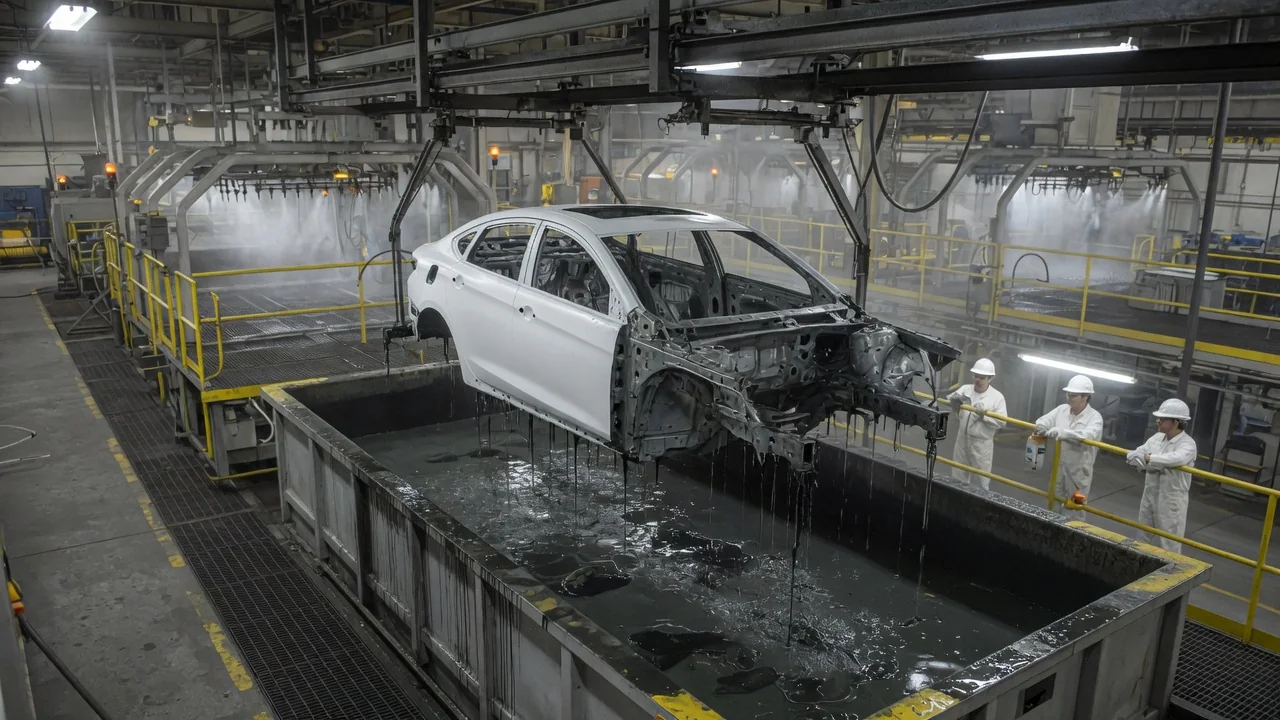
Anyone wondering how are car bodies protected against rust at the factory will find the answer is a layered system rather than a single coating. Automakers combine coated steel, chemical pretreatment, immersion primer, seam sealers, cavity wax, and carefully placed drain paths so that moisture has little chance to reach bare metal or stay trapped inside the body structure.
Metal preparation
Corrosion protection begins before a panel is ever stamped. Much of the sheet steel used in modern bodies arrives from the mill with a zinc coating, commonly described as galvanized or galvannealed. Zinc protects in two ways: it forms a physical barrier, and it corrodes sacrificially in place of the steel beneath when a scratch exposes both metals. Some manufacturers also use aluminum for hoods, doors, or entire body structures, which does not form red rust but still needs pretreatment and isolation from dissimilar metals.
Once the welded body shell is assembled, it passes through a series of cleaning and rinsing stages that strip stamping oils, weld residue, and shop dust. A conversion coating, traditionally zinc phosphate and increasingly thin-film alternatives, then creates a microscopic crystalline layer that helps primer bond and slows corrosion from creeping under the paint. Owners cannot see this layer, but its effect shows up years later when a stone chip stays a small blemish rather than spreading. The exact chemistry and substrate mix differ by brand, plant, and model generation.
Paint and cavity protection
After pretreatment, the entire body shell is submerged in an electrocoat bath, often called e-coat or electrodeposition primer. An electrical charge draws the primer onto every conductive surface, including the inside of rocker panels, pillars, and frame rails that a spray gun could never reach. The film is then baked hard. Primer surfacer, color basecoat, and clearcoat follow on the exterior, adding chip resistance, ultraviolet protection, and gloss. Open a door or lift the hood and the duller, uniform finish in hidden areas is often that electrocoat with little or no topcoat over it.
Joints are the weak points of any welded structure, so seam sealer is applied along overlapping panels in the floor, trunk, door hem flanges, and wheel housings to block capillary water entry. Underbody coating or fitted plastic liners shield the floor and wheel arches from gravel abrasion. Many manufacturers also spray wax-based cavity preservative into enclosed box sections, where it creeps into seams and repels moisture. How extensively cavity wax and underbody coating are applied varies considerably between vehicles, so two cars of similar age can look quite different underneath.
Ongoing owner care
Factory protection is designed to work alongside drainage, and keeping those drains open is the most valuable habit an owner can adopt. Doors, rocker panels, tailgates, and sunroof trays have small holes or tubes that let water escape after rain or washing. Leaves, mud, and road grit can plug them, leaving water standing against seams from the inside. A periodic look along the lower door edges and the cowl area beneath the windshield, with debris cleared gently, helps the body shed water the way its engineers intended.
Washing matters more than many drivers assume, particularly where road salt or coastal air is part of daily life. Salt holds moisture against the metal and speeds the electrochemical reaction, so rinsing the underbody and wheel arches during and after winter removes the fuel for corrosion. Paint chips on the hood edge or rocker panels deserve prompt touch-up, because a break in the coating exposes the zinc layer and eventually the steel. Wax or sealant on the exterior helps preserve the clearcoat, though it does nothing for hidden cavities.
Everyday Use and Observations
Daily driving tests the factory coatings in predictable places. The leading edge of the hood, the area behind each wheel, and the lower doors take constant bombardment from stones and sand thrown up by the tires. Mud packed onto ledges inside the wheel arches stays damp for days and keeps the metal wet long after the roads have dried. Short trips in cold weather can also leave condensation inside box sections, which is exactly the situation cavity wax and drain openings are meant to manage.
Early warning signs are usually subtle. Paint that bubbles or blisters along a wheel arch lip, door bottom, or tailgate seam often indicates corrosion working outward from behind the panel. Brown staining weeping from a seam, water sloshing inside a door, or damp carpets after rain point to blocked drains or a failed seal. Light surface rust on exposed suspension parts, exhaust components, and brake rotors is commonly normal and does not reflect the condition of the body shell, since those parts are finished to different standards.
Limits and Next Steps
No factory system makes a vehicle immune to rust. Coatings are thin by design, and their protection can be compromised by collision damage, poorly finished body repairs, holes drilled for accessories, or abrasion that wears through underbody coating. Repaired panels may not receive the same immersion primer and cavity treatment as the original shell, which is why previously damaged areas are frequent starting points for corrosion. Age, climate, and how the vehicle is stored all influence how long the original protection remains effective, so outcomes vary widely.
When rust is suspected, a body shop inspection on a lift gives a far clearer picture than a glance at the visible paint, since structural sections such as rocker panels, floor supports, and subframe mounts matter most for safety. Owners in harsh climates sometimes consider supplemental cavity wax or underbody treatment, and its value depends on the product, the application quality, and the vehicle's existing protection. The manufacturer's corrosion warranty terms, found in the warranty booklet, explain what is covered and what inspection or maintenance conditions apply to that specific vehicle.