How a Car Cooling Fan Helps Prevent Engine Overheating
Direct Answer
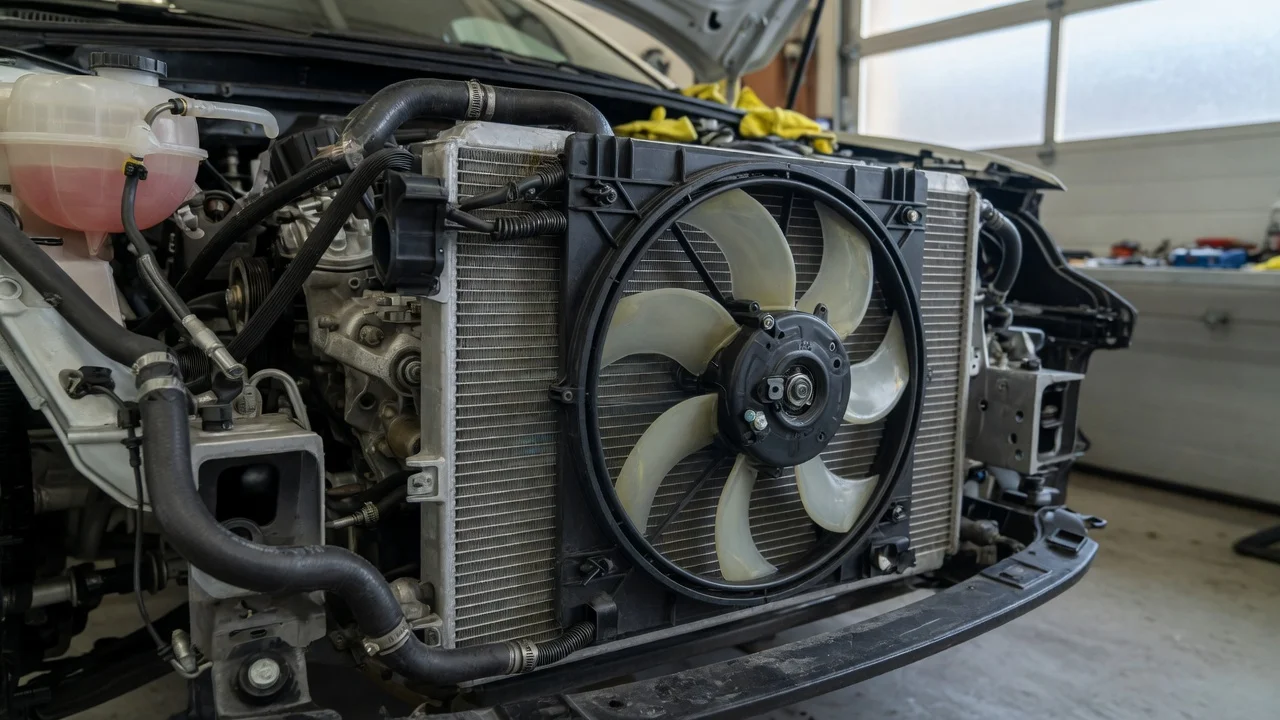
The car cooling fan helps prevent engine overheating by pulling or pushing air through the radiator when the vehicle is moving too slowly for natural airflow to do the job. At highway speed, air enters the front of the vehicle and passes through the radiator, removing heat from the coolant. At idle, in traffic, or during low-speed driving, there is not enough ram air. The cooling fan creates that airflow so the radiator can still release heat and keep coolant temperature within the intended operating range.
The exact fan design, control strategy, and activation temperature vary by vehicle model year, engine, market, and configuration. The explanation below describes general automotive practice rather than one universal specification.
Cooling Fan Names and Common Confusion
The term car cooling fan usually refers to the radiator cooling fan or engine cooling fan mounted near the radiator. It is not the same as the interior HVAC blower motor, which moves air through the cabin vents for climate control. It is also different from the condenser fan if a vehicle has a separate fan for the air conditioning condenser, although many vehicles have shared or combined fan assemblies that serve both the radiator and condenser.
Why the Fan Is Needed
Engine coolant absorbs combustion heat and carries it to the radiator. The radiator transfers that heat to outside air. For that heat transfer to work, air must pass across the radiator core. Vehicle movement provides airflow at speed, but a stationary or slow-moving vehicle cannot create enough airflow. Without a working fan, coolant temperature can rise until the engine overheats.
The risk is highest during conditions that combine engine heat with low road speed: idling for a long time, stop-and-go traffic, climbing at slow speed, or using the air conditioning on a hot day.
How the Cooling Fan Works
The fan is positioned so its airflow passes through the radiator. Depending on the vehicle, it may pull air through the radiator from the engine side or push air through from the front. The fan activates when cooling demand increases, typically based on a signal from the engine control system or a temperature-sensing device. Some systems use multiple speeds or pulse-width modulated control so the fan runs only as fast as conditions require.
On many vehicles, the fan may also run when the air conditioning is on. The AC condenser must release heat, and at low vehicle speed the fan supplies the airflow needed for that process.
Cooling Fan Types
A mechanical cooling fan is driven by the engine, often through a belt and a viscous fan clutch or another torque-limiting device. The clutch allows the fan to engage more or less strongly according to temperature and airflow need.
An electric cooling fan runs from the vehicle electrical system and is switched by a relay, module, or controller. Electric fans are common on many modern vehicles because they can operate independently of engine speed and can be controlled more precisely.
What Happens When Cooling Fan Problems Appear
A failed cooling fan may not create an immediate problem at highway speed because ram air can still cool the radiator. The symptom often shows up at idle or in slow traffic: the temperature gauge rises, a high coolant temperature warning may appear, or the air conditioning may lose cooling performance. The engine can overheat if the condition continues.
Possible causes include a failed fan motor, a blown fuse, a faulty relay, a broken wire or connector, a failed temperature switch or sensor, a control module fault, or a failed fan clutch on a mechanical system. The appropriate repair depends on which component failed and how the specific vehicle controls fan operation.
Practical Warning If Overheating Occurs
If the vehicle shows signs of overheating, the safest response is to reduce load and stop safely rather than continue driving. Continuing to operate an overheated engine can cause severe damage. The specific safe procedure can vary by vehicle and availability of a safe stopping location, so the driver should first prioritize reaching a secure place to stop and turning the engine off when appropriate.
When Vehicle-Specific Information Is Required
Fan location, type, fuse identification, control strategy, activation temperature, and repair procedure all vary by vehicle. Definitive diagnosis and repair require the service information for the exact model year, engine, market, and configuration. Without that information, a general article cannot reliably identify the correct fuse, relay, or replacement part for a particular car.