Honda TPMS Sensor Replacement: When It's Needed and What to Expect
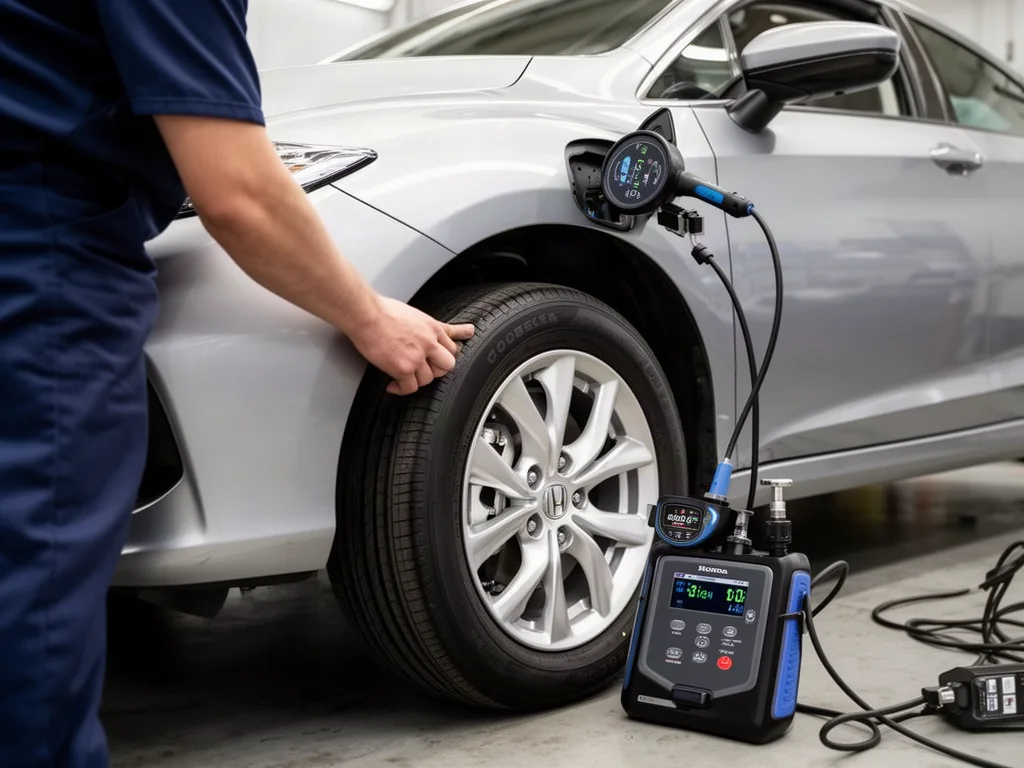
A Honda tire pressure sensor is part of the tire pressure monitoring system Honda uses to warn when inflation is outside the expected range. Whether you drive a Civic, an Odyssey, or another model, Honda TPMS equipment varies by year and market. Confirm the installed system before buying a Honda TPMS sensor or scheduling Honda TPMS sensor replacement, because a warning light is a starting point for diagnosis, not proof that a sensor has failed.
Confirm Your Honda’s TPMS Type Before Buying a Sensor
Honda TPMS type, hardware, and procedures depend on model, year, and market, so identification comes before any purchase. The owner's manual and vehicle-specific service information identify whether the Honda tire pressure monitoring system is a direct TPMS setup with a replaceable in-wheel sensor or an indirect TPMS arrangement that infers pressure from wheel-speed data. Direct systems use a Honda tire pressure sensor at the wheel. Indirect systems typically do not, so buying a sensor for a Honda that uses wheel-speed monitoring is the wrong first move.
What the driver sees also needs vehicle-specific confirmation. Some Hondas show individual tire pressures; others illuminate a TPMS warning light without a numeric display. Either indication can reflect actual inflation, a communication issue, or a system that has not completed its expected checks. Confirming the installed Honda tire pressure monitor and how it behaves on that vehicle keeps sensor shopping from running ahead of the facts. A replacement appointment is useful after the system type is known, not as a substitute for identifying it.
Warning Signs That Need Diagnosis Before Replacement
A TPMS warning light does not by itself prove a Honda TPMS sensor has failed. Cold tire pressure can drop from a leak, seasonal temperature change, or underinflation relative to the door-jamb tire placard. Check cold pressure with a gauge against that placard and look for visible tire damage, cuts, or objects in the tread without removing components. Stop safely for a visibly flat tire, rapid pressure loss, or abnormal handling rather than continuing to drive in hopes the warning will clear.
Persistent malfunction indications, missing readings where the vehicle supports them, and warnings that return after wheel service are reasons for vehicle-specific testing, not automatic sensor replacement. A shop may use a TPMS scan tool to check sensor communication, stored faults, valve stem leakage, and whether sensor ID registration matches the installed hardware. A stored fault is evidence to interpret, not proof a part has failed. Manufacturer-dependent codes still require confirmation on the specific Honda before attributing the problem to the sensor or its sensor battery.
2012 Honda Civic Sensor Identification and Fitment
A 2012 Honda Civic TPMS sensor is not a generic Civic part. Market, vehicle identification, and the installed Honda tire pressure monitoring system must be confirmed before naming sensor specifications. Some 2012 Civic applications use a wheel-mounted Honda TPMS sensor; others may use different monitoring equipment depending on market and options. A technician verifies the TPMS sensor for 2012 Honda Civic application and communication requirements with vehicle-specific parts and service information rather than matching by year and model name alone.
When arranging diagnosis of a Honda Civic 2012 TPMS sensor concern, owners should disclose aftermarket wheels and any previous sensor replacements, because those details affect fitment, valve hardware, and whether the installed sensors will communicate as expected. Replacing the TPMS sensor for Honda Civic 2012 also requires confirmation of the applicable sensor ID registration procedure. Do not assume a dashboard reset or ordinary driving will register a replacement TPMS sensor on a 2012 Honda Civic. Service is incomplete until the vehicle recognizes the installed IDs under the specified method.
Honda Odyssey Tire Pressure and TPMS Checks
Tire pressure for Honda Odyssey models is not a single universal number, and Honda Odyssey TPMS equipment is not identical across every year and market. Identify the model year and market before describing the monitoring system, a TPMS sensor for Honda Odyssey applications, or warning-light behavior. Find the specified cold pressures on the door-jamb tire placard and note any separate front and rear requirements. The pressure molded into a tire sidewall is a maximum rating for that tire, not the Odyssey's recommended inflation target.
If Honda Odyssey TPMS warnings persist after verified inflation to the placard, check for leaks and diagnose the system before authorizing sensor replacement. TPMS for Honda Odyssey applications may be direct, with Honda Odyssey TPMS sensors in the wheels, or another configuration; that distinction belongs to the vehicle's service information. Verify wheel and sensor fitment for the specific van, including aftermarket wheels or any TPMS sensor a Honda Odyssey already carries from earlier tire work. Those details change both diagnosis and parts selection.
What Happens During Honda TPMS Sensor Replacement
Professional Honda TPMS sensor replacement starts with confirming the fault and verifying the replacement part against the vehicle. Accessing the in-wheel sensor requires tire-service equipment; the technician then installs the approved unit and checks for leaks at the valve. Battery serviceability depends on sensor design, and a sealed sensor battery usually means replacing the sensor assembly rather than servicing the cell. Valve stem components are inspected to the applicable service requirements without improvised fastening or pressurized-component repairs.
Replacing a TPMS sensor on a Honda, or authorizing additional Honda tire pressure sensors, should follow test results and the condition of the installed components rather than a habit of changing all four. An estimate for Honda TPMS sensor replacement commonly includes diagnosis, the sensor, valve hardware, tire service, and registration or relearn time. Exact prices vary and are not useful as a universal figure. A TPMS scan tool may be part of confirming communication after the new sensor is in place, before the vehicle is released.
Relearn, Registration, and Checks After Service
Sensor programming, sensor ID registration, and TPMS calibration are distinct operations, and only those specified for the Honda being serviced should be performed. On an equipped direct TPMS system, the applicable registration or sensor relearn procedure is required so the vehicle recognizes the installed Honda TPMS sensors. On an equipped indirect TPMS system, the manual may call for calibration after pressure or tire service; that procedure does not replace an in-wheel pressure sensor. Mixing those steps wastes time and can leave the tire pressure monitor in an incomplete state.
Completion checks include correct cold tire pressure to the placard, no detected leakage, and normal system operation under the prescribed verification procedure. If the TPMS warning light returns, recheck pressures and continue diagnosis rather than repeatedly resetting the system. A reset does not repair a leak, a failed sensor battery, or a communication fault. The Honda tire pressure monitoring system is doing its job when it reports a remaining problem; clearing the indication without finding the cause leaves the vehicle unmonitored in the way the design intended.