Honda steering angle sensor: location and faults
A Honda steering angle sensor is part of the stability and traction control network, and it helps the vehicle understand how far and how quickly the driver is turning the wheel. On Accord, Civic, and CR-V models, this information supports systems such as Vehicle Stability Assist and electric power steering. When the signal becomes implausible, the cluster may store a fault and illuminate a warning. The following sections explain where the sensor is typically found, how to interpret related warnings, and what may cause a steering angle sensor fault without assuming the component itself has failed.
Direct answer
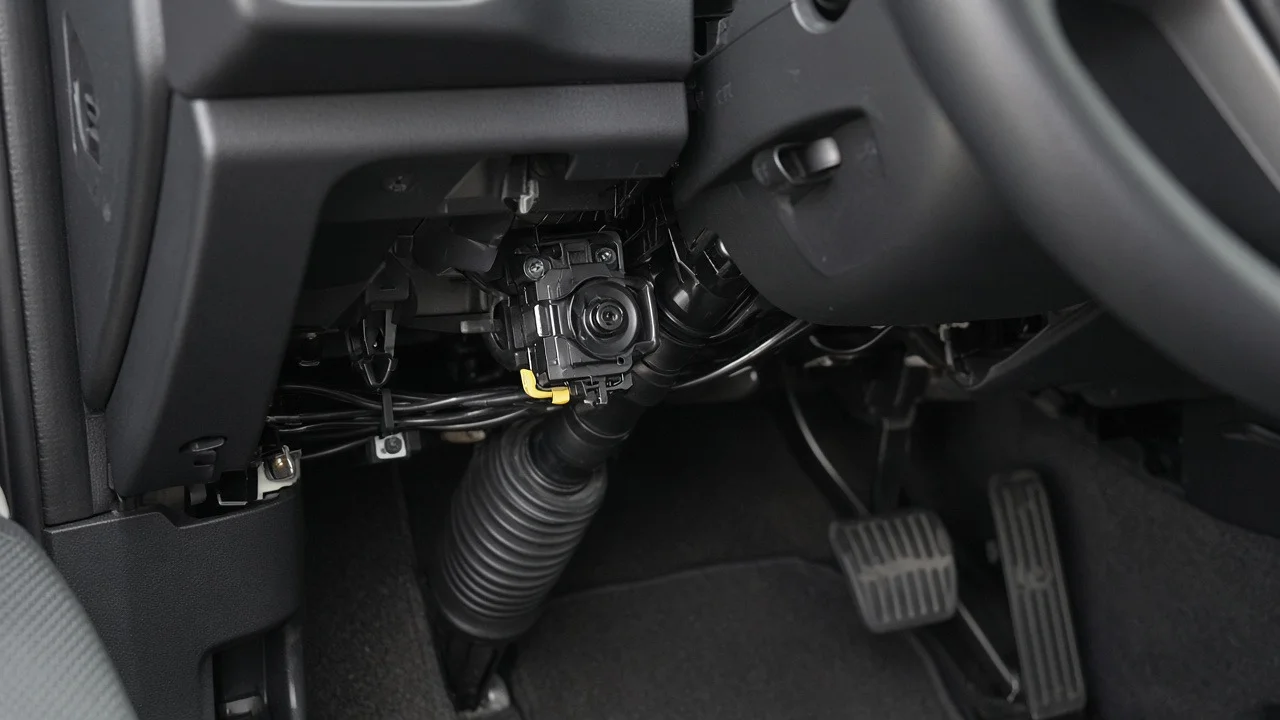
The steering angle sensor is usually integrated with the steering column, often near the combination switch or clock spring assembly behind the steering wheel. In many Honda applications, the sensor measures rotation of the steering shaft and reports that angle to the ABS or stability control module. A Honda Accord steering angle sensor, for example, generally lives in this column area rather than near the rack or wheels. Its exact mounting style varies by model year and trim, so column disassembly or trim removal is commonly needed for access.
A fault in this circuit does not automatically mean the sensor is defective. Wiring, connector fit, steering wheel alignment, or a recent alignment change can all create an angle signal that the control module sees as incorrect. The stored code is evidence that the system detected a mismatch, not proof that one part needs replacement. For this reason, the most useful first step is to read the code, then check the sensor signal and its related inputs before changing components.
Identification and location
On many Honda Accord, Civic, and CR-V vehicles, the steering angle sensor is a small electronic module clipped or screwed to the steering column. It may be located under the steering column covers, close to the clockspring, or built into a column-mounted sensor ring. Because the sensor reads rotation directly from the shaft, it needs a fixed reference point and a clear electrical path to the stability controller. The wiring typically routes down the column and into the main under-dash harness.
Identifying the correct part can be tricky because the clock spring, turn signal switch, and steering torque sensor may be nearby. The steering angle sensor usually has a multi-pin connector and a rotor that turns with the steering shaft. Some vehicles do not list it as a separate serviceable component because it is sold as part of the column switch assembly. Before working in this area, the airbag system should be treated with care, since the clock spring and supplemental restraint wiring share the same location.
Interpreting symptoms and test results
A common indicator of a Honda steering angle sensor issue is a stability warning light or a steering-related warning that appears with a stored chassis code. Drivers may also notice that the vehicle feels less stable during hard braking or that traction control intervenes unexpectedly. These symptoms suggest the control module is receiving an angle reading that does not match wheel speed, yaw, or lateral acceleration data. The problem may be in the sensor, its connector, the column wiring, or the module’s reference values.
A scan tool reading is most useful when the steering is centered and the front wheels are straight ahead. If the displayed angle is far from zero, the sensor may need calibration or the steering wheel may be off-center after an alignment. Checking the connector and looking for damaged column wiring can distinguish an electrical failure from a sensor that has lost its zero point. Only after those tests remain inconclusive should replacement be considered, and the new sensor will typically require a calibration or reset procedure.