Honda S2000 Rear Differential Fluid: Type and Change Guide
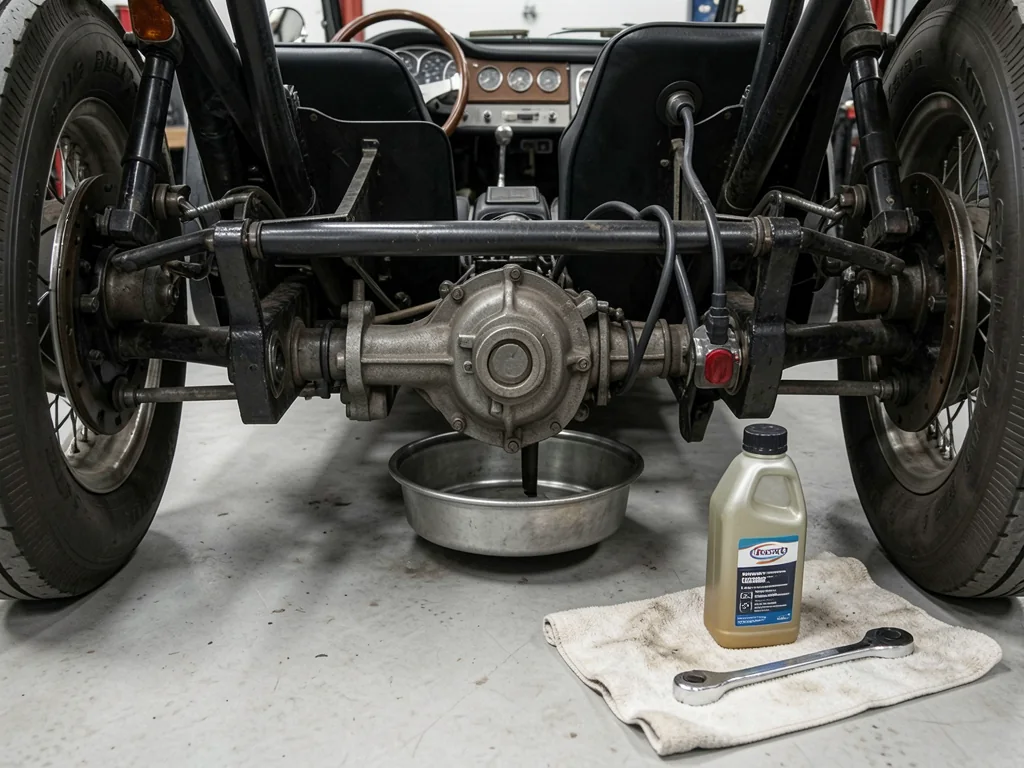
The Honda S2000’s rear differential is a precision component that transfers engine power to the rear wheels while allowing them to rotate at different speeds through corners. Choosing the correct s2000 differential fluid and changing it at the right time protects the hypoid gears and bearings from heat, wear, and contamination. This guide explains how to confirm the proper gear oil, consider limited-slip needs, and plan a safe fluid change.
What the S2000 Rear Differential Does and Why Its Fluid Matters
The rear differential receives rotational force from the driveshaft and redirects it to the rear axles through a set of hypoid gears. When the S2000 turns, the outside wheel travels a longer arc than the inside wheel, so the differential must allow a speed difference between them. The gear oil forms a load-bearing film on the gear teeth and bearings, preventing direct metal-to-metal contact under acceleration, deceleration, and cornering loads.
Heat is the biggest enemy of differential fluid. Hard driving, high ambient temperatures, and sustained high-speed operation raise oil temperature, which can break down the lubricant over time. As the S2000 ages, seals may allow a small amount of moisture or contaminants inside, and the original fill cannot last indefinitely. Mileage, storage conditions, and driving style all influence how quickly the fluid degrades.
Confirming the Correct Rear Differential Fluid Specification
Before purchasing gear oil, check the owner’s manual or official Honda service information for the exact fluid type, viscosity grade, and API service rating. Gear oil labels use a viscosity grade such as 75W-90, where the first number describes cold-flow behavior and the second describes high-temperature thickness. The API GL-5 rating indicates the oil contains extreme-pressure additives suitable for hypoid gears, which operate with high sliding pressure between the gear teeth.
Specifications can differ by model year, market, or previous modifications, so a forum recommendation may not match your particular S2000. The rear differential oil is not the same as transmission fluid; each lubricant is formulated for different gear geometries and friction requirements. Using the wrong oil can reduce limited-slip performance, increase wear, and shorten component life. When in doubt, confirm your selection with a Honda dealer or a trusted parts professional.
Limited-Slip Differential Considerations When Choosing Gear Oil
The S2000 uses a limited-slip differential in most markets, which resists excessive wheel speed difference under hard acceleration or on slippery surfaces. An open differential sends power to the wheel with less traction, but a limited-slip unit uses clutch packs, gears, or a viscous coupling to transfer torque to the wheel with more grip. The fluid choice can affect how smoothly the limited-slip mechanism engages and releases during transitions from straight-line driving to cornering.
Some limited-slip differentials require a friction modifier or additive to prevent chatter when the clutch packs engage during low-speed tight turns. Check Honda’s guidance for your specific unit before adding anything; many modern gear oils already contain the necessary additives. If the differential was swapped or modified, verify the exact type fitted. Occasional chatter or a groaning noise in tight low-speed turns may suggest the fluid is not ideal, but those symptoms alone do not prove the cause—mechanical wear can produce the same signs.
Deciding When to Change the Differential Fluid
The safest approach is to follow the maintenance schedule in the owner’s manual or Honda service information for the differential fluid change interval. Hard use, such as track days, autocross, spirited mountain driving, or high-load operation, elevates oil temperature and can break down the fluid more quickly. If your S2000 sees this kind of use, consider a shorter interval and discuss it with a qualified technician who understands the car’s needs.
Long storage or low yearly mileage does not mean the fluid lasts forever. Condensation can form inside the differential housing during temperature swings, and additives degrade over time even without driving. Check the vehicle’s service records to see what was changed and when. For older or collectible S2000s, keep a written log of the date, mileage, fluid type, and any observations from the old oil—this record helps you spot trends and plan future maintenance.
Preparing for a DIY Rear Differential Fluid Change
Before starting a DIY change, locate the fill plug and drain plug on the differential housing. Always loosen the fill plug first to make sure it can be removed; if it is seized and you drain the oil first, you cannot refill the unit. Raise and support the car on firm, level ground using proper jack stands or a lift, and never rely on a jack alone. If you do not have the right equipment or experience, have the job done by a professional.
Gather the correct fluid in the quantity specified in the service information, along with new crush washers or seals if the manual calls for them. Have the plug torque values ready from official documentation before you begin. Use a hand pump or hose to add fluid through the fill hole until it just starts to overflow, then reinstall the fill plug to the specified torque. Dispose of used gear oil at a local recycling center or auto parts store that accepts waste oil—never pour it on the ground or into drains.
Reading Old Fluid and Knowing When to Seek Professional Inspection
When you drain the old fluid, look for unusual color, a burnt smell, or visible metal on the drain plug. Gear oil darkens with use, but a thick black appearance or a strong acrid odor can indicate overheating or contamination. A magnetic drain plug often collects a fine metallic paste, which is normal wear; however, larger flakes or chunks point to gear or bearing damage that needs professional inspection.
Pay attention to symptoms before and after the change: whining that changes with road speed, clunking when transitioning on or off throttle, vibration at certain speeds, or oil leaks around the differential seals. These signs require proper diagnosis rather than guesswork, and changing the fluid rarely fixes an existing mechanical problem. If noises continue after a fluid change, if leaks keep coming back, or if the differential’s history is unknown, have a qualified technician inspect the unit.