Honda Pilot, Ridgeline and Passport Timing Belt Replacement: Interval, Cost and Kits
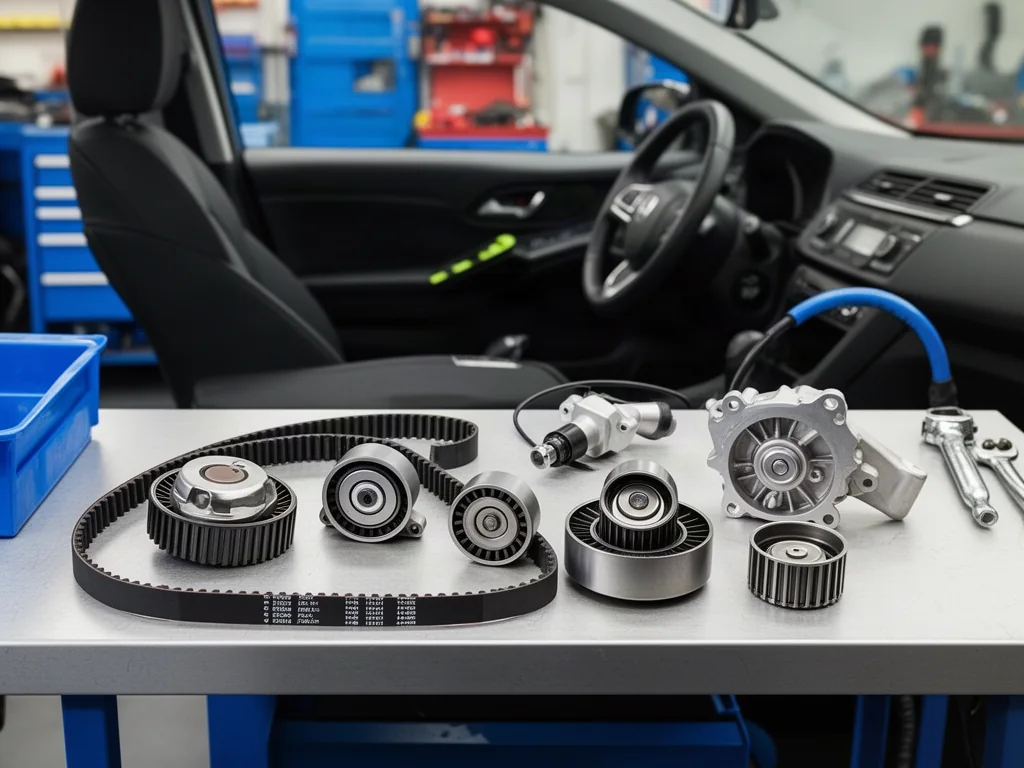
Before you change the timing belt on a Honda Pilot, Ridgeline or Passport, confirm which engine the vehicle has. Then check its service history against Honda's maintenance guidance. This guide covers how to find the right interval, what a proper timing belt replacement includes and how kits and water pump work differ. It also explains what drives the cost and which warning signs need a professional's attention.
Confirm Timing Belt Service for Your Model Year and Engine
Before booking a Honda Pilot timing belt replacement, find the model year, the engine designation and the 17-character VIN. You'll find the VIN on the registration, the insurance card or the driver-side door jamb. With these details, a service advisor or parts counter can pull the correct maintenance information instead of working from a general description. Not every Honda engine uses a belt, and some use a timing chain with different service needs. This guidance applies only to the V6 shared by the Pilot, the Ridgeline and some Passport generations, once that engine is confirmed.
The timing belt connects the crankshaft to the camshafts so the valves open and close in step with the pistons. A stretched, cracked or damaged belt can let the timing drift or fail completely. On engines where valves and pistons share space, a break can cause serious internal damage. Take extra care with the Passport name, because not every Passport generation has used the same powertrain. Confirm the engine and service information before applying Pilot or Ridgeline guidance to a Honda Passport timing belt replacement.
Find the Correct Replacement Interval and Check Service History
Whether timing belt service is due depends on the owner's manual, Honda's maintenance schedule and, on equipped vehicles, the Maintenance Minder. The Maintenance Minder shows service codes as items come due. Check each model year separately. A 2006 or 2007 Honda Pilot, a 2011, 2012 or 2013 Pilot, and a 2015, 2016, 2017 or 2019 Pilot should not all be given one universal mileage. The requirement may be based on mileage, elapsed time or documented operating conditions, so follow the schedule for your exact vehicle.
Proof of an earlier timing belt change comes from paperwork. Look for a dated invoice that shows the odometer mileage, the VIN and the parts installed, ideally the belt, tensioner and water pump. A seller who only says the belt was done leaves the history uncertain. If records are missing, a qualified shop can review the vehicle and set up a service plan, which may mean treating the belt as due. A quiet, smooth-running engine doesn't prove the belt is healthy, because it can wear out without obvious symptoms.
Understand the Timing Belt Replacement Scope
A professional timing belt replacement on a Honda Pilot, Ridgeline or Passport follows the same broad steps. The shop confirms the vehicle's requirements, removes the parts that block access and replaces the specified components. It then checks that crankshaft and camshaft timing are aligned and runs operational checks after reassembly. Once the engine is confirmed, the written scope should name the belt and every other part being replaced. It should also list inspection of the idler pulleys, belt tensioner and surrounding area for oil or coolant seepage.
Replacing seals or doing other repairs while the engine is partly apart can be sensible. Each item should still have a documented reason, such as an observed leak, and your clear approval before work starts. When the job is done, ask for a completion record. It should show the date, odometer mileage, VIN, installed parts with brands or part numbers, and the parts and labor warranty terms. Future owners, buyers and technicians will rely on that invoice to decide when the next timing belt change is due.
Check Kit Contents, Tensioner Coverage and Water Pump Work
A Honda Pilot timing belt kit, or a kit sold for the Ridgeline or Passport, is only a label. There is no standard list of what it contains. One kit may include just the belt and tensioner, another may add idler pulleys, and a third may include a water pump. Compare each item with the parts your shop plans to replace, and confirm fitment by model year, engine and VIN. These vehicles share a V6, but that doesn't prove their parts are interchangeable, because components can change between generations or during production.
Shops often recommend replacing the tensioner and water pump during the same visit. Depending on the confirmed engine layout, those parts may sit behind the same covers and need much of the same labor to reach. The recommendation should be based on service requirements and the parts' condition, not habit. If you approve a water pump, ask whether coolant, seals, gaskets and vehicle-specific hardware are included. Also ask whether the shop will refill and bleed the cooling system. A missing gasket or the wrong coolant can undermine otherwise good work.
Understand Pilot, Ridgeline and Passport Replacement Costs
The cost to replace a timing belt on a Honda Pilot, Ridgeline or Passport depends on local labor rates, the confirmed engine, the parts chosen and the agreed scope of work. A useful itemized estimate separates labor, timing components, water pump work, coolant, shop fees and taxes. It should also say whether the tensioner, pulleys and water pump are included or listed separately. Two quotes that look far apart may simply cover different work.
Extra charges can come up when a technician finds problems after the covers are off, such as an oil leak at a seal, coolant seepage or a damaged pulley. A reputable shop should explain the finding, show evidence where practical and get your approval before adding work. When comparing estimates, look for the VIN, parts brands and part numbers, included work, exclusions and the parts and labor warranty terms. These details let you compare value fairly instead of just picking the lowest price.
Recognize Warning Signs and the Limits of Owner Checks
Timing belts can wear out without a reliable warning sound or dashboard alert, so watching for symptoms is no substitute for scheduled maintenance. Get the vehicle checked if you hear unusual ticking, whining or slapping from the front of the engine, see coolant under the vehicle or notice the temperature gauge rising. None of these automatically means a timing belt problem, because accessory belts, pumps and other parts can cause similar signs. Limit your own checks to reviewing records, noting dashboard warnings and looking for visible leaks, with the vehicle safely parked and the engine off and cool.
If the engine overheats, stalls suddenly or makes severe mechanical noise while you're driving, pull over safely, shut it off and call for professional help or a tow. Don't keep trying to restart it if you suspect the timing belt has failed. Cranking an engine with a broken or slipped belt can make internal damage worse. Only a professional inspection can confirm the belt's condition, tensioner operation, timing alignment or valve damage. That may involve removing covers or running a compression test. A fault code is evidence to interpret, not proof that a specific part has failed.