Honda Oil Filter Guide: Accord, Civic, CR-V Fitment and Change Tips
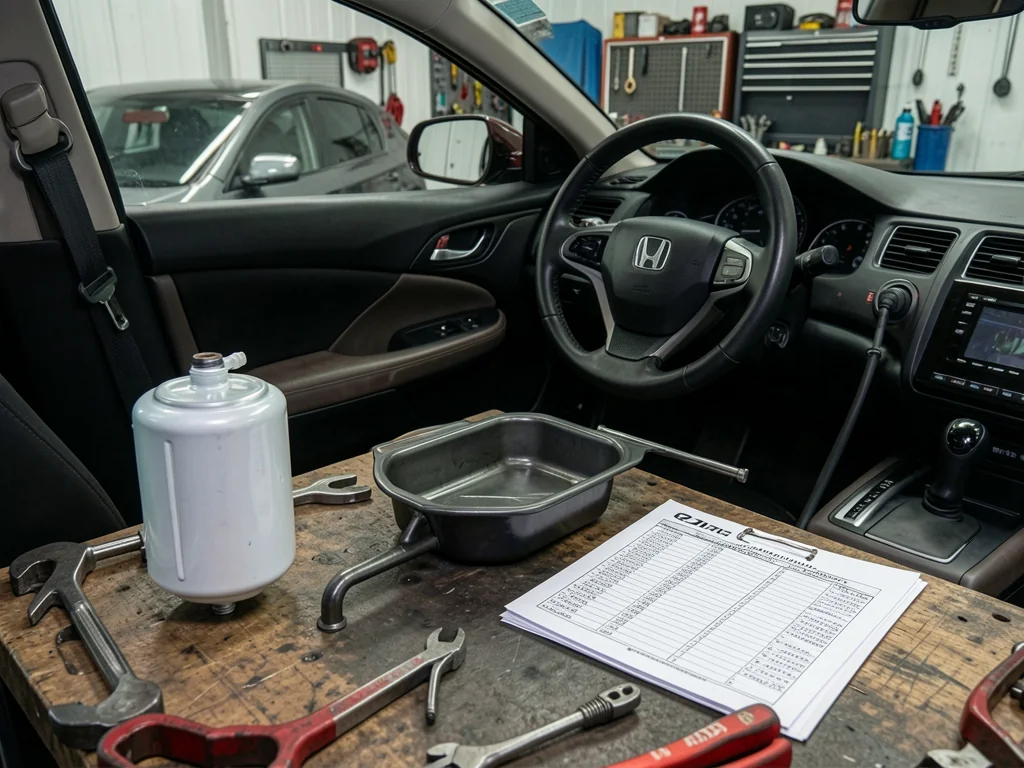
Honda oil filters look simple, but choosing the right one depends on details many owners never check. Honda part number 15400-PLM-A02 is widely searched, yet a popular number does not guarantee fit. This guide explains how to identify your Accord, Civic, or CR-V precisely, verify part numbers and cross-references, and prepare for a clean, safe oil and filter change.
Identify Your Honda Before Choosing an Oil Filter
Choosing an oil filter starts with the car, not the box on the shelf. Model year, engine, powertrain, and the market the vehicle was built for all affect which filter a Honda parts catalog lists. Two cars with the same badge can differ underneath, especially when a model offered several engines or a hybrid version in the same year. When a catalog asks questions you cannot answer confidently, use the VIN. It records the build details the lookup depends on.
The filter traps particles circulating in engine oil and seals against the engine so pressurized oil flows through the filter media rather than around it. A reliable listing therefore reflects thread size, gasket dimensions, and the internal valve design the engine needs, all tied to a specific application. Generation labels help narrow the search, but the exact year and engine decide it. Rely on vehicle-specific parts information instead of assuming one filter serves every Honda.
Check Honda Oil Filter Part Number 15400-PLM-A02
Whether written with spaces or hyphens, 15400 PLM A02 and 15400-PLM-A02 are the same Honda part number, so either form should bring up the same product. The number shows up in many Honda applications, but that does not make it universal. To check it for your car, enter the year, model, and engine in a Honda parts catalog, or give your VIN to a dealer parts counter, and see whether this number is listed.
Part numbers can also be superseded, which means a newer number replaces an older one for the same applications. If a catalog shows a different number where you expected 15400-PLM-A02, use current application information to confirm which one is correct. Don't assume the two are interchangeable. A genuine-parts label tells you who claims to have supplied the filter, not whether it fits your engine. You can't prove a filter is authentic from its packaging, so buy from a reputable source.
Honda Civic Fitment, Including 2012 and 2017
Civic filter guidance is easiest to follow when you organize it by generation and then narrow it by model year and engine. A 2012 Civic belongs to the ninth generation, a lineup with more than one powertrain depending on trim and version. Before confirming a filter, identify the exact engine, whether the car is a hybrid, and the trim, then check the listing against those details. Get the oil specification and capacity from the owner's manual, not from the filter listing.
A 2017 Civic belongs to the tenth generation, which brought a redesigned car and different engines across trims. Don't reuse a filter number from an earlier Civic, or even from another 2017 trim, without confirming it for the specific engine. This guide names no Civic part number because fitment has not been verified here for each engine. Treat that as an open question to settle with a VIN-based catalog lookup before buying.
Honda Accord Fitment for 2007, 2012, 2013, and 2014
The four Accord years people most often ask about span three generations. A 2007 Accord is the last year of the seventh generation, a 2012 Accord is the last year of the eighth, and the 2013 and 2014 models belong to the ninth. Within each generation, Accords were sold with different engines, and some later years added a hybrid. That's why every parts lookup needs the engine and any hybrid designation along with the model year.
Check each year-and-engine combination separately before assigning 15400-PLM-A02 or any other filter number, even when neighboring years look similar. If two catalogs disagree, or one retailer lists several filters for the same Accord, run a VIN-based search through a Honda parts catalog or dealer parts department. The VIN ties the result to the engine actually installed. Waiting for that confirmation before you buy prevents returns and the risk of a filter that seals poorly.
Confirm Honda CR-V Oil Filter Fitment by Generation
Narrowing a CR-V filter search follows the same logic. Start with the model year, then confirm the engine, the market the vehicle was built for, and the powertrain, including whether it is a hybrid. The CR-V's engines have changed over its history, and vehicles built for other markets may differ from the usual North American versions. Each added detail rules out filters listed for other engines under the same model name. A VIN lookup covers all of these variables at once.
Generations are useful for organizing CR-V applications, but a filter can change partway through one. A mid-cycle engine change or a new hybrid version can mean different filters within what owners think of as a single generation. For that reason, no filter number should be named for a CR-V whose year and engine are unknown. Find a listing that matches your exact year and engine, and treat any generic answer as a starting point rather than a final choice.
Validate Cross-Brand Oil Filter Part Numbers
Aftermarket filter makers publish application catalogs that match their part numbers to specific vehicles. To check a cross-reference, look up your exact Honda year, model, and engine in that manufacturer's own catalog. A third-party chart that just lists a Honda number next to a competitor's number isn't enough. No equivalent numbers are given here because each one has to be confirmed for a specific application, and cross-reference lists sometimes group different engines together.
Matching outside dimensions and thread size is not enough. A filter also needs the correct gasket diameter and thickness to seal, plus internal features such as a bypass valve setting and anti-drainback design that suit the engine. Two filters that thread on the same way can behave differently once oil pressure builds. If the filter maker's catalog, a retailer's listing, and a Honda cross-reference disagree, have a parts specialist check the application against your VIN before you install anything.
Plan Oil and Filter Service and Recognize Warning Signs
Plan an oil and filter service with the owner's manual or Honda maintenance information for your vehicle. It lists the approved oil specification, quantity, and filter. Some Hondas show maintenance reminders, so service timing may depend on how the car is driven rather than a fixed mileage. Before starting, make sure you can reach the filter safely with proper equipment, let the engine and exhaust cool, and set up spill containment. If you lack the tools or experience, have a professional do the service.
After the service, watch for leaks. Oil spilled during the change, a damaged or doubled gasket, or a filter installed incorrectly can each cause drips. A visible drip alone can't tell you which one it is, so have it inspected. Check the oil level the way the owner's manual describes, and if an oil pressure warning appears, stop the engine promptly. Take the used oil and old filter to an appropriate collection facility instead of throwing them away.