Honda OEM Roof Rails: SUV Compatibility and Selection
Short answer
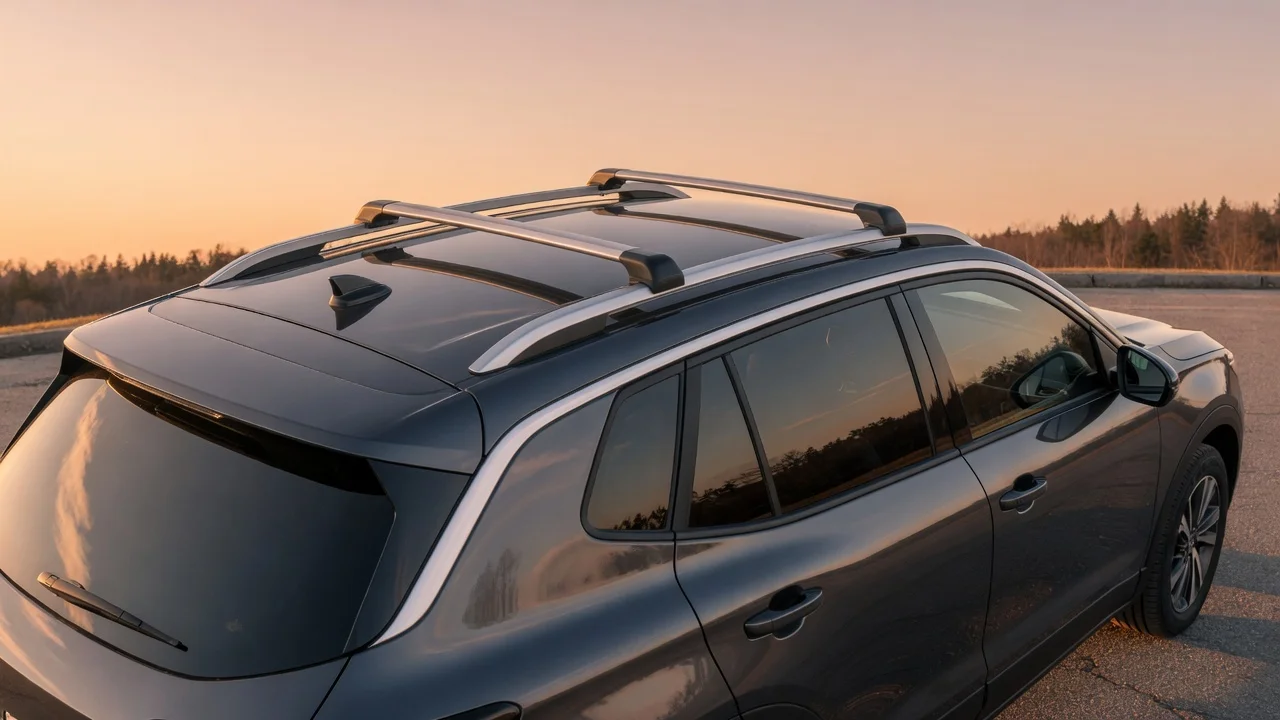
Honda OEM roof rails are the factory-designed longitudinal rails fitted to many Honda SUVs and crossovers. They are the mounting base for crossbars and roof accessories, but availability depends heavily on the exact model, model year, trim and whether the vehicle was built with the necessary roof mounting points. Some trims include rails as standard equipment, while others require either a factory accessory kit or may not support rails at all. Before ordering, confirm the Honda accessory part number for your VIN rather than assuming that any rail set for the same body style will fit.
Roof rails versus roof rack
The terms are often used interchangeably, but they describe different parts. Roof rails are the long bars that run front to rear along the sides of the roof. Roof racks, or crossbars, are the transverse bars that attach to those rails and carry accessories such as cargo boxes, bike carriers or kayak mounts. Many Honda vehicles with rails still need a compatible crossbar set before they can accept cargo.
OEM rails are matched to the roofline, rain gutter or fixed mounting studs of a particular generation. This matters because a rail set designed for one model year may appear similar but use different hole spacing, clamps or end caps.
Compatibility factors that change the answer
Model and generation: CR-V, HR-V, Passport and Pilot do not share one universal rail part across all generations. Trim level: some trims have rails from the factory; others may have smooth roof moldings without mounting provisions. Roof preparation: a roof with fixed mounting points can accept a bolt-on OEM rail kit more directly than a roof that needs drilling or replacement moldings. Market specification: accessory kits and standard fitment can differ between regions, so a part confirmed for one market is not automatically correct for another.
Checking whether your Honda supports OEM rails
The most reliable check is to look up the official Honda accessory catalog using the vehicle VIN and select the roof-rail accessory offered for that exact trim. If the accessory catalog shows no rail kit, the body may not have factory provisions for a straightforward mounting.
A visual check can also help. A vehicle already fitted with flush side moldings and covered mounting points is generally a better candidate than one with a continuous smooth channel and no obvious removable covers. However, visual similarity is not proof of compatibility, because internal reinforcement and stud locations are not visible from outside.
Selection guidance
Confirm the kit by trim and VIN. If the catalog lists multiple rail options, note whether one is for a black or silver finish and whether it is listed as standard replacement or accessory. Pair rails with the correct crossbar system. An OEM rail kit does not always include crossbars, and not all accessory crossbars fit every rail profile. Check the load rating stated by Honda for the rail and roof system. The accessory load limit is different from the general cargo capacity of the vehicle. Decide between dealer installation and self-installation. Bolt-on kits can be straightforward on prepared roofs, but kits requiring sealant, trim removal or torque-sensitive fasteners may be better handled by a dealer.
Ownership trade-offs
Factory rails preserve the intended appearance and usually follow the roofline more closely than universal aftermarket rails. They are also designed around the vehicle's tested mounting points. The trade-off is that OEM kits are tightly tied to a specific model and trim, so they cannot be transferred as freely between vehicles and may cost more than generic alternatives.
Adding rails can also create modest aerodynamic noise and a small effect on fuel economy, especially when crossbars are left installed. The practical benefit depends on whether you plan to carry roof cargo regularly; rails alone add little utility without a compatible crossbar and accessory.
Limits of this guidance
No universal part number or price is supplied here because Honda roof-rail fitment changes by generation, trim and market. Prices, inventory and installation labor also vary by retailer and region. The necessary next step is a VIN-specific parts lookup for the vehicle in question; a general search by model name is not enough to confirm the correct kit.