Honda K24 and K20 Timing Chain Wear, Kits, and Replacement
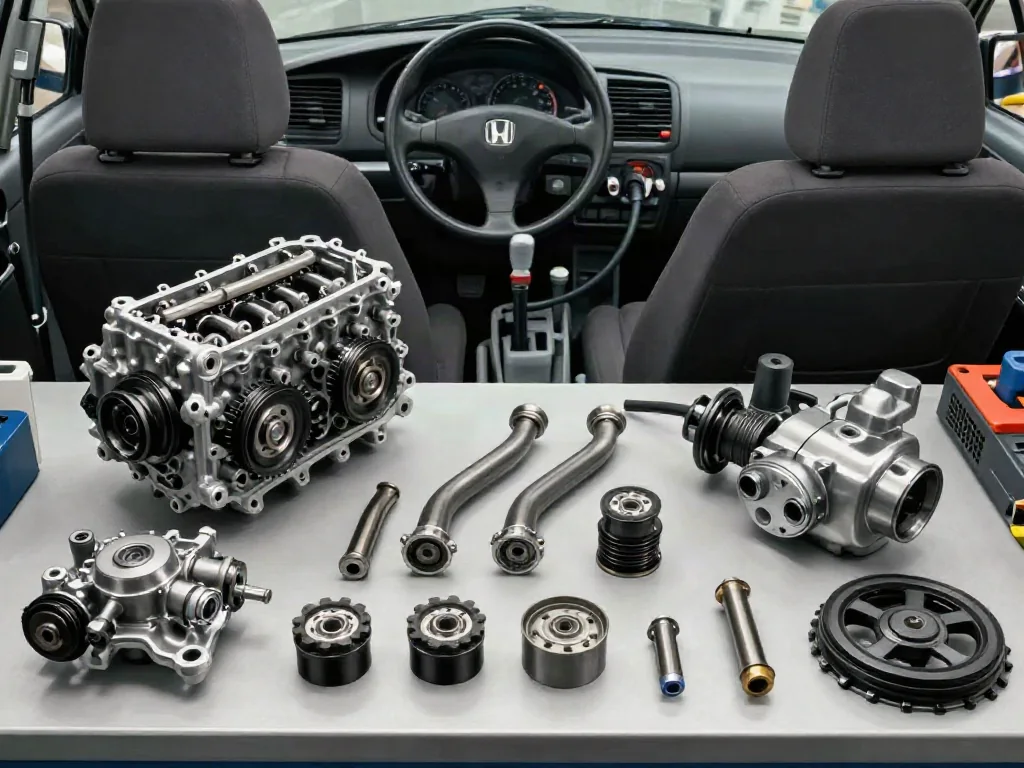
The Honda K24 timing chain keeps crankshaft timing and camshaft timing locked together so valves and pistons stay in step. Related K20 engines rely on a timing chain for the same synchronization task. Wear, kits, and Honda K24 timing chain replacement only make sense after the installed engine is identified, because engine oil condition, the timing chain tensioner, and the chain guides all influence how the system behaves in service.
Identify the K24 or K20 Engine Before Planning Chain Work
The timing chain's job is to maintain cam and crank correlation so camshaft timing stays aligned with crankshaft timing as the engine turns. If that relationship drifts, valve events no longer match piston position, which can produce misfire, poor running, or contact between valves and pistons if the engine is an interference design. Before ordering a K24 timing chain or planning service, record the complete engine code, model year, and the vehicle it is actually in. Stamped or labeled K-series engine identification is the starting point, not a forum nickname or a sales listing.
K24 and K24A describe a family of engines, not a single hardware package, so a K24A timing chain listing or a timing chain K24 catalog match is not enough to choose parts. Later owners may have swapped a different K-series mill into the chassis. The installed engine, not the badge on the car, determines the chain, tensioner, and guides. Confirm the full code on the block or under-hood label against the application chart for that vehicle before selecting a kit or pulling service information.
Recognize Symptoms That Need Timing System Diagnosis
Rattling from the front of the engine, rough running, hard starting, and illuminated warning lights are reasons to assess the timing system, not proof that the chain has stretched or that a guide has failed. Similar noises can come from accessory drives, a dry hydraulic lash adjuster, or a tired timing chain tensioner that still has enough remaining control to keep the engine running. Record when the noise appears, whether at cold start, idle, or under load, and note any stored messages. Those details help a technician decide whether cam and crank correlation needs checking.
Check engine oil condition and oil level with the owner-manual procedure before assuming the chain is the problem, because a starved tensioner cannot hold the chain taut. If the engine produces severe mechanical noise, stalls, or shows an oil-pressure warning, stop safely and arrange professional assistance rather than continuing to drive. Do not attempt to listen for stretch by racing the engine or by probing the timing cover. A shop can compare live data and mechanical findings against the symptoms you recorded without you taking the cover off at the roadside.
Confirm the Fault Before Authorizing Replacement
A technician should evaluate oil supply to the tensioner, the condition of the chain guides, related timing components, and the chain itself before recommending Honda K24 timing chain replacement. Engine oil condition matters because sludge or aeration can make a sound tensioner behave like a worn one. Visual wear on a guide, slack in the chain, or a noisy tensioner still has to be interpreted against the rest of the front-end hardware. Replacement is a conclusion after inspection, not the first response to a rattle.
Timing-related diagnostic codes need vehicle-specific interpretation and the matching service information. A correlation or camshaft-position code is evidence that the control system saw a disagreement, not proof that the chain has failed; a sensor, reluctor, wiring fault, or oil-control issue can set the same message. Professional timing and mechanical checks can confirm whether cam and crank correlation is still within specification without you performing timing adjustments. No single replacement mileage applies across all K24 and K20 engines. Authorize work only after documented findings and the applicable guidance for that engine and vehicle.
Check K24 and K24A2 Timing Chain Kit Contents
A K24 timing chain kit is a marketing bundle, not a guaranteed bill of materials. Timing chain kit contents vary by brand and listing, so verify the chain, chain guides, timing chain tensioner, and any other named pieces individually against what the job actually requires. Some boxes include only the chain; others add rails, a tensioner, and hardware of mixed quality. Read the itemized packing list, not the product title. If a component is missing from the list, assume it is not in the box.
Documented application fitment is still required for a K24A2 timing chain kit, because K24A2 is a specific engine code rather than a catch-all for every K24A timing chain. Ask the shop to identify seals, gaskets, fasteners, and any extra timing pieces required by the procedure or by inspection findings, including parts that affect timing cover sealing after the cover comes off. A product photograph cannot prove compatibility or completeness; geometry, tooth count, tensioner style, and gasket shapes are not always visible, and swapped engines make catalog photos even less reliable.
Verify a Timing Chain Kit for the K20Z3
Confirm the installed engine is a K20Z3 before buying a K20Z3 timing chain kit. K-series engine identification on the block or emissions label is what matters, especially after a swap. Membership in the K-series family does not establish parts interchangeability with a K24 timing chain or with other K20 codes. Tensioner design, guide layout, and chain length can differ even when the engines look similar from the oil-fill neck.
Require a documented K20Z3 application listing and an itemized contents check before the order is placed. Have the installer confirm supporting parts, including seals, cover gaskets for timing cover sealing, fasteners, and any components that inspection says should be replaced at the same time. Do not treat a K24A2 timing chain kit as a substitute on the strength of a shared family name. If the listing is silent on a guide, tensioner, or seal, treat that silence as a missing part until the shop writes it onto the estimate.
Understand the K24 Replacement Estimate and Completion Checks
Professional Honda K24 timing chain replacement, once authorized, follows a limited sequence: confirm the diagnosis, access the timing system, replace the approved components, restore timing cover sealing, and verify operation. Accurate timing setup and verification require the application-specific procedure and the tools that procedure names; this is not a job to improvise from a generic K-series diagram. The installer, not a parts-counter photo, is responsible for setting camshaft timing and crankshaft timing so cam and crank correlation is restored.
Ask for an itemized estimate that covers diagnosis, labor, parts, sealing materials, applicable fluids, and written authorization if inspection uncovers extra wear. Current prices vary with access, kit contents, and inspection findings, so the estimate should show those lines instead of a single round number. At completion, the shop should check for leaks at the timing cover, abnormal noise from the tensioner or chain, remaining fault status, and normal engine operation, then explain the original fault and the work performed. Keep that paperwork with the vehicle records.