Honda Fit (Jazz) Check Engine Light: Common Causes
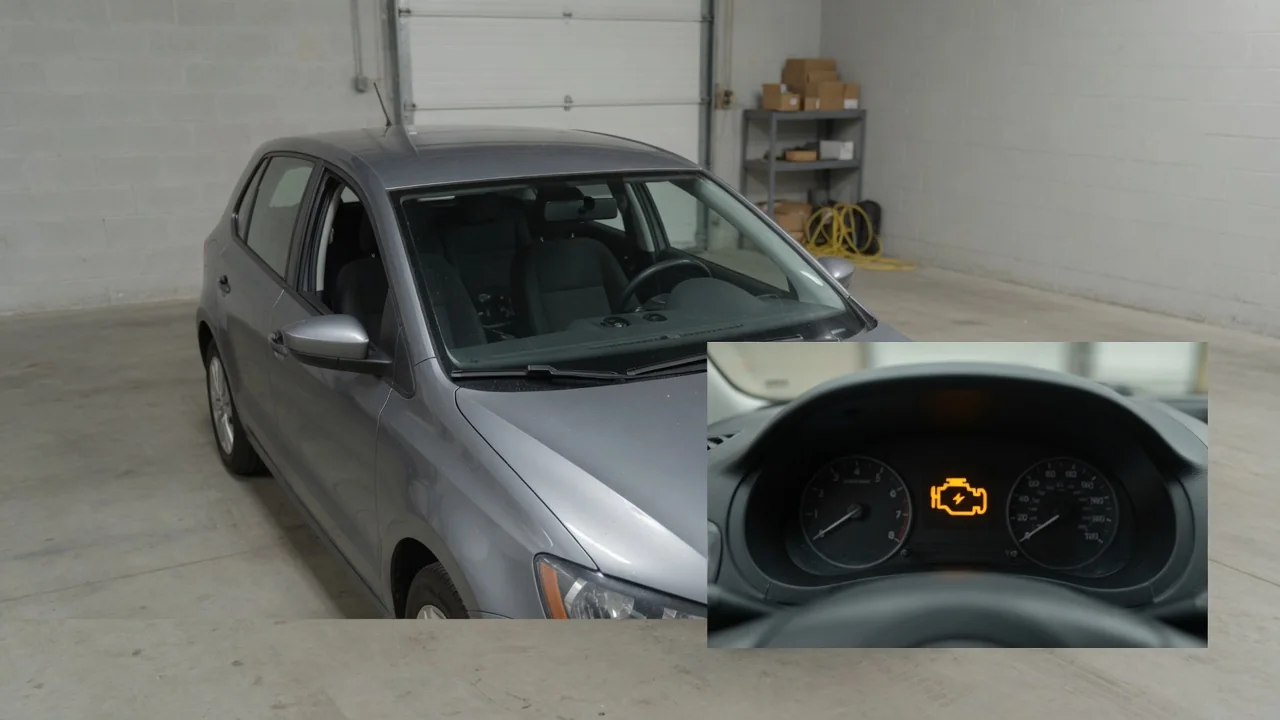
When the check engine light on a Honda Fit comes on, the dash lamp is reporting that the engine-management or emissions system has stored a fault. The same warning applies when a Honda Jazz check engine light appears in markets where the Fit is sold as the Jazz. Illumination of this malfunction indicator lamp does not name a failed part. A scan for diagnostic trouble codes, plus freeze-frame data and driving symptoms, is what starts a useful diagnosis.
What to Do When Your Fit’s Check Engine Light Appears
The engine-shaped check engine light on a Honda Fit is the malfunction indicator lamp for detected engine-management or emissions faults. A steady Honda Fit check engine light means the control module stored a condition; it does not identify which part failed. A flashing lamp can indicate an active engine misfire that may overheat the catalyst and reduce catalyst efficiency. If the light flashes and the engine runs roughly, pull over when it is safe, shut the engine down if conditions allow, and arrange assistance rather than continuing to drive.
When the lamp stays on without shaking, stalling, or obvious drivability trouble, schedule prompt diagnosis and follow the owner's manual rather than assuming the car is safe to keep using. Continued driving is not automatically acceptable just because the light is steady. Stop as soon as it is safe and seek assistance if you notice severe shaking, stalling, overheating, a sudden loss of power, smoke, or a strong fuel smell. Those symptoms can point to conditions that worsen quickly, including misfire-related catalyst stress or a fuel leak.
Identify the Fit or Jazz Before Interpreting Fault Codes
The Honda Fit is sold as the Jazz in other markets, so a Honda Jazz check engine light is the same class of malfunction indicator lamp on a closely related vehicle, not a different warning philosophy. Diagnostic details still depend on model year, market, engine, and powertrain, including automatic, manual, or hybrid arrangements where they apply. Record those identifiers from the door jamb, under-hood labels, and owner's documents before applying any diagnostic information or choosing a repair path. Generic advice that ignores those details can send testing in the wrong direction.
Verify every diagnostic trouble code against definitions that apply to the exact vehicle, especially manufacturer-specific Honda codes that do not share a universal meaning across years and markets. A code is evidence of a detected condition, not proof that a named part has failed. Keep check engine light guidance distinct from oil-service reminders, tire-pressure alerts, and other dashboard symbols; the owner's manual confirms which icon is the malfunction indicator lamp. Mixing those warnings leads people to treat an emissions-related lamp as a routine service prompt.
Fault Categories That Can Trigger the Fit’s Engine Light
Ignition and combustion problems can set an engine misfire condition on a Fit or Jazz. Worn spark plugs, weak coils, fuel-delivery issues, or mechanical cylinder problems may all produce similar stored codes, so none of those parts can be assumed failed from a scan alone. Intake leaks, fuel-metering faults, and sensor or wiring problems can also disturb mixture control and fuel trim. Lean or rich fuel trim readings are clues for targeted testing of air leaks, injectors, or mass-air and related circuits rather than a parts list.
Oxygen sensor and catalyst-monitoring faults also appear. An oxygen sensor code can reflect a slow or biased sensor, wiring trouble, or an exhaust leak that confuses the reading; it does not automatically mean the sensor must be replaced. Catalyst efficiency codes likewise need confirmation that the converter is actually underperforming rather than seeing downstream effects of misfire or mixture errors. The evaporative emissions system can also illuminate the lamp after a leak, a stuck purge or vent component, or an improperly secured fuel cap on vehicles that use one. Those EVAP possibilities still require confirmation.
Safe Observations to Record Before a Diagnostic Visit
Before a shop visit, write down whether the check engine light on a Honda Fit is steady or flashing and whether it appeared at startup, under acceleration, at idle, or shortly after refueling. Note rough idle, hesitation, difficult starting, stalling, and any change in fuel use you already observed. Do not recreate unsafe driving conditions to force the lamp to repeat. Those operating notes, paired later with freeze-frame data, help a technician see whether the stored event happened under load, at idle, or after a fuel fill.
If the vehicle has an accessible fuel cap, park, shut the engine off, and confirm the cap is secured as the owner's manual describes. A loose cap can relate to evaporative emissions system monitoring, but tightening it will not necessarily clear the lamp immediately, and the light should still be diagnosed if it remains. Also note recent maintenance, battery replacement, or jump-starting, because voltage interruptions can affect stored information and readiness monitors. Photograph the warning display while the vehicle is stationary so the exact symbol is documented.
What an OBD-II Scan Can Establish
Have the stored diagnostic trouble codes read and save the exact numbers, their pending or confirmed status, and any freeze-frame data before anyone clears the memory. Freeze-frame data captures operating conditions at the moment the fault set, such as engine speed, load, and temperature, which is more useful than the lamp state alone. Codes identify detected conditions or affected circuits and systems. They are starting points for testing, not instructions to replace the part named in a description. Clearing first can erase that snapshot.
Symptoms, the conditions when the Honda Fit check engine light appeared, and the presence of multiple related codes help a technician choose targeted tests instead of swapping sensors at random. Fuel trim, oxygen sensor activity, and misfire counters on a capable scan tool can show whether the problem looks mixture-related, ignition-related, or catalyst-related. Scanner coverage still varies. A generic OBD-II reader may miss Honda-specific information, so additional Honda-capable diagnostic equipment may be needed for manufacturer-defined codes and enhanced data on this model family.
Professional Testing and Confirmation After Repair
Professional misfire testing, wiring inspection, fuel-system evaluation, or evaporative leak testing is warranted when codes and symptoms do not isolate a single confirmed cause, or when an engine misfire risks catalyst damage. Those procedures belong in a shop with the right equipment; they are not roadside experiments. The repair should address the confirmed cause, including contributing faults such as a persistent misfire or mixture error that could damage emissions components. Replacing only the downstream oxygen sensor or catalyst after an unresolved misfire can leave the original problem in place.
Do not clear codes or disconnect the battery merely to hide the check engine light on a Honda Fit. That practice can erase freeze-frame data and reset readiness monitors, which delays both diagnosis and emissions inspection readiness. After a confirmed repair, recheck for returning codes and complete the follow-up tests the technician specifies for that vehicle. There is no single universal drive cycle that proves every monitor has run on every Fit or Jazz. Confirmation means the original condition is gone and related monitors can complete under normal driving.