Honda CR-V Torque Converter Shudder Diagnosis
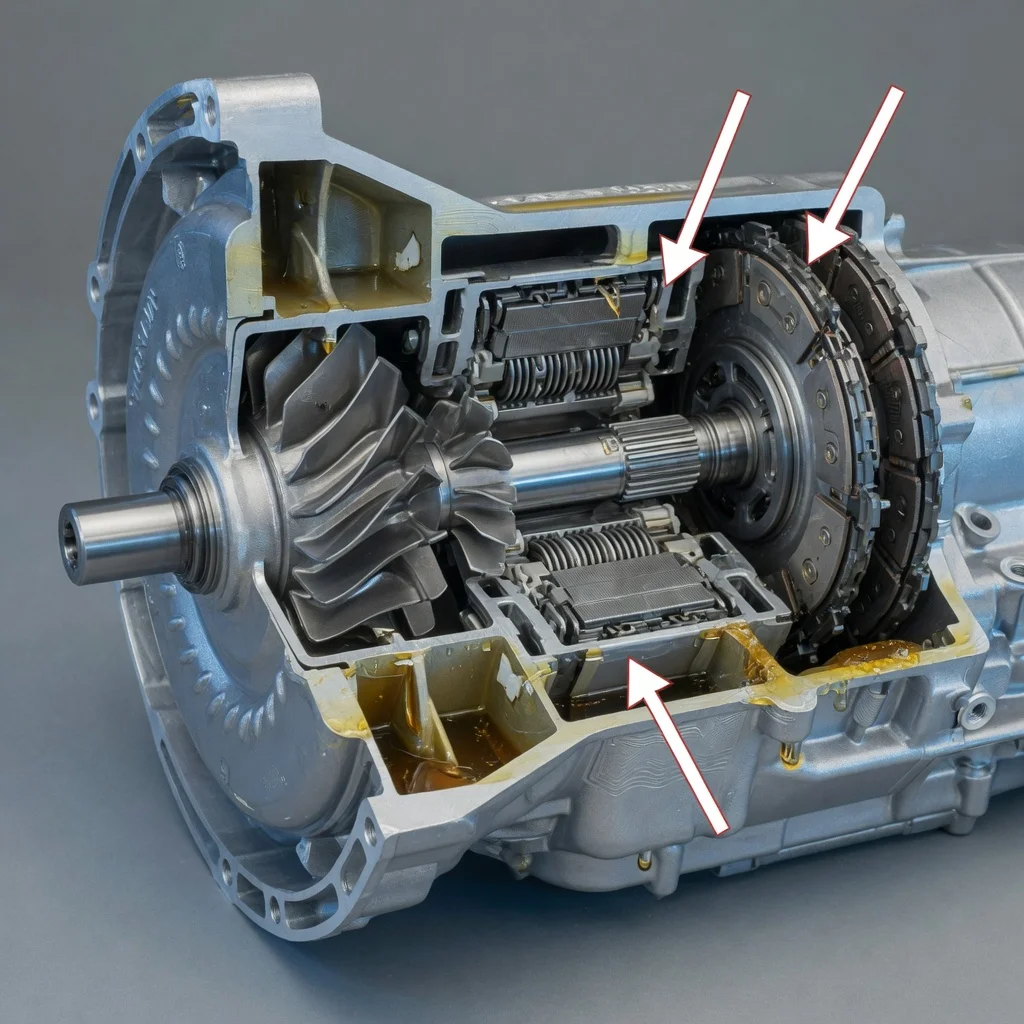
A shudder that feels like driving over rumble strips at steady, light throttle is often blamed on the torque converter in a Honda CR-V. Sometimes that is correct, but misfires, worn mounts, aged fluid and driveline faults can feel almost identical. This guide shows how to record the symptom, weigh the likely causes, run checks in a sensible order and decide what to do next, without assuming a failed part before the evidence supports it.
Identify the transmission in your CR-V
Different CR-V model years use different transmissions. Earlier generations use conventional stepped automatics with a torque converter and lockup clutch. Later non-hybrid models use a continuously variable transmission (CVT) that also couples to the engine through a torque converter. Hybrid versions use a two-motor system without a conventional torque converter, so a shudder in a hybrid CR-V needs a different diagnostic path. Before going further, confirm the year, engine, drive layout and transmission type. You can find these in the owner's manual or the vehicle's documentation, or ask a dealer to look them up by VIN.
The transmission type matters because the fluid specification, the level-check procedure and the way the converter clutch is controlled differ between stepped automatics and CVTs. Honda specifies particular fluids for its automatics and CVTs. A substitute or multi-vehicle fluid can change how the lockup clutch behaves. Check the exact requirement for your vehicle rather than relying on a general rule.
Establish the symptoms
Before anyone works on the vehicle, write down exactly when the shudder appears. Note the road speed, whether you are accelerating gently, cruising or climbing a slight grade, and whether the engine is cold or fully warm. A typical torque converter clutch shudder shows up at light throttle and moderate speeds, when the transmission is applying or holding lockup. It often eases if you press the accelerator a little more or lift off slightly. Record whether it happens at the same speed every time, and whether it also occurs in reverse, at idle or while stopped in gear.
Associated signs matter just as much. Watch for a check engine light, especially one that flashes. Also note any rough idle, change in engine sound, clunks when shifting between drive and reverse, slipping, delayed engagement or unusual shift behavior. Record recent changes as well, such as a fluid service, new tires, a battery disconnection, an engine repair or work on the axles or mounts. A shudder that started right after a fluid change points in a very different direction from one that built up slowly over many months.
Distinguish plausible causes
The torque converter clutch itself is one candidate. Its friction surface can glaze or wear, or the fluid can lose the friction properties the clutch relies on. Either way, the clutch grabs and releases rapidly instead of applying smoothly. This cause is more likely when the shudder appears at steady light throttle and disappears when lockup is released. Control-side problems can produce a similar feel without any damage to the converter. These include a faulty lockup solenoid, valve body wear, wiring faults and software calibration.
Engine misfire is the most common impostor. A weak ignition coil, a worn spark plug or a fuel delivery problem can cause a stumble under load that feels like transmission shudder. This is especially true at low engine speeds with the converter locked. Misfire is more likely if the shudder also appears with a light rev in neutral, if the check engine light flashes or if misfire codes are stored. Worn engine or transmission mounts let normal vibration pass into the cabin. Suspect them when the shudder comes with clunks on takeoff or when shifting into gear. Driveline faults such as worn CV joints, tire defects or wheel imbalance usually change with road speed rather than with throttle or lockup state. On all-wheel-drive models, a rear differential that needs fluid service typically causes a judder or groan during tight, slow turns rather than a shudder on a straight road.
Checks in a useful order
Start with observations any owner can make safely. Repeat the conditions on a quiet road and note whether a small change in throttle stops the shudder. Check the service history for when the transmission fluid was last changed and what fluid was used. Look under the vehicle for fresh leaks. If your model has a transmission dipstick, check the level and condition exactly as the owner's manual describes, because Honda procedures specify engine temperature and timing. Many CVT-equipped models have no conventional dipstick, and their level check is a shop procedure.
Next come checks that need tools. A basic OBD-II scanner can read stored and pending diagnostic codes, but a scan tool with live data is far more useful. During a road test, it can show commanded lockup, converter slip, engine speed compared with transmission input speed, and misfire counters. Codes such as P0741, which flags a converter clutch performance problem, or P0300-series misfire codes narrow the field without naming a failed part. Inspecting mounts, axles and tires properly requires a lift.
Some steps belong with a qualified technician or a Honda dealer. These include checking for technical service bulletins and transmission software updates for your VIN, measuring fluid level on CVT models and performing pressure tests. A technician can also judge whether a fluid replacement with the correct specification is a reasonable first repair. Manufacturers, Honda included, have issued bulletins and calibration updates for judder on some models, so ask specifically whether any apply to yours.
Interpret the findings
Suppose live data shows the shudder only while lockup is commanded, and it stops when lockup releases. Then the converter clutch circuit is the leading suspect, but that still does not prove the converter is mechanically worn. Old or incorrect fluid, a sticking solenoid or a calibration issue can produce the same pattern. That is why fluid condition, service history and any applicable software update are usually addressed before replacing the converter. A converter clutch code supports the same conclusion, with the same limits.
Rising misfire counts on one or more cylinders during the shudder shift attention to the engine. Repair the misfire and retest before judging the transmission. A shudder that tracks road speed regardless of throttle or lockup points toward tires, wheels or axles. Clunks paired with visible mount movement support a mount problem. If a correct fluid service reduces the shudder but it returns later, the converter clutch may be worn. In that case, a technician should reassess with data rather than repeat fluid changes indefinitely. When results conflict, the safest conclusion is that the diagnosis is incomplete.
Urgency and next action
Stop driving and arrange an inspection if any of these appear: a flashing check engine light, slipping or flaring between gears or ratios, delayed or lost drive engagement, a burning fluid smell, a significant leak or a transmission warning. A flashing light signals misfire severe enough to damage the catalytic converter. Without these signs, a mild shudder is less urgent, but it should not be ignored. A slipping converter clutch generates heat and contaminates the fluid, and nobody can reliably predict how many more miles it will tolerate.
For an accurate repair quote, bring the year, engine, transmission type, drive layout and VIN, along with current mileage, fluid service records and the fluid used. Add any stored codes and a written description of when the shudder occurs. Ask the shop to explain what evidence supports its recommendation. Repair options range from a fluid service or software update to converter replacement or transmission repair. Parts must fit your exact configuration. Getting a clear diagnosis first keeps the cost proportional to the actual fault.