Honda CR-V Sway Bar Links: Fitment Guide
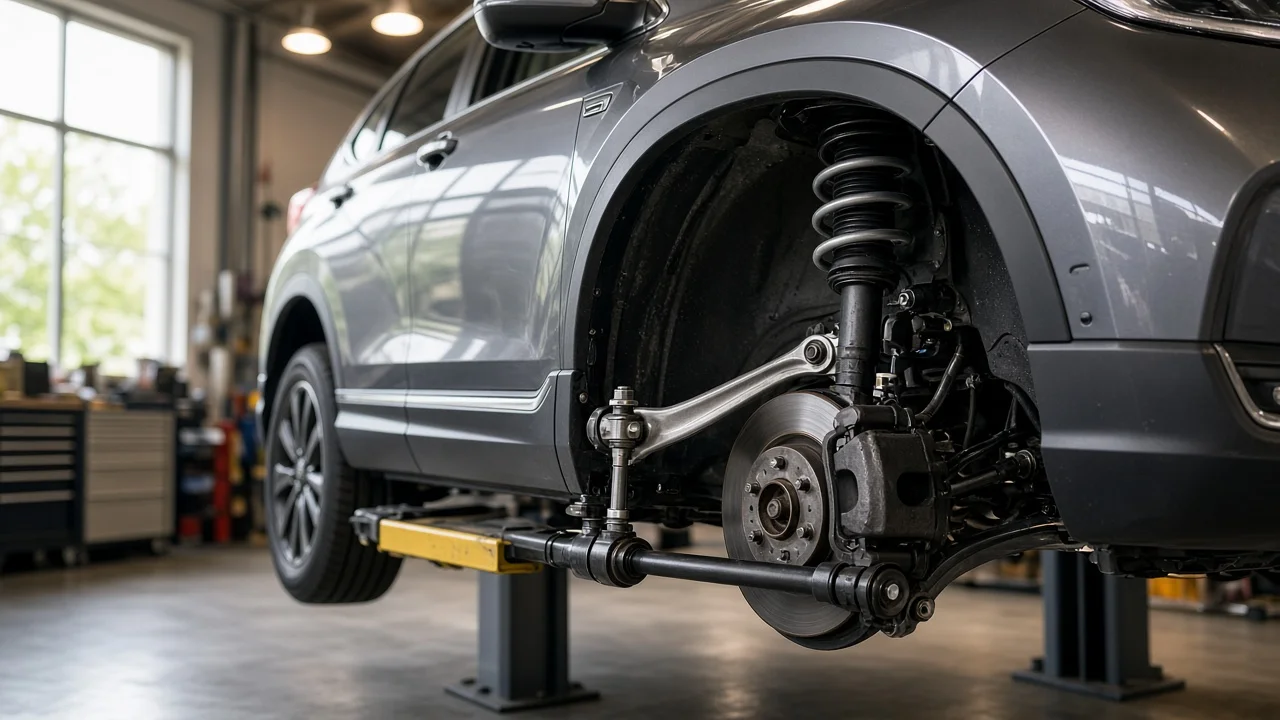
Sway bar links on a Honda CR-V are small parts, but it is easy to order the wrong one. Fitment depends on model year, generation, front or rear position, and sometimes drivetrain or powertrain. This guide explains how the links work and what decides whether a part fits your CR-V. It also covers how to check for worn links and when to rely on a VIN-based parts lookup or a shop instead of a generic listing.
Which sway bar links fit your CR-V
Sway bar links for a Honda CR-V are specific to each generation, and front and rear links are different parts. A link made for one generation usually will not fit another, because mounting points, length and stud design change when Honda redesigns the suspension. In the US, the CR-V generations cover 1997-2001, 2002-2006, 2007-2011, 2012-2016, 2017-2022 and 2023 onward. Matching your model year to its generation is the first filter. The second filter is position. Front links connect the front stabilizer bar, rear links connect the rear bar, and the two are not interchangeable. Some catalogs also list separate left and right front parts, so read the listing notes rather than assuming the pair is symmetrical.
Your VIN is the most reliable fitment check. A VIN-based lookup through a Honda parts counter or a reputable parts catalog identifies the exact vehicle configuration. That includes trim, drivetrain, and hybrid or gasoline powertrain where those details matter. If an aftermarket listing says it fits a range of CR-V years, confirm two things: the whole range falls within your generation, and the listing names the correct axle position.
How sway bar links work
The sway bar, also called a stabilizer or anti-roll bar, is a steel bar that ties the left and right suspension together. When the CR-V leans in a turn, the bar twists and resists body roll. The end links connect each end of the bar to the suspension. Depending on the generation and axle, they attach to the strut or to a control arm. Most modern links have a small ball joint at each end, sealed by a rubber boot and packed with grease, so the link can pivot as the wheel moves up and down.
The links carry the bar's load every time one wheel moves differently from the other, so the ball joints gradually wear. Once a boot tears, water and grit get in, the grease washes out and play develops. A worn link rarely changes steering feel dramatically, but it makes noise and can reduce how well the bar works. A link that breaks completely leaves that end of the bar disconnected, which increases body roll.
What changes the right part for your CR-V
Generation is the main variable, but not the only one. A mid-cycle refresh can sometimes change suspension parts, so check your VIN even if a listing covers both early and late years of your generation. On some vehicles, drivetrain affects rear suspension components. The hybrid CR-V, introduced for the 2020 US model year, is another configuration that parts catalogs may treat separately. If a catalog asks for trim, drivetrain or powertrain, answer accurately rather than skipping the question.
Modifications change the answer more than anything else. Lifting or lowering a CR-V changes the distance between the bar and its mounting points, so stock-length links may sit at an awkward angle or bind. In that case, consider adjustable or extended links designed for the modification, and follow the suspension kit maker's instructions. Operating conditions also affect how fast links wear. Rough roads, gravel, salted winter roads and potholed city streets wear boots and joints faster than smooth highway driving. As a result, no single replacement mileage applies to every owner.
Part design is another variable. OEM-style links are built to the original dimensions. Some aftermarket links have greaseable joints or heavier construction. These may suit hard use, but on a stock vehicle they still need to match the original length and stud size.
Signs and checks owners can do
The classic symptom of a worn link is a clunk or knock from one corner when driving slowly over speed bumps, driveway lips or broken pavement. It is often more noticeable on uneven surfaces, where one wheel moves more than the other. A rattle on rough roads that disappears on smooth asphalt fits the same pattern. However, strut mounts, sway bar bushings, control arm bushings and ball joints can make similar noises, so the sound alone does not confirm the diagnosis.
A visual inspection is a good starting point. With the vehicle safely supported on stands, look for torn or missing boots, grease flung around the joint, a bent link body or corrosion around the studs. Then grab the link and try to move it. Noticeable looseness or knocking in the joint suggests wear. A loaded sway bar can hide play, so a mechanic may disconnect one end or check with the suspension in a specific position. Also review your service history. If the links were replaced recently, a bushing or mount may be the more likely source of the noise.
If you replace the links yourself and the other side of the same axle also shows wear, replace both so the two sides behave the same. The nuts often seize on the threaded stud, and the stud may spin inside the joint. Most links have a hex or Torx socket in the stud end so you can hold the stud while turning the nut. Penetrating oil, the correct holding tool and patience will keep you from rounding off the stud. Tighten the new nuts to the torque listed in the Honda service information for your model year rather than guessing. Do not use an impact wrench on the ball stud, because it can damage the joint.
Limits and when to get professional help
This guide cannot confirm a part number for your vehicle. It also does not give torque values or replacement intervals, because those depend on the exact model year and are found in Honda's manufacturer specifications and service information. Use your VIN to find the part and the service manual for installation details. Sway bar links have no general maintenance schedule interval; they are replaced based on inspection results, not mileage alone.
Get professional help in any of these situations: the noise continues after new links are installed, you cannot tell which component is loose, the studs are badly corroded, or you find damage to the sway bar, bushings or other steering and suspension parts. A shop with a lift can check the front and rear suspension under the correct load conditions and confirm whether new links are the right fix. If the car pulls, wanders or the steering feels unstable, have it inspected before driving further, because those symptoms point to something beyond a worn end link.