Honda Civic Spark Plug Replacement: Timing, Types, and Access
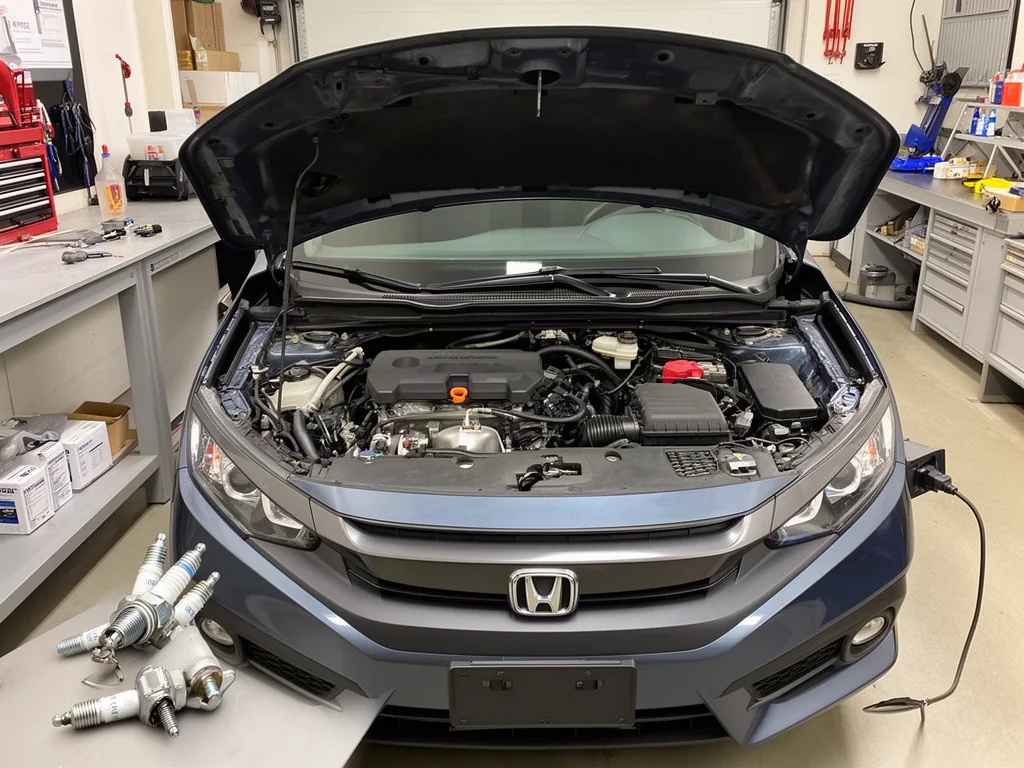
Choosing Honda Civic spark plugs starts with the engine in the car, not the badge on the trunk. Spark plugs for Honda Civic models are not interchangeable across every year and market, so buying or scheduling work still depends on engine identification, documentation, and layout. Owners need the applicable replacement interval, spark plug specification, access notes, and a clear view of symptoms that can look like ignition trouble without proving the plugs have failed.
Identify Your Civic’s Engine Before Choosing Spark Plugs
Honda Civic spark plugs are specified to an engine, not to a model name alone. Two cars that look similar can use different thread reach, heat range, electrode material, and coil-on-plug layouts depending on model year, displacement, and the market they were sold in. Service guidance follows the same split: a schedule, a Maintenance Minder message, or a spark plug specification that belongs to one powertrain can be wrong for another. Establishing year, engine family, and sales market first keeps the parts search and the interval search from mixing incompatible Civic variants.
Owner manuals, under-hood labels, and a VIN-based parts lookup are the practical way to confirm engine identification before ordering spark plugs for Honda Civic service. The VIN and the engine code on the vehicle can match the car to the documented plug and to the correct maintenance notes. That original specification is not enough if the engine has been swapped or if ignition parts have been changed to a non-stock setup. In those cases, the installed engine and the hardware around the plug wells determine fitment, not the door-jamb label from the first assembly.
Find the Applicable Spark Plug Replacement Schedule
The spark plug replacement interval for a Civic belongs in that vehicle's maintenance schedule, not in a single mileage figure applied to every Honda Civic. Many later cars also use Maintenance Minder, which can call for ignition service based on operating conditions rather than a calendar guess. Use the owner documentation and the service information that match the identified engine. Do not treat a number heard from another Civic, another market, or a different engine family as the interval for the car in front of you.
Dated service records show whether plugs were replaced and at what mileage, which is the only reliable way to know if scheduled replacement is due. If the history is missing, treat the plugs as unknown rather than assuming they are new or that they must be overdue. Inspection and the applicable schedule then guide the next step, along with any Maintenance Minder item still stored in the system. New rough running, hard starting, or an engine misfire warning still warrants diagnosis even when the calendar interval has not been reached.
Confirm Plug Type, Dimensions, and Gap
After the engine is identified, confirm the spark plug specification by part number or a documented equivalent for that powertrain. Electrode material, heat range, thread reach, seat design, and resistor construction are fitment requirements, not optional upgrades. A plug that is too long, too short, or the wrong seat can damage the head or fail to seal. Catalog listings that simply say spark plugs Honda Civic are a starting filter, not proof that the listed part matches the coil, the well, and the combustion chamber of the engine in the car.
Spark plug gap also has to match the specification for that engine, and the plug maker's handling notes decide whether a new plug may be measured, adjusted, or left as shipped. Fine-wire and precious-metal electrodes can be damaged by careless gapping, so it is wrong to assume every box of plugs needs the same treatment. A part advertised for a Honda Civic still needs engine-specific confirmation of thread, reach, seat, heat range, and gap. When those details disagree with the documented specification, do not install the plug on the strength of the model name.
Understand Access Before Planning the Work
Access to Honda Civic spark plugs is a layout problem, not a one-size job. Engine covers, intake plumbing, ignition coils, and electrical connectors can sit over the plug wells, and the path differs by engine. Applicable service information is the way to see what has to come off and how the coils are retained. Plan the work on a parked vehicle with the ignition off and a fully cooled engine so plastic covers, boots, and fasteners are less likely to break and so hot metal is not part of the procedure.
Before any plug is unscrewed, inspect the plug well for debris, oil, or moisture. Dirt that falls into an open cylinder, or oil that has been pooling around a coil, can create a new problem that had nothing to do with the old plug. Brittle coil connectors, obstructed access, rounded fasteners, or signs of prior thread damage are reasons to stop and use a qualified technician. Forcing a stuck ignition coil or working blind around a wet well is how a simple replacement turns into cylinder-head repair.
Recognize Symptoms Without Assuming the Plugs Are at Fault
Rough idle, hard starting, hesitation, and an engine misfire warning can point at ignition, but they do not by themselves prove Honda Civic spark plugs have failed. An ignition coil, a damaged boot, a fueling fault, a vacuum leak, or a mechanical issue can produce the same feel. A stored misfire code is evidence to interpret, not a parts list. Manufacturer-dependent codes still need vehicle-specific confirmation, and coils, wiring, and fuel delivery may require testing before any plug is condemned.
Record when the symptoms appear, whether they change with temperature or load, and which warning lights are on. Do not attempt running-engine ignition tests that expose live high voltage or require holding a running engine at speed in an unsafe setting. A flashing check-engine light or severe shaking is a reason to stop safely and arrange professional help rather than keep driving while a cylinder is misfiring. That kind of event can load the catalytic converter and still leave several possible causes besides the plugs.
Set Safe Replacement and Follow-Up Expectations
Replacement itself has to follow engine-specific service procedures and the torque specification for that cylinder head and plug. There is no universal tightening value or removal sequence that is safe across Civic engines, and guessing either one risks stripped threads or a plug that later loosens. If a plug is seized, if resistance feels abnormal, or if the threads already look damaged, stop and get professional assessment instead of adding force. Extra leverage in an aluminum head is a common path from a stuck plug to a repair far larger than ignition service.
Do not apply oil, grease, or anti-seize on the threads unless the applicable plug and service instructions expressly call for it. Many modern spark plug specifications rely on a dry, specified torque, and added compound can change clamp load or contaminate the well. After installation, record the installed spark plug specification, the date, and the mileage so the next spark plug replacement interval is not a guess. If rough running, misfire warnings, or starting trouble persist after new plugs are in, treat that as a diagnostic problem rather than another round of parts swapping.