Honda Civic Brake Pad Replacement Cost
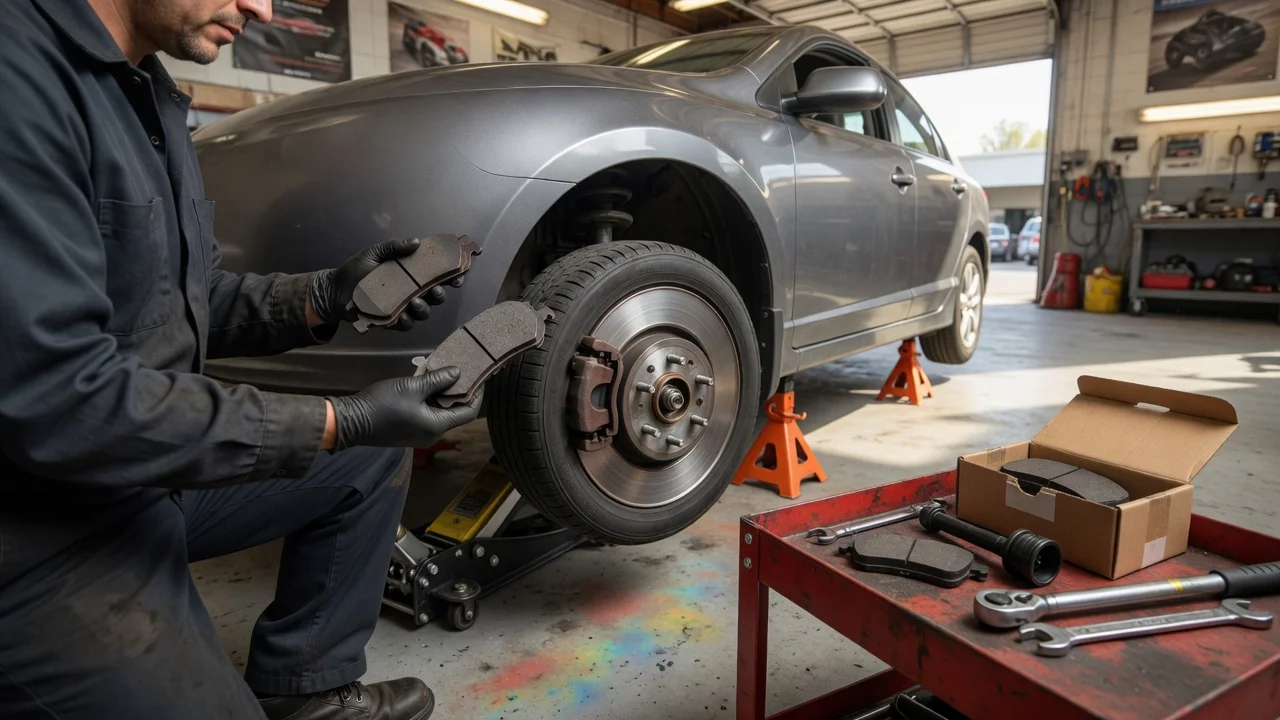
What brake pad replacement on a Civic usually costs
There is no single Honda Civic brake pad replacement price. The bill depends on which axle is worn, the model year and trim, whether the rotors are machined or replaced at the same time, the pad compound, and whether a dealer, independent shop, or the owner does the work. A pads-only job on one axle is the lower end of the range; a four-wheel job with new rotors at a dealer is the higher end. Specific dollar quotes were not supplied for this article, so treat any local estimate as the figure that matters and use the conditions below to judge whether that estimate is complete.
What you are actually paying for
A brake pad is the friction lining that presses against the rotor when you apply the pedal. Replacement is the labor and parts to unbolt the caliper, swap the pads, check the hardware and slide pins, and verify pedal feel and rotor condition. Shops often quote “brake pads” as a shorthand for a larger brake service. Confirm whether the quote is pads only, pads plus hardware, pads plus rotor resurfacing, or pads plus new rotors. Those four packages are not interchangeable, and mixing them is the most common reason two Civic quotes look far apart.
Parts: friction pads, and often anti-rattle clips, shims, and slide-pin grease. Some kits include wear sensors where the Civic uses them. Labor: typically billed per axle. Front work is usually quicker than rear work if the parking-brake mechanism or electronic parking brake is involved. Rotors: many modern Civic rotors are too thin to machine safely, so a worn or scored rotor is replaced rather than turned. Related items that appear on some invoices: brake fluid flush, caliper slide-pin service, and parking-brake adjustment.
Conditions that change the price
Model year, market, trim, and powertrain all affect parts. A base Civic, a Civic Si, and a Civic Type R do not share the same pad and rotor stack. Hybrid Civics add packaging and, on some years, different rear hardware. A quote written for a 2016–2021 tenth-generation Civic should not be assumed to match a 2022-and-later eleventh-generation car, and a North American parts number may not match a car built for another market. If the shop cannot confirm the year, trim, and VIN-level brake package, the parts line is still an estimate.
Axle: fronts usually wear faster because they do more of the stopping. Replacing only the worn axle is normal if the other axle still has usable lining and the rotors are in spec. Pad compound: organic, semi-metallic, and ceramic pads are all sold for Civics. Ceramic pads are often quieter and produce less dust; semi-metallic pads can tolerate more heat. The compound you choose changes the parts price and, over time, how often you come back. OEM versus aftermarket: Honda-branded pads cost more than many aftermarket equivalents. Fitment still has to match the exact caliper and rotor. “Civic pads” is not a complete parts description. Where the work is done: a dealer typically charges more for labor and OEM parts. An independent shop may use aftermarket pads and a lower labor rate. Do-it-yourself cost is parts plus any tools, with no labor line, and you remain responsible for torque, bedding, and a safe test drive. Rotors included or not: if the rotor is below minimum thickness, cracked, or heavily grooved, pads alone will not restore pedal feel. That single decision often doubles the parts cost on that axle.
Front, rear, or all four
Ask for a measured lining thickness on both axles before you approve work. Many Civics need fronts first and rears later. Replacing all four at once is reasonable when both axles are close to the wear limit, when you want even pedal feel, or when you are already paying for a fluid service and shop time. It is not required solely because one axle is due. A shop that quotes four-wheel pads without measurements is selling a package, not documenting wear.
Pads only versus a full brake job
Pads-only is appropriate when the rotor is smooth, above the stamped minimum thickness, and within runout limits. A pad-and-rotor job is appropriate when the rotor is thin, warped enough to cause pedal pulsation, or scored deep enough that new pads would not seat evenly. Machining (resurfacing) a rotor is only a savings if enough metal remains after the cut. On many late Civics, that leftover margin is small, so replacement is the usual path. Get the rotor’s measured thickness and the minimum spec on the quote so you can see why the shop chose one option.
How to read a Civic brake quote
A usable estimate names the year, trim, and axle; lists pad brand and whether hardware is included; states rotor action (none, machine, or replace) with a thickness reading if rotors are in question; and separates parts from labor. Watch for add-ons that belong on a different ticket unless they are actually due: a fluid flush is good maintenance on a schedule, not an automatic companion to pad replacement. Caliper replacement is warranted only if a piston is seized, leaking, or the boot is torn—not because the pads are worn.
Choosing a next step
If the pedal is low, the dash shows a brake warning, or you hear grinding (metal backing plate on the rotor), stop driving the car as a daily driver and have it inspected. Grinding means the pads are gone and the rotors are likely damaged, which raises the bill. If you only have a wear warning, a squeak, or a scheduled inspection, get thickness measurements and two quotes: one pads-only if the rotors pass, and one pads-and-rotors. Match each quote to your exact Civic before you compare prices. That comparison, not a national average, is what tells you whether to approve the work, shop elsewhere, or replace only the worn axle.
What this article cannot pin down
No current parts-list prices, labor rates, shop quotes, or test results were provided for a specific Civic year, trim, or market. Those numbers move with region, parts brand, and whether rotors are included. Use a VIN-matched estimate from a local dealer or independent shop as the figure you act on, and treat the conditions above as the checklist for whether that estimate is complete.