Honda Brake Pad Replacement Cost: What Affects the Estimate
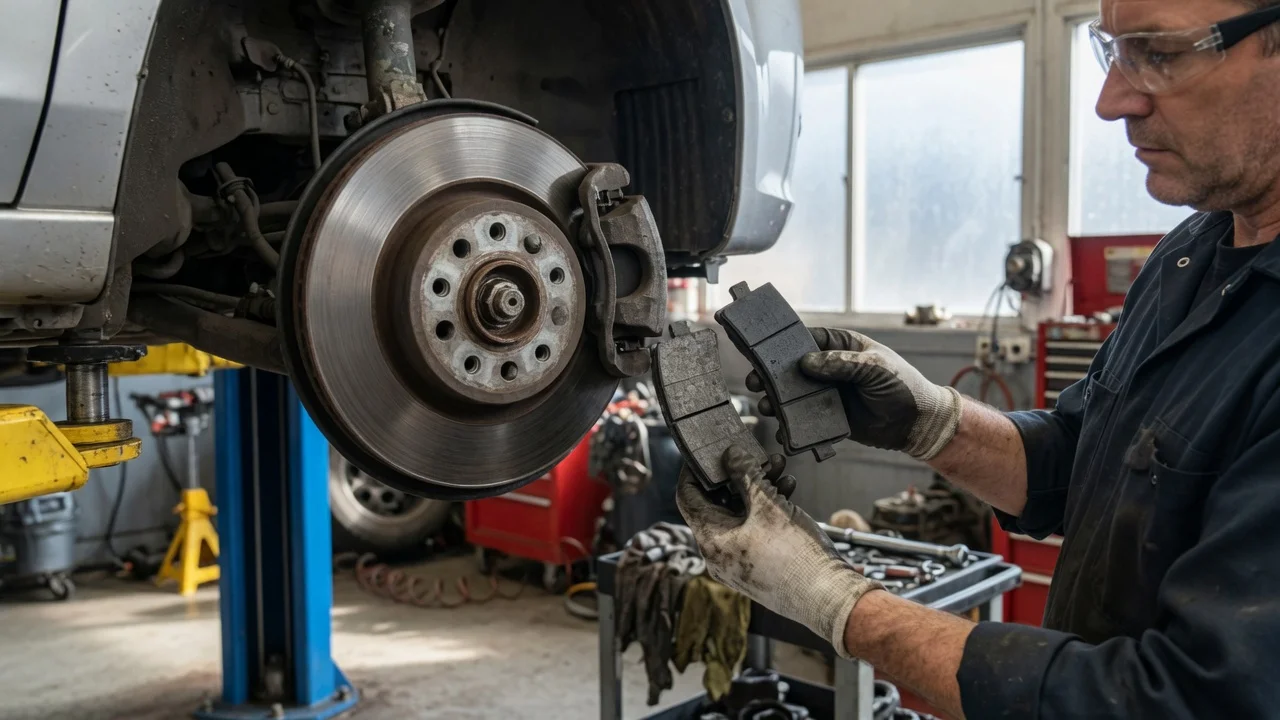
There is no single price for replacing brake pads on a Honda. The estimate depends mainly on which axle is being serviced, whether the rotors also need work, the grade of parts used, the specific model and trim, and the shop's labor rate. The biggest swing usually comes from the rotors. A pads-only job costs considerably less than one that also resurfaces or replaces the rotors, so any quote needs to say which of these it includes. This guide does not give dollar figures because no verified, dated pricing was available for it. Any number you see elsewhere is only useful if you know its market, date, currency and what it covers. The most reliable figure for your car is an itemized quote based on an inspection of your own vehicle.
What a Brake Pad Estimate Usually Includes
Brake pads are the friction blocks that a caliper clamps against a rotor, the metal disc that turns with the wheel, to slow the car. A brake estimate is usually made up of several separate items, and shops differ in which ones they list separately and which they bundle together.
Item | What it covers | Why it varies; Brake pads | The replacement friction material for one axle (both wheels) | Pad compound, brand and whether the parts are original equipment or aftermarket; Labor | Removing wheels and calipers, fitting new pads, reassembly and a test drive | Shop type, regional labor rates and model-specific steps; Rotors | Resurfacing (machining the existing discs smooth) or replacing them | Rotor thickness and condition, and the shop's policy on resurfacing; Hardware | Clips, shims and slide-pin lubricant that help the pads move freely and quietly | Some pad kits include hardware and others charge for it separately; Brake fluid service | Flushing and replacing the hydraulic fluid | May be due based on time or condition, or simply recommended as an add-on; Fees and tax | Shop supplies, disposal and local sales tax | Shop policy and jurisdiction
Factors That Move the Price Up or Down
Front axle, rear axle or both
Quotes and advertised prices are normally given per axle. On most passenger cars the front brakes do more of the stopping work and tend to wear out sooner, but this is a general pattern rather than a rule. Driving style, load and vehicle design all affect which axle needs service first. A quote covering both axles will cost roughly twice as much in parts and labor as one covering a single axle.
Rotor condition
Each rotor has a minimum allowable thickness, and on most vehicles this figure is stamped on the rotor or listed in the service information. If a rotor is still above that limit and is not badly scored or warped, it may only need resurfacing, or no work at all. If machining would take it below the limit, it has to be replaced. Rotor work is the most common reason a quote comes in well above an advertised pads-only price.
Pad material and parts grade
Pads come in several compounds. Ceramic pads are generally quieter and produce less visible dust. Semi-metallic pads are often chosen for heavier use and heat tolerance. Organic pads tend to be softer and wear faster. On top of the compound, you can choose between OEM parts (original equipment manufacturer, meaning Honda-branded or made to Honda's specification) and aftermarket parts, which range from economy to premium lines. The right choice depends on how the vehicle is used. For a daily commuter, a mid-grade pad that matches the original type is a common baseline.
Model, year, trim and powertrain
Brake components are not the same across Honda's lineup. A compact car, a midsize SUV and a minivan can use different pad and rotor sizes, and performance-oriented trims may be fitted with larger or different brake hardware than the standard versions of the same model. Parts can also change between model years and differ by market. Always quote parts against your exact model year, trim and, ideally, the vehicle identification number (VIN), rather than the model name alone.
Electric parking brake
Some newer Honda models use an electric parking brake instead of a lever or pedal. On those vehicles, servicing the rear brakes typically requires putting the parking brake into a maintenance mode, either with a diagnostic scan tool or with a specific procedure, before the rear caliper pistons can be retracted. This can add time and requires suitable equipment. Check whether your model year has this system before comparing rear-brake quotes.
Where the work is done
Dealer service departments, independent repair shops and chain brake or tire centers set labor rates differently, and rates also vary by region. Dealers usually fit OEM parts. Independent and chain shops may offer a choice of parts grades. Doing the job yourself avoids labor charges but requires the correct tools, a safe way to lift and support the vehicle, the model-specific procedure and torque values, and any scan-tool capability needed for an electric parking brake.
Additional findings during inspection
A shop may find a sticking caliper, seized slide pins, a leaking brake line or contaminated fluid. Each of these is a separate repair that adds to the bill, and some are necessary for the new pads to work and wear properly. Ask the shop to show or describe the specific finding and to price it as a separate line item.
What to Check Before You Approve a Quote
Which axle or axles are covered, and whether the price is per axle or for the whole vehicle. Measured pad thickness for each wheel, so you can confirm the replacement is actually due. Measured rotor thickness compared with the minimum specification, and whether the rotors are being resurfaced, replaced or left as they are. The pad brand, compound and grade, and whether the parts are OEM or aftermarket. Whether new hardware (clips and shims) is included. Whether a brake fluid service is required based on testing or service schedule, or only recommended. The parts and labor warranty, including its length and what it covers. Whether shop supplies, disposal fees and tax are included in the total. The date of the quote, since parts prices and labor rates change over time.
Comparing Quotes and Advertised Prices
An advertised brake special is not the same as a final invoice. Promotional prices often cover one axle with entry-level pads and exclude rotors, hardware, fees and tax. To compare offers fairly, ask each shop for an itemized quote covering the same scope: the same axle, an equivalent pad grade and the same rotor treatment. Online figures from forums or cost calculators are only meaningful if you can tell which market, date and currency they reflect, what was included, and whether they describe a price someone actually paid or an advertised starting price.
Gaps in This Guide
This article does not state typical dollar ranges, labor hours or part prices for specific Honda models, because no verified, dated pricing data was supplied for it. It also does not confirm which model years use an electric parking brake or which trims carry different brake hardware. Check those details against your vehicle's owner's manual, a parts lookup using your VIN, or a service advisor.
Next Step
Get an inspection that records pad and rotor measurements, then request itemized quotes from two or three shops for the same scope of work. Once you know which axle needs service, whether the rotors are within specification, and which parts grade is being fitted, you can compare the totals directly and decide whether the price fits your vehicle and how you use it.