Honda and Acura Brake Fluid: DOT 3 Heavy Duty, Requirements, and Service Cost
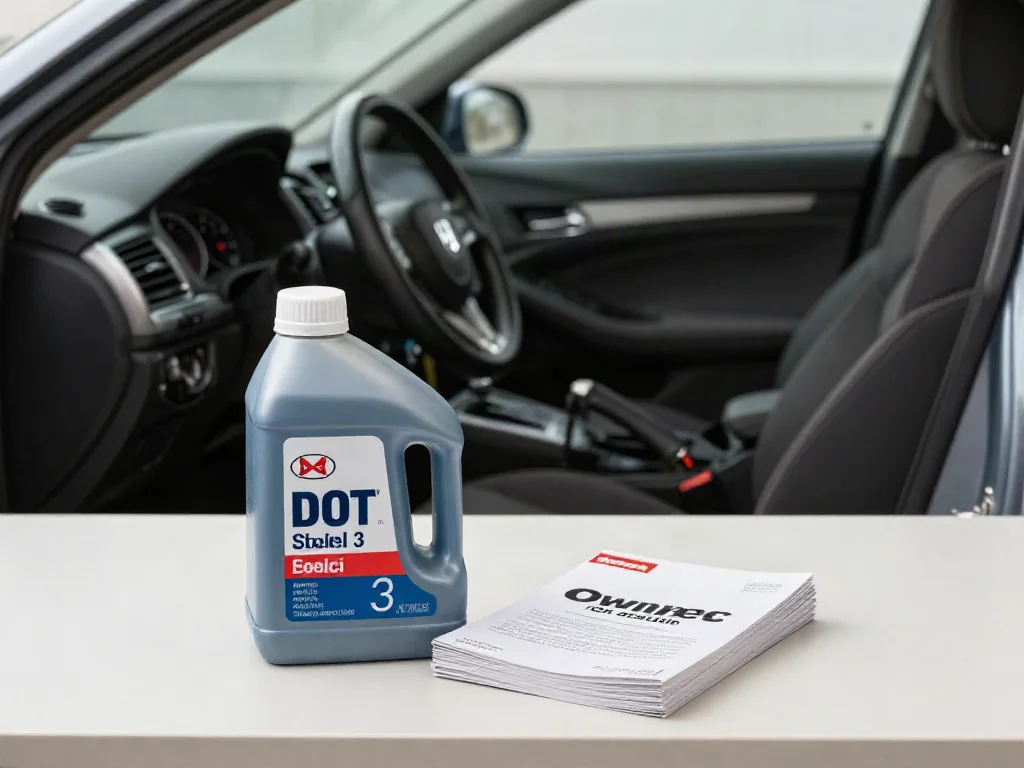
Choosing brake fluid for a Honda or Acura looks simple until you compare the bottle, the owner's manual and the reservoir cap. Genuine Honda DOT 3 Heavy Duty brake fluid is the product named in many Honda maintenance materials. Even so, the right fluid for a Civic, Accord, CR-V or Acura depends on the exact vehicle. Before you buy fluid or book service, check four things: product identity, substitution rules, your model's requirements and what the service quote covers.
Understanding Genuine Honda DOT 3 Heavy Duty Brake Fluid
Genuine Honda DOT 3 Heavy Duty is the branded brake fluid named in many Honda owner's manuals and maintenance guides. That is why so many shoppers search for Honda Heavy Duty DOT 3 brake fluid by that exact phrase. The words Heavy Duty are part of the product name. They don't mean a separate DOT class above DOT 3, and they don't mean the bottle is approved for every Honda ever built. Whether it fits your car depends on your vehicle's manual, not on the label wording.
When you buy genuine Honda DOT 3 brake fluid, read the container itself instead of relying only on a retailer's fitment tool. Check the Honda branding, the product name and the DOT 3 specification printed on the label, then compare them with the manual. A sealed container matters because brake fluid absorbs moisture from the air once it's opened. Store it tightly capped in a cool, dry place. If a bottle has a broken or missing seal, don't count on it.
Checking Whether an Alternative Fluid Is Permitted
Whether another brand is acceptable depends on what the owner's manual for your exact model year and market says. Some Honda manuals name the genuine fluid and then describe conditions under which a different DOT 3 fluid may be used. Others word the requirement differently. Read the whole brake fluid entry, including any notes. Don't assume one Honda's guidance applies to another vehicle sold in a different year or country.
If the manual allows a temporary substitute, follow its conditions too, such as any advice to replace it with the specified fluid at a later service. A DOT 3 label alone doesn't settle every requirement, because the manual can add restrictions beyond the DOT rating. If the reservoir may already hold an unknown or mismatched fluid, or you're unsure whether a product is compatible, have a qualified service provider check it before you add more.
Finding the Brake Fluid Requirement for a Honda Civic
To find the right brake fluid for a Honda Civic, start with the model year and market. The Civic has been sold across many generations and regions. The manual for your car usually lists brake fluid in the specifications or maintenance section, often next to other fluid types and capacities. Use that entry to decide whether DOT 3 brake fluid suits your Civic. Don't assume every Civic has the same requirement just because it wears the same badge.
The reservoir cap is a useful cross-check, because caps are often molded with the fluid specification. If the cap and the manual seem to disagree, go by the manual. Choosing a fluid is also a separate question from finding the level low. Brake fluid isn't normally used up, so an unexplained drop can point to pad wear or a leak. Have it inspected rather than simply topping it up.
Honda Accord Requirements, Including the 2008 Model
The same logic applies to the Honda Accord: identify the model year and market, then read that owner's manual. For a 2008 Honda Accord, the answer comes from the 2008 manual for your market. That includes any wording about using genuine Honda fluid or an alternative under stated conditions. Whatever the 2008 manual confirms shouldn't be applied to other Accord years, body styles or configurations without checking their own documentation.
When you order brake fluid for a Honda Accord or book service, give the parts counter or shop the model year and trim. Provide the vehicle identification number (VIN) if asked, since it helps them match the right documentation to your exact car. Mention any fluid-service history you know about, including when the brake fluid was last replaced and whether a non-Honda product was used. That context helps the technician decide whether a routine replacement is enough or whether other questions need answers first.
Confirming Honda CR-V and Acura Fluid Requirements
For the Honda CR-V, the rule is the same: find the fluid specification for your exact model year and market in the owner's manual or the vehicle's maintenance information. Acura owners have one more step. You can't choose brake fluid for an Acura from the brand name alone, because Acura covers many models and years. You need the specific model and year before any fluid recommendation makes sense.
Honda and Acura belong to the same company, but that alone doesn't prove a Honda-branded bottle is approved for every Acura. Check the Acura manual for your car and the reservoir cap marking. If the product label, cap and manual conflict, or the manual is missing, a dealer service department or another qualified service provider can look up the requirement for your vehicle. They can sort out the mismatch before any fluid is added or replaced.
When Honda Brake Fluid Service Needs Attention
A Honda brake fluid change is needed periodically because the fluid absorbs moisture over time. That moisture can lower its boiling point and allow corrosion inside brake components. How often the change is due depends on your vehicle's maintenance schedule, which may be in the manual or shown by an onboard maintenance reminder. Follow that guidance rather than a one-size-fits-all interval. In broad terms, the replacement means a technician drains the old fluid from the brake system and refills it with the specified product.
Color alone can't tell you the fluid's moisture content or how much service life is left. Dark fluid isn't proof it has failed, and clear fluid isn't proof it's fine. If the service history is unknown, a professional check is reasonable. You can safely watch for a brake warning light and, where the reservoir is easy to see, check that the level sits between its marks. If the pedal feels low or sinks, braking seems weaker, or you suspect a leak, stop safely and arrange professional help instead of continuing to drive.
What a Honda Brake Fluid Change Quote Should Include
The cost of a Honda brake fluid change has several parts: the specified fluid, labor, any shop or disposal fees, taxes and any diagnostic work you separately approve. Estimates vary with your location and local labor rates, the service procedure your vehicle calls for and the scope of the work. For example, the job may be a full fluid replacement or part of a larger brake visit. Because these factors vary so much, the only price worth relying on is a current quote from a local shop.
Ask for an itemized estimate that names the fluid specification, confirms whether the job is a complete brake fluid replacement and lists labor and fees separately. That makes quotes for a Honda brake fluid replacement easy to compare across shops. Leak repairs, damaged hoses or calipers, and cleaning out contaminated fluid aren't part of routine fluid service. Each needs its own inspection, explanation and approval, so a quoted fluid change shouldn't quietly grow to include them.