Honda Accord Spark Plug Replacement Guide
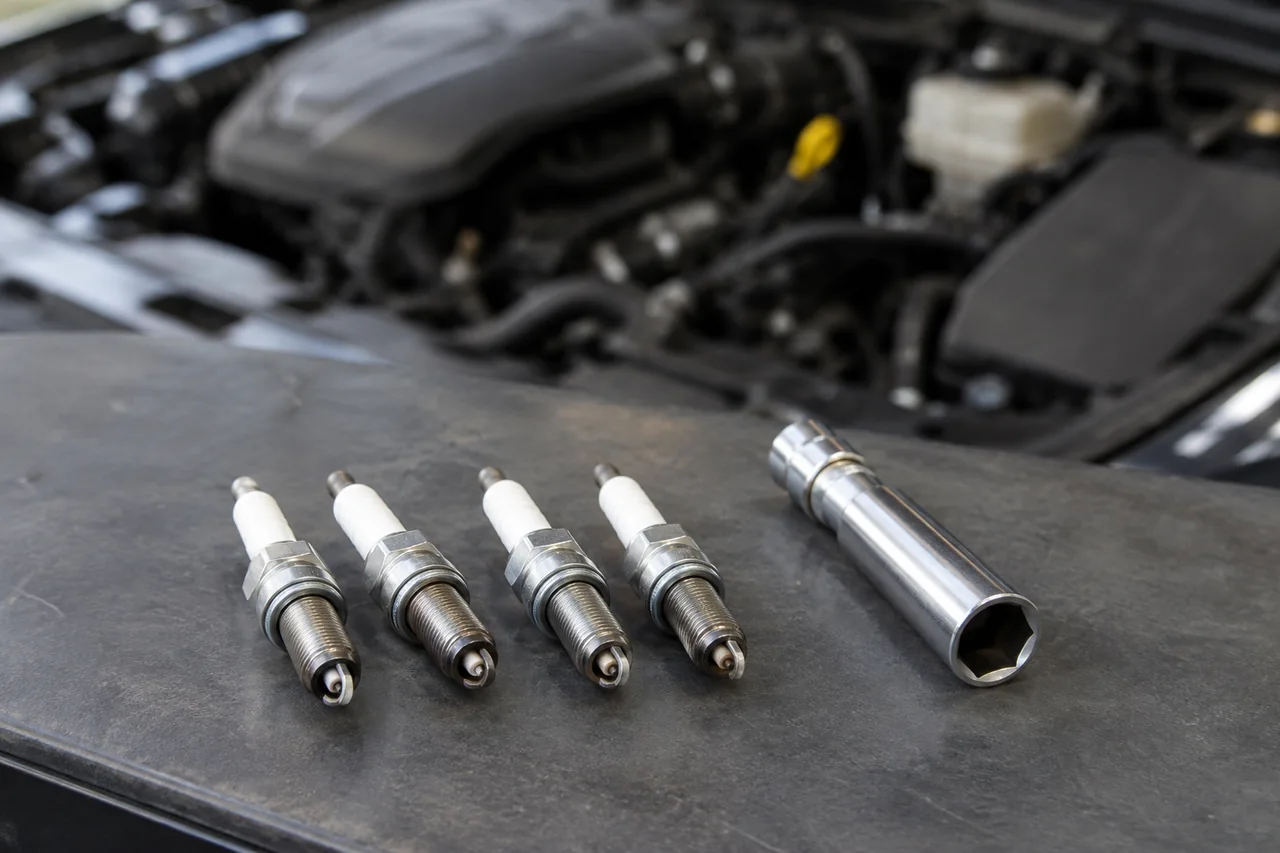
Honda Accord spark plugs are a routine maintenance item, but the right timing, parts, and approach depend on which Accord you own. The Accord has been built with several four-cylinder, V6, and hybrid powertrains over the years, and each can have different spark plug specifications and access requirements. This guide explains how to confirm your engine, judge when service is due, choose the correct plugs, and interpret symptoms responsibly.
Identify Your Accord’s Engine Before Planning Plug Service
The model year, engine, and market specification together determine which spark plug requirements apply to your Accord. Accords sold in different years and regions have used different engine families. Even within one generation, a four-cylinder, a V6, and a hybrid powertrain can call for different plug part numbers, electrode gap values, and installation torque. Engine identification matters because a plug is matched to the design of the combustion chamber, the compression, and the characteristics of the ignition system, not to the badge on the trunk lid.
Start with the owner’s manual and its maintenance section. Next, use the vehicle identification number, which a dealer or parts system can decode to the exact engine. Service records add context by showing what was installed before and when. The Accord name alone doesn’t tell you how many plugs the engine uses, which specifications apply, or whether reaching the plugs means removing covers, intake parts, or other components. Confirm those details before you buy parts.
Determine When Spark Plug Replacement Is Due
Replacement timing should come from the maintenance schedule or Maintenance Minder guidance that applies to your specific Accord. Many Honda vehicles use the Maintenance Minder system, which displays service codes based on operating conditions. Others follow a printed schedule. The owner’s manual explains which approach your car uses and what each code or item means. Intervals vary by engine and model year, so don’t assume an interval quoted for one Accord applies to another.
To decide whether service is due, compare the last documented plug replacement with your current mileage. Measure the distance driven since that change against your vehicle’s schedule. If records are missing, a qualified shop can review your car’s service requirements and may inspect the installed plugs to judge their condition. Rough running or hesitation calls for diagnosis even if scheduled plug service isn’t due yet, because worn plugs are only one possible cause.
Choose Spark Plugs With the Correct Specifications
When you choose spark plugs for a Honda Accord, confirm the specified part number for the exact engine. An equivalent is acceptable only if the plug maker explicitly documents it for that application. Thread diameter and reach must match the cylinder head, and the seat design, either gasket or tapered, determines how the plug seals. Heat range controls how the firing tip sheds heat, and the electrode gap affects spark quality. A wrong value in any of these can cause misfires, fouling, or engine damage.
Iridium spark plugs, platinum designs, and conventional copper-core plugs differ in durability and tip construction. The material only matters in relation to what your vehicle’s documentation specifies. A premium material isn’t automatically better if its design, heat range, or gap differs from the requirement. Packaging that claims broad vehicle coverage doesn’t prove compatibility, and neither does a plug that seems to thread in correctly. Confirm compatibility with the engine’s service information or a documented cross-reference.
Understand Engine Access and Replacement Requirements
Plug location, access to the ignition coils, and the surrounding components all depend on the Accord’s engine layout. An inline four-cylinder and a V6 place their plugs very differently, and hybrid versions add their own packaging considerations. Get configuration-specific details from verified service information. Access affects planning directly. If intake components, covers, or wiring must be moved, the job takes longer, may need new gaskets or seals, and is more likely to disturb connectors or hoses.
Correct installation depends on the engine-specific torque value and careful handling, so the electrode and gap aren’t disturbed. It also depends on protecting the cylinder-head threads, which can be expensive to repair if they are cross-threaded or overtightened. Professional service makes sense when access is difficult, coil connectors are brittle or damaged, a plug feels seized, or you can’t confirm the specifications. A shop can also record the part number and torque it used, which is useful for future maintenance.
Recognize Symptoms That Need Diagnosis and Confirm the Outcome
Rough idle, hesitation under acceleration, and hard starting can point to an engine misfire or another ignition-related problem, but they don’t show that the spark plugs are the cause. Safe observations help. Note whether problems appear when the engine is cold or warm, at idle or under load, or in wet weather. Record any warning lights and stored codes, and review recent service history. A stored misfire code is evidence to interpret, not proof that a particular plug or coil has failed.
Professional testing may be needed to tell plug wear apart from a weak coil, a fuel-delivery fault, a vacuum leak, or a mechanical problem such as low compression. If the check-engine light is flashing or the engine is shaking badly, stop safely and get assistance, because continued driving can damage the catalytic converter. After service, keep the installed plug specification and the service mileage in your records. If symptoms persist, have them investigated rather than assuming new plugs fixed the fault.