Honda Accord Electric Brake Booster: Unit Identification and Compatibility
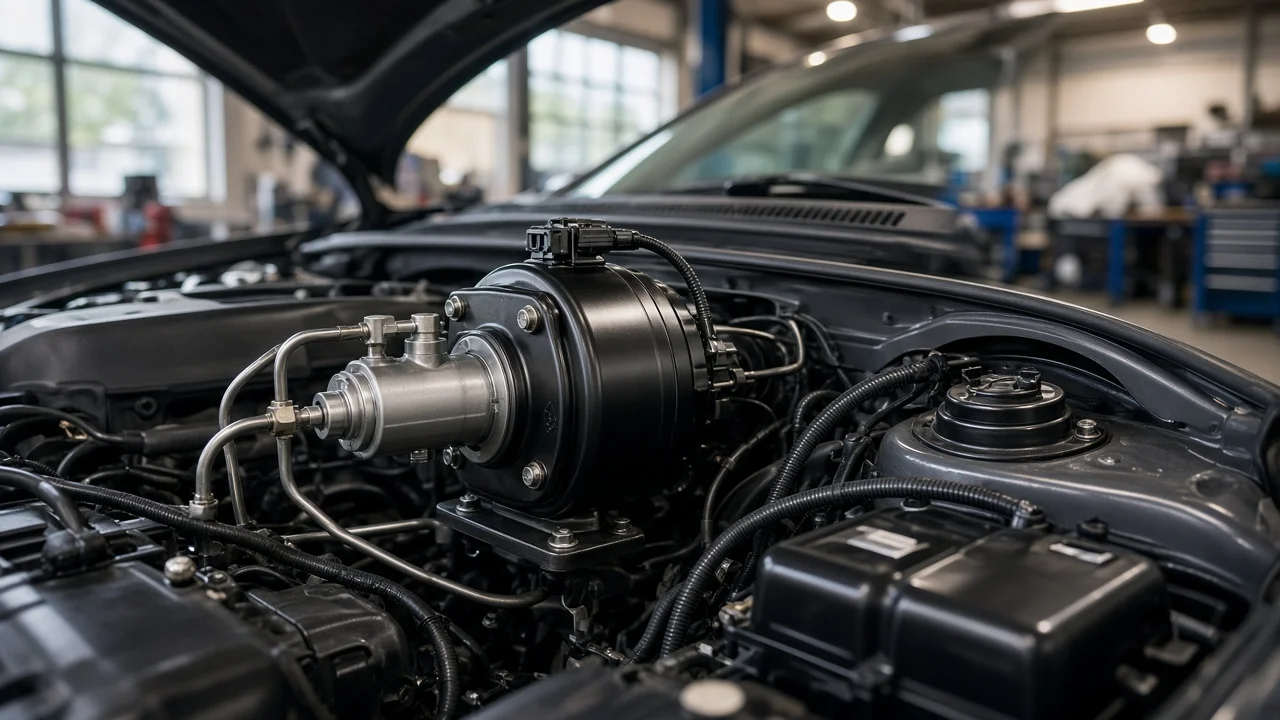
If you are shopping for a replacement electric brake booster for a Honda Accord, finding a unit for sale is easy. Confirming that it is the right one is harder. Electrically assisted brake units are tied to the car's powertrain, software and driver-assistance equipment, so two assemblies that look identical may not be interchangeable. This guide explains how to identify the unit fitted to your Accord and how to judge compatibility before you spend money.
The short answer on fitment
A replacement booster fits your Accord only if it matches the exact unit Honda specifies for that vehicle. You confirm that with the Honda part number and a parts lookup based on your VIN, not with model year alone. Also, not every Accord has an electric booster. Many Accords, including earlier generations, use a conventional vacuum booster, while Honda has used electrically actuated braking on hybrid versions. Check which system your car actually has before searching for parts. Even with the correct part, these units commonly need a scan-tool procedure after installation, such as initialization, calibration or a commanded brake fluid bleeding sequence. Buying the right hardware is only part of the job.
How an electric brake booster works
A vacuum booster uses engine vacuum acting on a diaphragm to multiply the force from your foot on the pedal. An electric booster does the same job with an electric motor and a control module. The module reads pedal input and generates assist or hydraulic pressure electrically. On a hybrid this matters because the engine is often off, so engine vacuum is not reliably available. The electric design also lets the car blend regenerative braking with friction braking. In gentle stops the drive motor recovers energy, and the system applies the brake pads against the brake rotors only as much as it needs to.
Because the control module decides how much hydraulic braking to apply, it is programmed for the specific vehicle configuration. It also communicates with other systems over the vehicle network, which can include stability control and collision mitigation braking. A unit with the wrong software or hardware version may set fault codes, show warning lights or disable assistance features, even if it bolts in place.
What changes the answer
Several factors decide whether a particular unit is compatible with your car: • Powertrain and generation: hybrid and conventional Accords can use entirely different brake assist systems, and designs change between generations. • Trim and equipment: driver-assistance features can affect which unit is specified. • Market and steering side: units built for other regions or right-hand-drive vehicles may differ even when the model name is the same. • Part number changes: Honda may supersede a part number with a revised one, so an older number on your unit does not always mean an identical replacement is still the correct choice.
The source of the unit matters as much as the part number. A used assembly from a salvage vehicle may carry the donor car's configuration and history. It may need dealer-level programming before your car accepts it, and some units may not be reprogrammable at all. A unit that came off a crashed vehicle may also have hidden damage to its housing, connectors or internal components.
Choosing between new, remanufactured and used units
A new genuine Honda unit ordered by VIN gives the most certainty on vehicle fitment and usually the clearest warranty. A remanufactured unit can cost less. Before you buy one, confirm that it lists the exact part number your car requires, check what testing the seller claims to have done, and read the warranty conditions, including whether professional installation is required. A used unit is the cheapest option and the riskiest, for the programming and condition reasons above. With any option, ask the seller directly whether initialization or coding is needed after installation, and confirm that a shop near you can perform it before you order.
How to identify your unit and check compatibility
Start under the hood on the driver's side, where the brake master cylinder mounts near the firewall. A vacuum booster is usually a large round canister with a vacuum hose running to it. An electric unit has one or more electrical connectors and no large vacuum hose. Look for a label or stamped part number on the housing, using a light and a gentle wipe if it is dirty. Then give your VIN to a Honda parts department or use a VIN-based Honda parts catalog. Compare the full part number, including any suffix, against what the seller lists. Matching appearance or matching model year is not enough.
Before you buy a booster, confirm that it is actually the faulty part. A brake warning light, a hard or unusually long pedal, or a new noise from the unit can have other causes. Low brake fluid, a sticking caliper or worn friction material can also change how the brakes feel. Have stored fault codes read with a scan tool that supports Honda brake systems, and check that the pads and rotors are within their wear limits. Diagnosis first often prevents paying for an expensive assembly you did not need.
Limitations and next step
This guide cannot confirm fitment for your specific car. Only the VIN-based part number and Honda service information can do that, and the installation and setup steps vary by vehicle. Replacing an electric booster means opening the hydraulic brake system and usually running procedures that need dealer-level or equivalent diagnostic equipment. Unless you have that equipment and the correct service information, have the work done by a Honda dealer or a qualified brake shop. If a brake warning comes on together with a changed pedal feel or longer stopping distances, stop driving the car and have it inspected or towed rather than continuing to use it.