Honda Accord Cabin Air Filter: Location and Replacement (2007–2016)
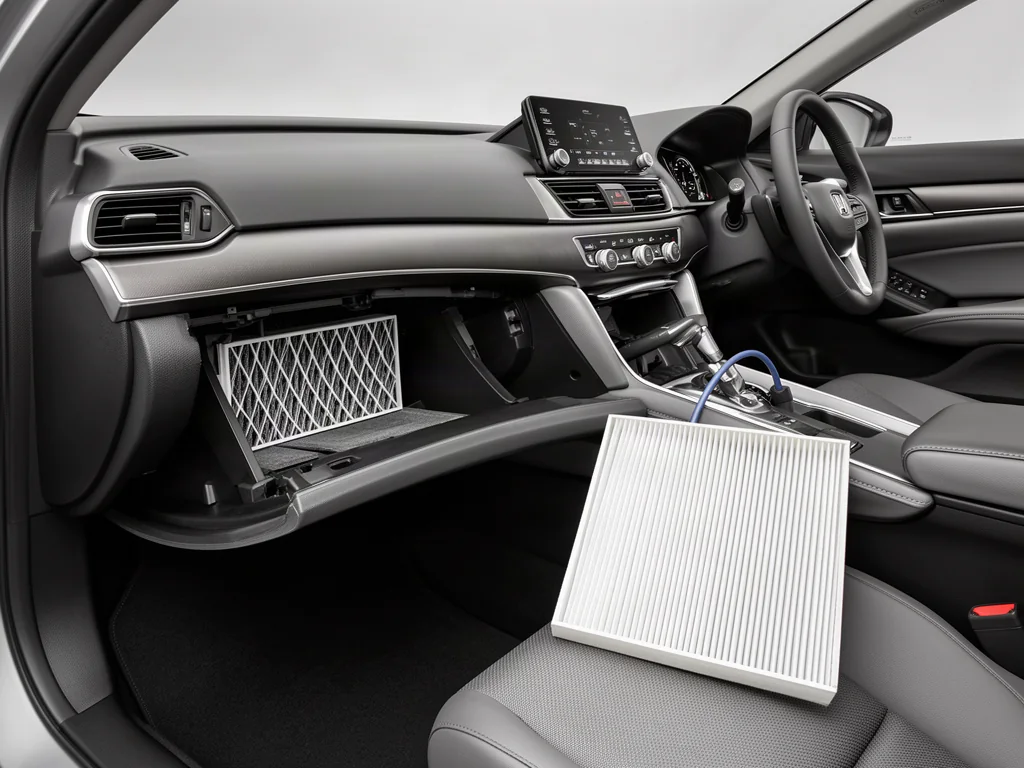
A Honda Accord cabin air filter sits in the climate system and traps dust and debris before air reaches the vents. This guide covers 2007 through 2016 Accords, including the 2007, 2008, 2009, 2010, 2012, 2013, 2014, 2015, and 2016 model years that owners most often look up. Confirm the year and body style first, then locate the filter behind the glovebox, swap a pleated filter, and restore the glovebox so vent airflow returns to normal.
Where the Accord Cabin Air Filter Sits
On a 2007-2016 Honda Accord, the cabin air filter sits in the cabin air filter housing behind the passenger-side glovebox, where it screens air entering the cabin ventilation system. That in-cabin air filter is not the engine air filter under the hood; it only treats the stream that feeds the heater and air conditioner. After the glovebox is lowered per applicable instructions, the filter access cover on the housing is the usual entry point. Confirm model year and body style before following access steps or ordering a cabin air filter for a Honda Accord.
Restricted vent airflow, leaves in the housing, or a stale odor can justify looking at the Honda Accord cabin air filter, but those clues do not prove the filter has failed. A clogged pleated filter can reduce flow, yet a blower, evaporator, or duct issue can produce similar symptoms with a clean element still in place. These steps apply to 2007-2016 Accords; an earlier or later generation can place the housing differently. Identify the exact year and body style first so the access path and filter size match the car.
2007–2012 Accords: Confirm Glovebox Access and Filter Fit
A 2007 Honda Accord cabin air filter is reached through the passenger glovebox, but that first year deserves its own check of the owner's manual or year-specific instructions before any stops or damper are released. For a 2008 Honda Accord and the 2009-2012 group, including a 2012 Honda Accord cabin air filter, the glovebox path is common, yet glovebox stops, the glovebox damper, and the filter access cover can differ by trim and body style. Confirm those release details from instructions written for the exact vehicle.
Do not assume a cabin air filter for a 2007 Honda Accord, a 2008 Honda Accord, or a 2012 Honda Accord is interchangeable across the whole span. Match the replacement to year, body style, and vehicle details in a current parts listing, including a 2009 Honda Accord cabin air filter and a 2010 Honda Accord cabin air filter when those years apply. At the access point you should see a cover over a slot or tray for the pleated filter. Stop if the layout differs or a retaining part resists gentle release.
2013–2016 Accords: Check the Access Layout Before Starting
A 2013 Honda Accord cabin air filter, a 2014 Honda Accord cabin air filter, and a 2015 Honda Accord cabin air filter belong to the later generation in the 2007-2016 range, which also includes a 2016 Honda Accord cabin air filter. Access still typically runs through the passenger glovebox, but the 2013-2016 layout is not a copy of the 2008-2012 housing. Confirm the model-year instructions, including sedan or coupe body style and any hybrid notes, before lowering the glovebox or releasing a filter access cover. Keep those year-specific notes beside the steps you actually follow.
Verify filter dimensions and application in a reliable parts listing for the VIN or exact year, engine, and body style rather than copying a number from a forum or a previous car. A cabin air filter for a 2013 Honda Accord, a cabin air filter for a 2014 Honda Accord, a 2015 Honda Accord, or a 2016 Honda Accord can differ from an earlier element even when both look like a pleated panel. If the listing and the housing opening disagree, stop and recheck the vehicle details. Do not force a filter that binds in the slot.
Replace the Filter and Restore the Glovebox
Park the Honda Accord on level ground, switch the ignition and climate system off, and empty the glovebox so nothing spills when it drops. Support the glovebox while you release only the retaining points confirmed in the instructions for that year, then lower it far enough to reach the filter access cover. Release the cover and withdraw the filter or its holder without prying plastic tabs. When changing the cabin air filter, lift out accessible loose debris so it cannot fall into the blower opening, and do not reach into the blower or disturb nearby wiring.
Honda Accord cabin air filter replacement depends on seating a correctly fitted pleated filter in the housing with the markings matching the case. An airflow arrow shows the direction of air movement through the media; an UP marking shows physical orientation of the panel. Slide the filter in without crushing the pleats, secure the filter access cover fully, reconnect any glovebox damper you released, and restore the glovebox stops using the procedure that applies to that Accord. After you replace the cabin air filter, the job is finished only after the glovebox hangs and latches as it did before.
Check Airflow, Noise, and Glovebox Operation
Confirm that the glovebox opens and closes on its stops and that the filter access cover is fully seated before you run the climate system. Weak latching or a cover that sits proud can let the panel shift and create a rattle once the blower starts. Set the fan to a moderate speed and check vent airflow at the dash and floor outlets. Listen for new rattles or fluttering that were not present before the Honda Accord cabin air filter change. If noise appears, turn the system off before inspecting filter seating or the cover again.
Persistent odors, weak airflow, or blower noise after a correct Honda Accord cabin air filter replacement may require diagnosis beyond the filter itself. Leaves can still sit deeper in the housing, a damper door can stick, or the blower can be worn. Have a technician inspect damaged glovebox retainers, inaccessible debris, or signs of water intrusion rather than repeating the swap. Symptoms that remain after the cabin air filter for a Honda Accord is seated correctly belong to the rest of the ventilation system, not to another identical element.
When to Inspect or Replace the Cabin Air Filter
Use the model-year owner's manual and the applicable maintenance schedule for Honda Accord cabin air filter replacement timing instead of a single mileage or calendar rule. Honda publishes guidance by year, and dusty roads, construction debris, pollen, or wildfire smoke can justify more frequent inspection under that same guidance. A 2008 Honda Accord cabin air filter, a 2014 Honda Accord cabin air filter, and a 2016 Honda Accord cabin air filter are not on one universal clock. Change the cabin air filter when the schedule or inspection findings support it, not because a round number feels due.
On inspection, heavy debris loading, crushed or torn media, or obvious dampness are practical reasons to replace the cabin air filter. Appearance still cannot measure airflow restriction; a gray but open pleated filter may flow adequately, while a warped panel can bypass dirty air even if it looks only moderately used. Record the replacement date and mileage after you replace the cabin air filter on a Honda Accord. Recurring moisture or odor should be investigated at the evaporator drain and housing seals rather than treated with another identical filter.