Honda Accord Brake Pads Price
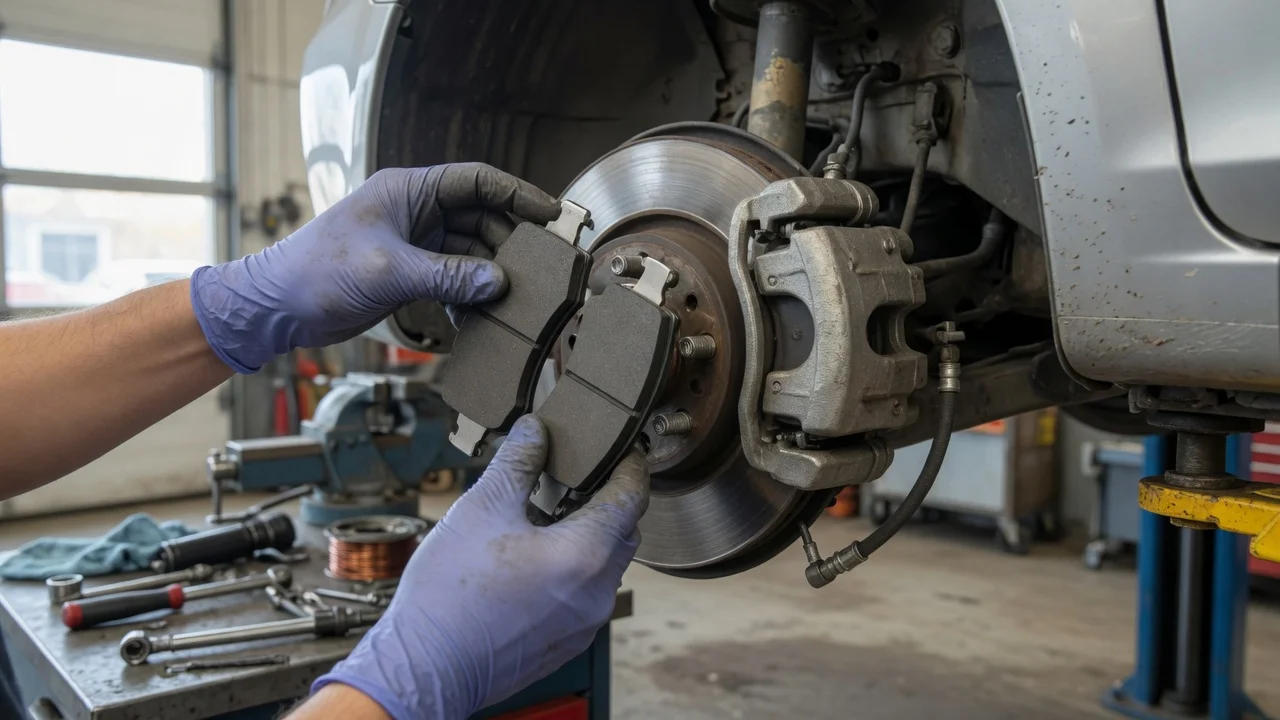
What Honda Accord brake pads cost
There is no single Honda Accord brake-pad price. The amount you pay depends on the model year, whether you need front pads, rear pads, or both, the pad material, whether the parts are Honda original equipment or aftermarket, and whether the quote is for parts only or parts plus labor. Those conditions change the bill more than the Accord nameplate itself.
A parts-only set is usually cheaper than a shop-installed job. Front pads typically cost more than rear pads because they do more of the stopping work and wear faster. Ceramic pads often sit above economy organic or basic semi-metallic sets. Honda-branded pads and dealer labor usually sit at the high end of a local quote range; independent shops and quality aftermarket brands fill the middle.
What changes the price
Accord brake hardware is not identical across generations. Later models, hybrid variants, and some higher trims can use different pad shapes, wear sensors, or caliper designs than earlier four-cylinder sedans. A quote is only valid when it matches the exact year, market, trim, and powertrain of the car, plus the axle being serviced. If a listing does not name those details, treat the number as a starting point rather than a fit.
Model year and generation: pad shape, thickness, and sensor type can differ from one generation to the next. Axle: front pads, rear pads, or a four-wheel set are priced separately. Pad material: organic (NAO), semi-metallic, and ceramic pads sit in different price bands and wear, dust, and noise differently. Brand path: Honda OEM, premium aftermarket, and economy aftermarket are not interchangeable on price or expected life. Hardware and extras: new shims, abutment clips, wear sensors, and brake grease may be included or billed separately. Labor versus parts: a boxed set is cheaper than a shop job that also covers inspection, rotor measurement, and bedding-in. Rotors: if rotors are below minimum thickness, warped, or heavily grooved, a pads-only price will not finish the repair.
OEM, aftermarket, and material trade-offs
Honda original-equipment pads are built to the Accord’s factory feel, dust, and noise targets. They are the safest compatibility choice when you want the car to stop the way it did from the factory, especially on later models with electronic wear sensors or specific pad shapes. The trade-off is a higher parts price and, at a dealer, higher labor.
Aftermarket pads can match, beat, or undercut OEM on price. Ceramic compounds are popular on Accords used for commuting because they tend to make less dust and less noise than many semi-metallic pads. Semi-metallic pads can offer strong bite and heat capacity, which some drivers prefer for heavier loads or harder stops, but they may dust more and can be noisier. Low-price organic or economy sets can be adequate for light driving, but they may wear faster or fade sooner under repeated hard braking. Compatibility still has to be confirmed for the exact year and axle; a generic “Accord” listing is not enough.
Parts-only versus installed cost
A boxed pad set is only the parts line. An installed price also covers labor time, shop supplies, and usually a multi-point brake inspection. Shops often recommend replacing pads in axle pairs and checking rotor thickness against Honda’s minimum spec. If rotors need machining or replacement, the job price rises even when the pad set itself is inexpensive.
Doing the work yourself can cut the labor line, but only if the calipers, slides, and hardware are in good condition and you have the tools to compress the pistons, torque the fasteners to spec, and bed the pads in. A seized slide pin, a damaged wear sensor, or a rotor below minimum thickness can erase the savings. If you are comparing a parts-store box to a shop quote, ask whether clips, sensors, and rotor work are included so the two numbers describe the same job.
How to get a quote that actually fits
Give the seller or shop the VIN or the full year, trim, engine, and whether the car is a hybrid. Specify front, rear, or both axles. Ask whether the pads are ceramic, semi-metallic, or organic, and whether they are Honda OEM or aftermarket. Confirm that wear sensors and abutment clips are in the kit or billed as extra. Ask for rotor thickness to be measured; a pads-only estimate is incomplete if the rotors are out of spec.
Compare at least one OEM-path quote and one quality aftermarket quote for the same axle. The cheaper box is the better deal only if it fits, includes the hardware your Accord needs, and will last through your driving. Warranty length, return policy, and whether the shop will re-check noise after bedding-in matter as much as the headline number.
When a low price is a warning
A listing that covers “Honda Accord” with no year, no axle, and no material is too vague to trust. Pads sold without the correct wear sensor, clip kit, or chamfer/slot design can fit the caliper and still noise, wear unevenly, or fail to trigger a dashboard warning. Extremely cheap sets may use a compound that dusts heavily, wears quickly, or fades on a long downhill. If the quote is far below other local numbers for the same year and axle, ask what is omitted: labor, rotors, sensors, or a brand with a short service life.
A practical next step
Decide first whether you need front pads, rear pads, or both, then get two written quotes for that exact Accord: one Honda OEM or dealer path, and one independent-shop or known aftermarket path. Include labor and any rotor work so you can compare complete jobs. If you already have a parts-store price, take that box number to a shop and ask what it would cost to install those pads, or an equivalent ceramic or OEM set, after measuring the rotors. That comparison, not a single advertised figure, is the reliable way to choose.
This article does not list current dollar amounts, shop rates, or stock availability. Those figures change by region, year, and supplier, and they should come from a quote matched to your VIN or year-trim-powertrain. If your Accord has a hybrid powertrain, a performance brake package, or a recent generation change, treat any generic Accord price as unverified until the parts diagram or VIN lookup confirms the pad.