Honda ABS and VSA Lights On: Accord, Civic and CR-V Troubleshooting
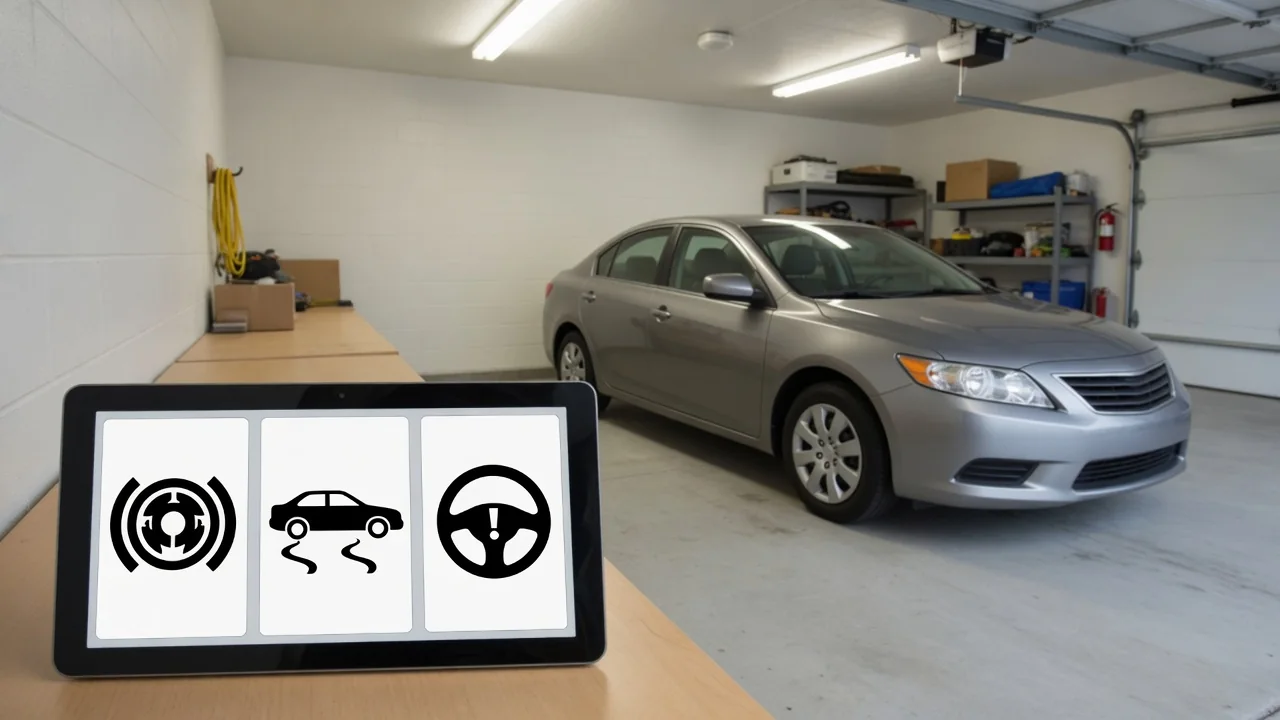
When an ABS light on a Honda Accord, Civic, or CR-V stays on, or Vehicle Stability Assist joins it, the cluster is reporting that anti-lock braking, stability control, or related inputs are not ready. Those warnings can appear after startup, while driving, or with an electric power steering indicator. The combination is a starting point for checking, not proof that a particular part has failed.
What ABS and VSA Warning Lights Can Tell You
The anti-lock braking system modulates hydraulic pressure in a hard stop so a locking wheel can keep rotating and retain steering. Vehicle Stability Assist uses wheel-speed sensor signals and, when fitted, a steering-angle sensor to help hold the intended path. Indicator behavior still depends on the exact model year, so that Accord, Civic, or CR-V owner's manual is the reference for which lamps belong on the cluster.
Many Honda clusters illuminate ABS and VSA lamps briefly during a startup self-check, then extinguish them if the systems pass. A warning that remains on, or an indicator that flashes while moving, means the control logic is not satisfied. Shared wheel-speed inputs or an electrical fault can light more than one lamp, so the display does not identify a failed component. While warnings stay on, anti-lock braking or stability assistance may be unavailable even if ordinary braking still works.
When Brake or Steering Symptoms Mean You Should Stop
A red brake warning indicator, a soft or sinking pedal, reduced stopping power, visible fluid leakage, or substantial steering difficulty warrants stopping in a safe place and arranging assistance. An ABS light on a Honda Accord, Civic, or CR-V by itself does not establish whether the vehicle is safe to continue; pedal feel, other warnings, and the model-specific manual still matter. Do not use hard stops, skids, or abrupt steering just to test the lamps.
Report warning colors, whether the Honda Accord ABS light or Civic or CR-V lamps appeared at key-on, after a restart, or once moving, and whether Vehicle Stability Assist or electric power steering joined them. Describe any change in pedal or steering feel. Deliberate hard braking or aggressive maneuvers add risk without a reliable diagnosis, so leave that evaluation to a controlled inspection. Those notes help a technician reconstruct whether the vehicle was starting or already underway when the cluster changed.
Honda Accord ABS Warnings and Combined VSA Lights
An ABS light on a Honda Accord can appear alone or with a VSA lamp; that pairing still does not assign a failed part. On a 2004 Honda Accord, stability-control equipment varies by trim, so check the exact owner's manual and listed equipment before treating a VSA-style lamp as relevant or discussing procedures that assume Vehicle Stability Assist is fitted. A 2004 Honda Accord with the ABS light on still needs that year-and-trim context.
A 2010 Honda Accord with VSA and ABS lights on needs stored diagnostic trouble codes and evaluation of shared wheel-speed or electrical inputs before a repair is chosen. Plausible areas include a wheel-speed sensor signal fault, damaged wiring, battery voltage or other power-supply issues, and ABS control module or related control faults. None of those is ranked by the lamps alone. The Honda Accord ABS and VSA light combination remains evidence to interpret, not a parts list.
Honda Civic ABS Warnings With Power Steering Indicators
When an ABS light on a Honda Civic stays on, record the exact model year, accompanying indicators, starting behavior, and any steering-effort change. For a 2013 Honda Civic with ABS, VSA, and power steering lights, confirm the actual lamps and retrieve codes from the relevant modules. The Honda Civic ABS light alone does not explain why electric power steering joined the display. Those notes keep later testing from depending on memory of a brief cluster event.
Multiple warnings can share an electrical supply, communication network, or wheel-speed input, yet a separate steering fault remains possible. If steering assistance changes, seek professional assessment rather than driving on to see whether it clears. Replacing a wheel-speed sensor solely from this 2013 Civic warning combination is unsupported; the lamps do not isolate a sensor, steering-angle sensor, or assist hardware without module data. Shared communication problems and independent electric power steering faults can look similar on the cluster.
Honda CR-V ABS and VSA Warning Patterns
A Honda CR-V ABS light that stays on, or ABS and VSA lights on a Honda CR-V together, still has to be read against that vehicle's year and equipment. Persistent illumination after the self-check is not a brief bulb test. Warnings that appear at startup versus after the vehicle begins moving give a technician timing context, but that timing does not prove a particular sensor or module has failed.
Recent tire, wheel, brake, or battery work is useful history because those jobs disturb wheel-speed sensor signals, connectors, and battery voltage that the ABS control module monitors. A disturbed connector or low-voltage event can coincide with the Honda CR-V ABS light coming on without being the confirmed cause. The warning combination alone does not justify replacing a sensor, hub-and-bearing assembly, or ABS modulator. The same caution applies when ABS and VSA light on a Honda CR-V after a tire rotation or wheel installation.
Safe Observations Owners Can Make Before Service
Photograph the warning display while parked so colors and lamp combination are not reconstructed from memory. Record whether the Honda Accord ABS light, Civic lamps, or CR-V indicators remain on after an ordinary restart. Note slow cranking, a recent jump-start, or battery replacement; those clues support electrical testing without confirming a battery voltage fault. An ABS light on in a Honda Accord after a jump-start is history for the technician, not a finished diagnosis.
With the vehicle parked, compare tire pressures and sidewall size markings with the owner's guidance. A discrepancy is worth reporting; it is not a confirmed cause of an ABS or VSA warning. Limit brake-fluid observation to the manual's safe method. Low fluid or a suspected leak needs assessment, and topping up does not correct why the level dropped or why the brake warning indicator appeared. Do not open brake lines as a home experiment when the ABS light is already on.
How Diagnostic Testing Leads to a Verified Repair
Useful diagnosis needs equipment that reads Honda ABS/VSA modules and, when a power steering lamp is present, the steering module. A basic engine-code reader often cannot access those networks. Record full diagnostic trouble codes, then confirm each code's Honda model-year and module-specific meaning before interpretation. Professional checks follow the findings: wheel-speed data, sensor circuits, power and ground, charging performance, and network communication. A fault code is evidence to interpret, not proof a part has failed.
Tie repairs to confirmed faults, with any required calibration or initialization taken from that vehicle's service information. Reserve hydraulic and steering work for qualified technicians. Clearing codes or disconnecting the battery is not a repair; it can erase evidence and leave the condition in place. After a verified fix, scan again and have a professional confirm that the Honda Accord, Civic, or CR-V warnings stay out under the conditions that originally set them.